
A groundbreaking discovery in southwest China is making scientists rethink what we know about human evolution. Researchers have uncovered fossil remains that might belong to an entirely new species of ancient human, one that doesn’t quite fit into any known category like Neanderthals, Denisovans, or even early Homo sapiens.
The bones were found in Longlin Cave, a limestone cave in Yunnan Province near the border with Vietnam. The site has been under study since 2021, but it’s only now, after detailed scans, dating, and anatomical comparisons, that scientists are seriously suggesting these remains could represent a new branch on the human family tree.
The team behind the discovery, which includes experts from Yunnan University and international collaborators, has tentatively nicknamed the find Homo longlinensis, after the cave where it was found. The individual appears to have lived between 75,000 and 90,000 years ago and was likely a young adult male.
A Strange Mix of Features
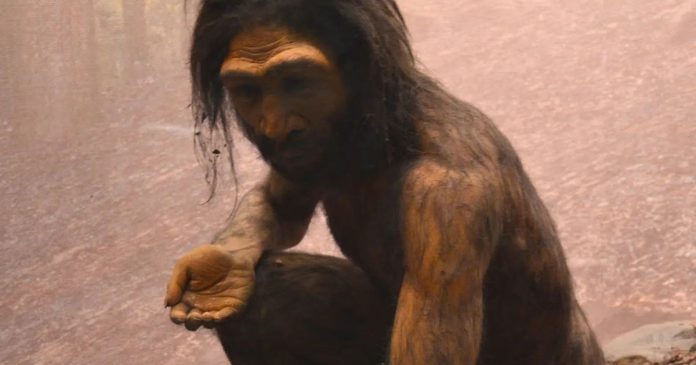
What makes this fossil so puzzling is its unusual mix of features. The skull is long and low, with heavy brow ridges similar to much older human relatives like Homo erectus. But the jaw shows a surprising chin-like structure and smaller molars, traits usually linked to modern humans. Even the inner ear bone has a shape researchers haven’t seen before in any other hominin.
We’re seeing a real mosaic of traits, said Dr. Elena Vasilopoulou, a Greek paleoanthropologist involved in the study. Some parts look ancient, some look surprisingly modern, and others just don’t match anything we’ve documented before.
Hints of Unique DNA
To add to the intrigue, scientists managed to pull out a bit of ancient DNA from the skull. The mitochondrial DNA they recovered doesn’t match Neanderthals, Denisovans, or early Homo sapiens. While it’s too early to draw firm conclusions from such limited genetic material, it’s enough to raise eyebrows in the scientific community.
Not everyone is ready to call it a new species just yet. Some experts warn that odd anatomical combinations can result from interbreeding between known groups or natural variation within a population. It’s exciting, but we need more evidence, especially a full genome, before rewriting the textbooks, said Dr. Maria Koutsoukou, a bioarchaeologist at the University of Athens who wasn’t part of the research team.
If confirmed, this discovery would add another layer to the already complex story of human migration through Asia. Until recently, scientists thought that by the time modern humans arrived in East Asia, the only other hominins left were Denisovans, known mostly from genetic traces in today’s Tibetan and Southeast Asian populations. But Homo longlinensis, if real, suggests that multiple kinds of humans might have shared the landscape, possibly interacting in ways we’re only beginning to understand.
Excavations at Longlin Cave are still ongoing. Researchers hope to find more bones, tools, or even signs of fire use that could reveal how this mysterious human lived, what they ate, and how they fit into the ancient ecosystems of Pleistocene Asia.
One thing’s for sure: the human story is far messier and far more interesting than we once thought. And places like Yunnan may hold even more secrets waiting to be unearthed.
