
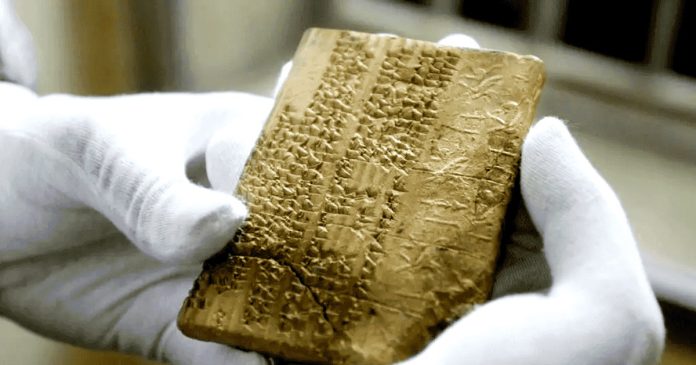
Linear Elamite writing ranks among the earliest known phonetic scripts in human history. Used in southern Iran between roughly 2300 and 1880 BCE during the late third and early second millennia. It recorded the Elamite language spoken in the ancient kingdom of Elam. French excavations at Susa uncovered the first examples in 1903 yet the script resisted full reading for more than a century. In 2022 a team led by François Desset published the landmark paper “The Decipherment of Linear Elamite Writing” in Zeitschrift für Assyriologie und Vorderasiatische Archäologie. That study presented the near complete decoding of the system and opened a direct window into Elamite royal inscriptions culture and history. Subsequent work by Desset and collaborators has expanded the corpus to 45 texts and confirmed the breakthrough while preparing comprehensive editions and digital resources.
The Long Road to Decipherment
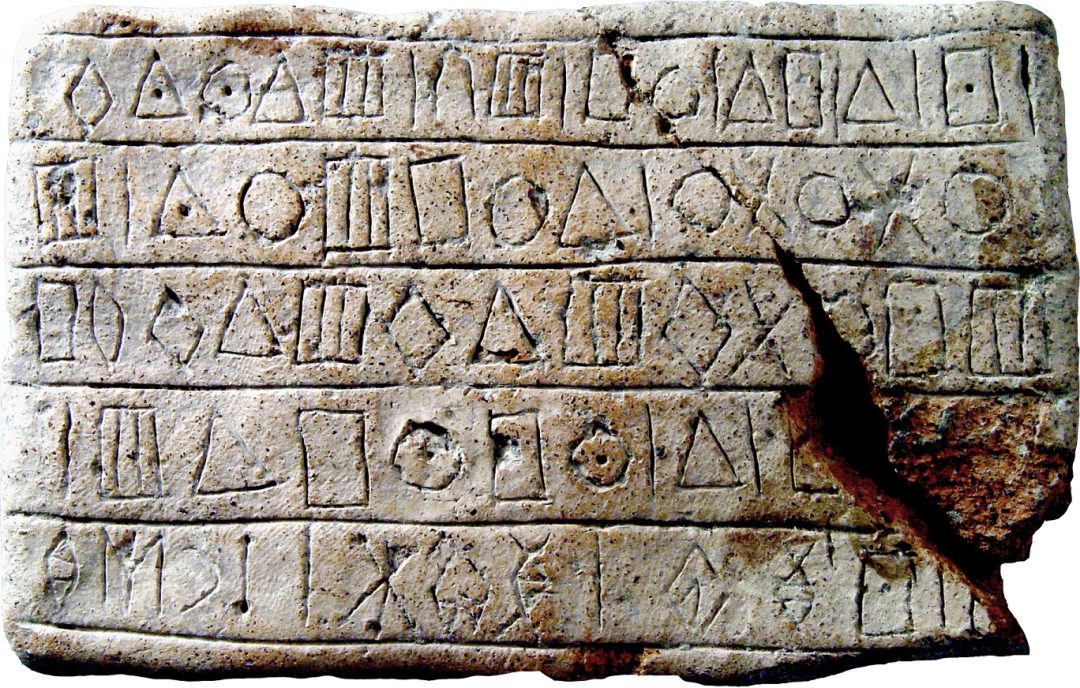
Scholars recognized Linear Elamite as distinct from the earlier Proto Elamite system by the 1960s. Early attempts by pioneers such as Ferdinand Bork Carl Frank and Walther Hinz identified scattered sign values especially in proper names but lacked sufficient bilingual anchors. The script appeared on stone slabs clay tablets seals and metal vessels yet most inscriptions remained fragmentary. Without a large body of parallel texts or a clear bilingual key progress stalled. By the early twenty first century only about a dozen signs had secure readings and the script was still considered undeciphered. The small corpus roughly 40 texts known in 2021 and the absence of obvious logograms or determinatives made the task especially daunting.
The Breakthrough with Silver Beakers
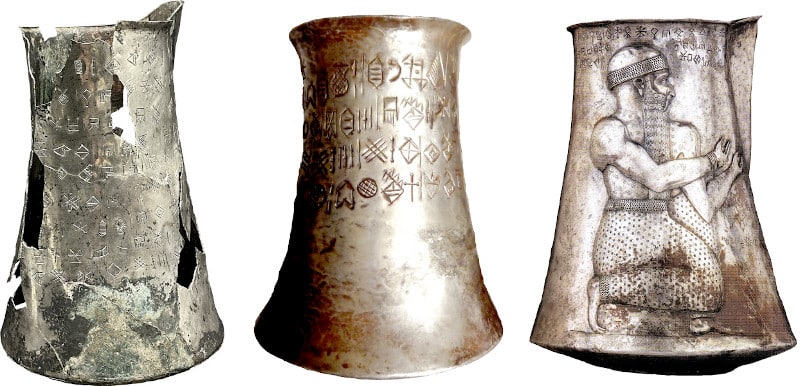
The decisive advance came from eight silver beakers inscribed with Linear Elamite that entered scholarly view through private collections around 2018. These vessels likely originated from a royal or elite burial context near Kamfiruz in the Fars region. Their texts proved highly formulaic royal dedications naming rulers from the Šimašhki and early Sukkalmah dynasties such as Itatu I Eparti II Šilhaha and Pala išan. Critically these Linear Elamite inscriptions aligned thematically and phraseologically with nine known cuneiform texts on similar metal vessels.
The cuneiform pieces supplied Elamite Sumerian and Akkadian versions of comparable royal formulas titles and divine invocations. Matching personal names divine epithets and standard phrases across the two scripts supplied the phonetic grid. Independent work by Kambiz Tabibzadeh and Matthieu Kervran in 2019 rapidly assigned values to more than 30 additional signs. The full team Desset Tabibzadeh Kervran Gian Pietro Basello and Gianni Marchesi then refined the system through rigorous cross checking.
Phonology Sign Inventory and Biscriptualism
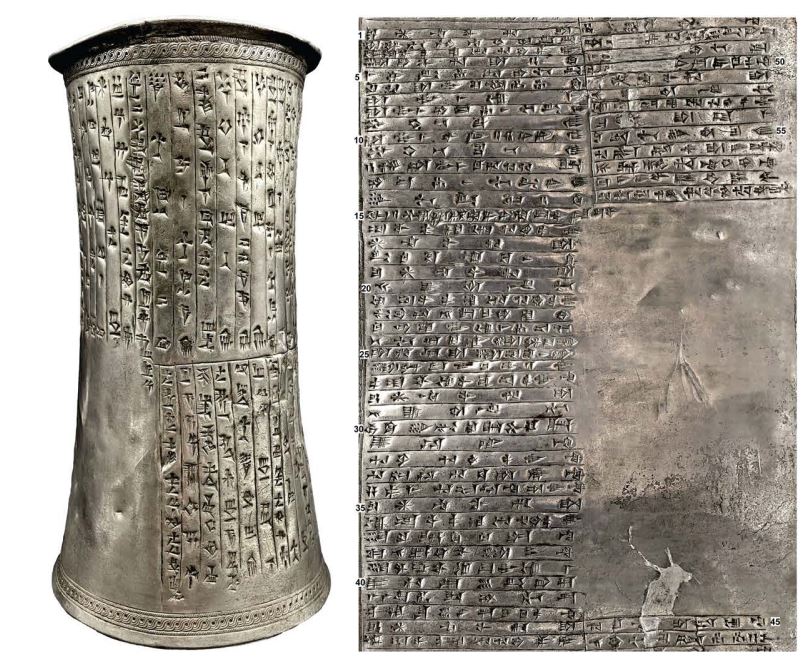
drawing: F. Desset).
Linear Elamite functions as an alpha syllabary with roughly 80 to 110 graphemes depending on how graphic variants are counted. It distinguishes five vowels and a set of consonants while showing no consistent contrast between voiced and voiceless stops a feature that aligns with Elamite phonology. The writing system captures syllables such as CV VC and some CVC combinations yet exhibits allographic variation that earlier scholars mistook for separate signs.
The 2022 paper catalogs 348 distinct glyph forms and assigns secure phonetic values to the vast majority covering 96 percent of all sign occurrences in the known corpus. Only a handful of rare or hapax signs remain open. Biscriptualism the coexistence of Linear Elamite and cuneiform on related artifacts proved essential. Elamite itself is a language isolate yet its earliest phase shows heavy interaction with Mesopotamian writing traditions. The decipherment reveals that Linear Elamite was deliberately phonetic and locally developed a point that distinguishes it from imported cuneiform.
The Corpus and Its Historical Value
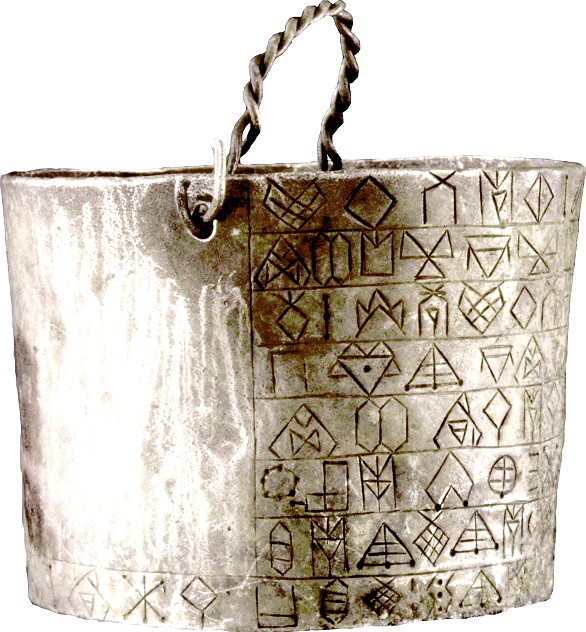
The known Linear Elamite texts divide into seven groups ranging from Susian stone and clay inscriptions of the Puzur Sušinak period to the Kamfiruz silver beakers and scattered finds from Kerman and southeastern Iran. Many record royal dedications to deities such as Napireša or Insušinak and include titles like “grand likawe” (likely equivalent to šukkalmah) and kinship formulas linking rulers to predecessors such as Šilhaha.
The beakers themselves often called gunagi or kun vessels in related cuneiform texts illuminate elite metalworking and gift giving practices between 2050 and 1850 BCE. Once decoded these short texts illuminate political succession religious ideology and cultural exchange across the Iranian plateau and Mesopotamia. They also confirm that Elamite kings employed multiple scripts simultaneously reflecting a sophisticated administrative and ideological bilingualism
Recent Developments and Ongoing Work
Since the 2022 publication Desset and his collaborators have refined readings and expanded the corpus to 45 inscriptions. A dedicated digital database Hatamti Linear Elamite launched in 2025 at the University of Liège now makes high resolution images transcriptions and analyses freely available. Volume one of a planned three volume edition Linear Elamite Inscriptions and Related Cuneiform Texts focusing on texts from Susa appeared in the OrientLab Series in 2025 with further volumes forthcoming.
Media coverage in 2025 and 2026 has celebrated the achievement likening it to the decipherment of Egyptian hieroglyphs. Desset has indicated plans to tackle the still undeciphered Proto Elamite tablets the earliest writing from the region. While a few specialists debate the precise degree of completeness and the treatment of rare signs the scholarly consensus recognizes the 2022 breakthrough as fundamentally sound and transformative.
A New Chapter in Ancient Iranian Studies
The decipherment of Linear Elamite marks one of the most significant philological advances of the twenty first century. It restores voice to a civilization long known mainly through Mesopotamian lenses and confirms that Iran developed its own sophisticated phonetic writing tradition independent of cuneiform. The royal inscriptions now readable illuminate governance kinship religion and artistic patronage in the Elamite heartland.
As the full editions and database become standard references historians linguists and archaeologists will gain fresh insights into the cultural foundations of the later Persian Empire. Linear Elamite stands as a powerful reminder that even the most resistant ancient scripts can yield their secrets when persistent scholarship meets the right combination of new artifacts and comparative method. The work of Desset and his team not only closes a 120 year puzzle but opens exciting avenues for understanding one of humanity’s earliest experiments in phonetic writing.
