
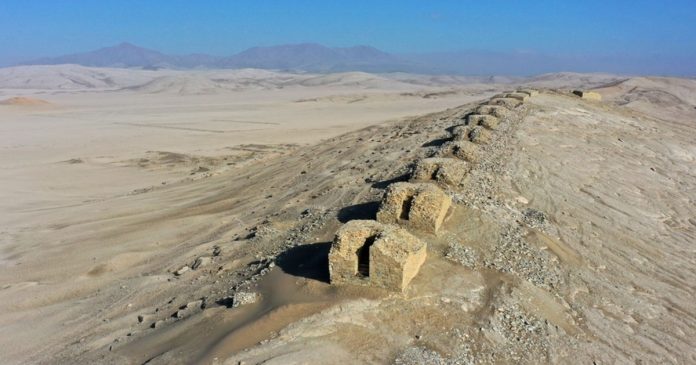
Long celebrated as the oldest solar observatory in the Americas, Chankillo has revealed structures older than its Thirteen Towers. New architectural remains at Chankillo, in Peru’s Casma province, reshape our understanding of astronomy’s origins in the Andes. Alongside the fortified temple, ceremonial vessels, and square structures, these findings show astronomy, ritual, and political authority were intertwined. Recent excavations combined with decades of research reveal Chankillo as a scientific center and locus of power and ceremony. This synthesis extends Andean astronomy’s chronology far earlier than previously believed, highlighting cosmological innovation and cultural sophistication.
The Fortified Temple: Ritual and Power on the Hilltop
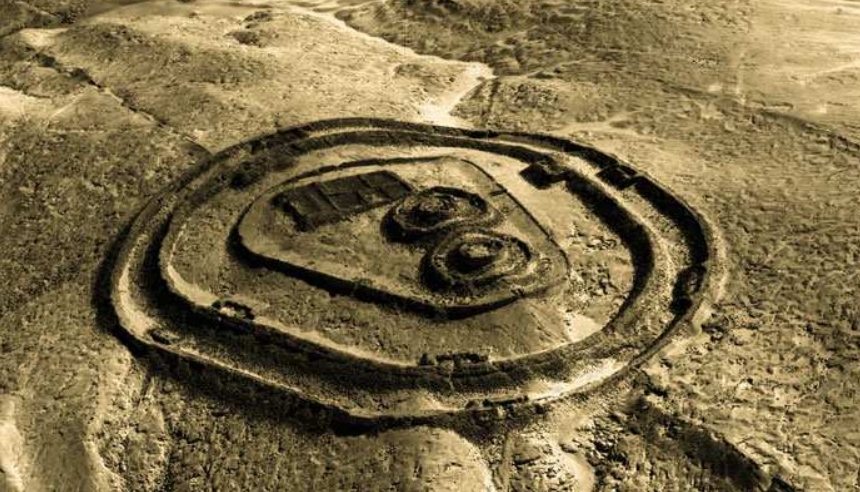
At the heart of Chankillo lies the Fortified Temple (350–150 B.C), an oval hilltop enclosure surrounded by double walls and restricted access points. Early excavations revealed that this was not a defensive fortress, as once assumed, but a ceremonial and elite-controlled space. Within its walls, archaeologists found ritual feasting, offerings, and smashed warrior figurines, showing religious and political authority. The temple’s elevated platforms and restricted corridors created hierarchical access: elites controlled sanctuaries, while common participants gathered in plazas.
Recent findings reinforce this interpretation. The discovery of a large Patazca-style vessel, nearly a meter tall, decorated with warrior figures, underscores the temple’s dual role. Its placement near the observatory suggests elites combined astronomical knowledge with military leadership, legitimizing authority through cosmic and earthly power. The temple emerges as a nexus where astronomy was observed and woven into the broader fabric of social control.
The Thirteen Towers: A Solar Horizon Calendar
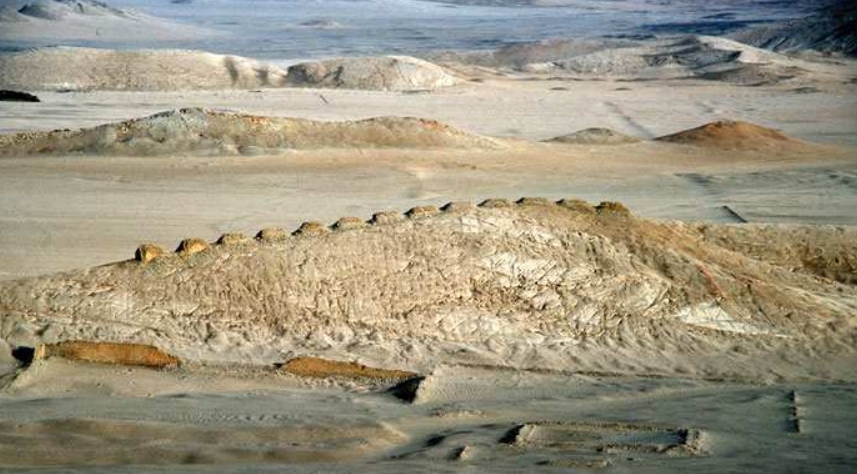
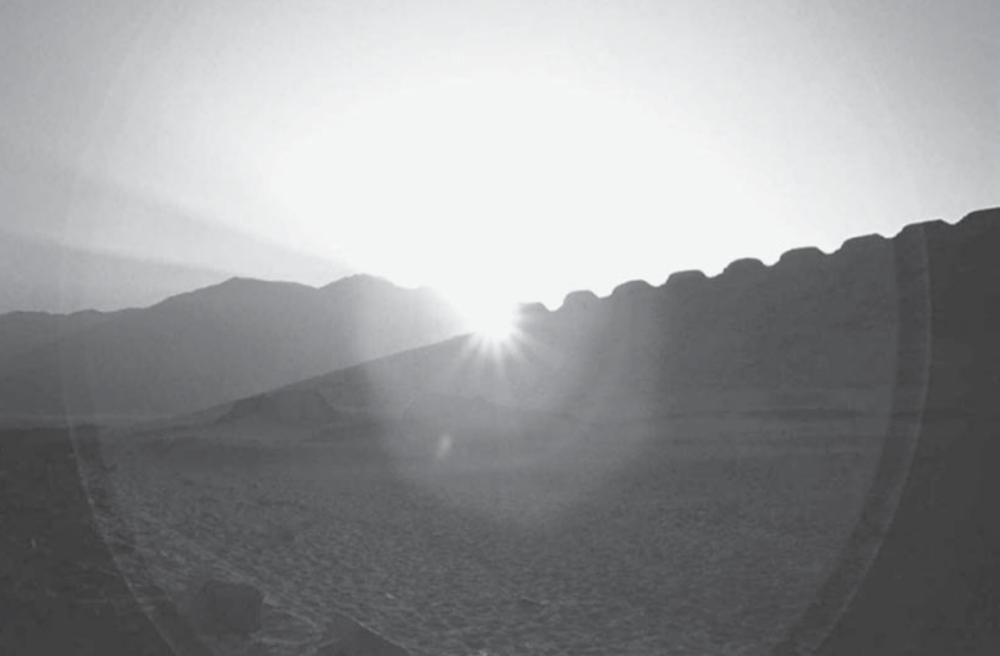
The most iconic feature of Chankillo is the row of thirteen stone towers aligned north–south along a ridge. These towers, built between 400 and 200 B.C., form an artificial horizon against which the rising and setting sun could be tracked throughout the year. From two distinct observation points, one to the east and one to the west, the towers mark the full annual solar arc. At the December solstice, the sun rises behind the southernmost tower; at the June solstice, it rises at Cerro Mucho Malo, a natural feature acting as a “fourteenth tower.” The precision of these alignments allowed observers to determine the time of year to within two or three days.
The Towers
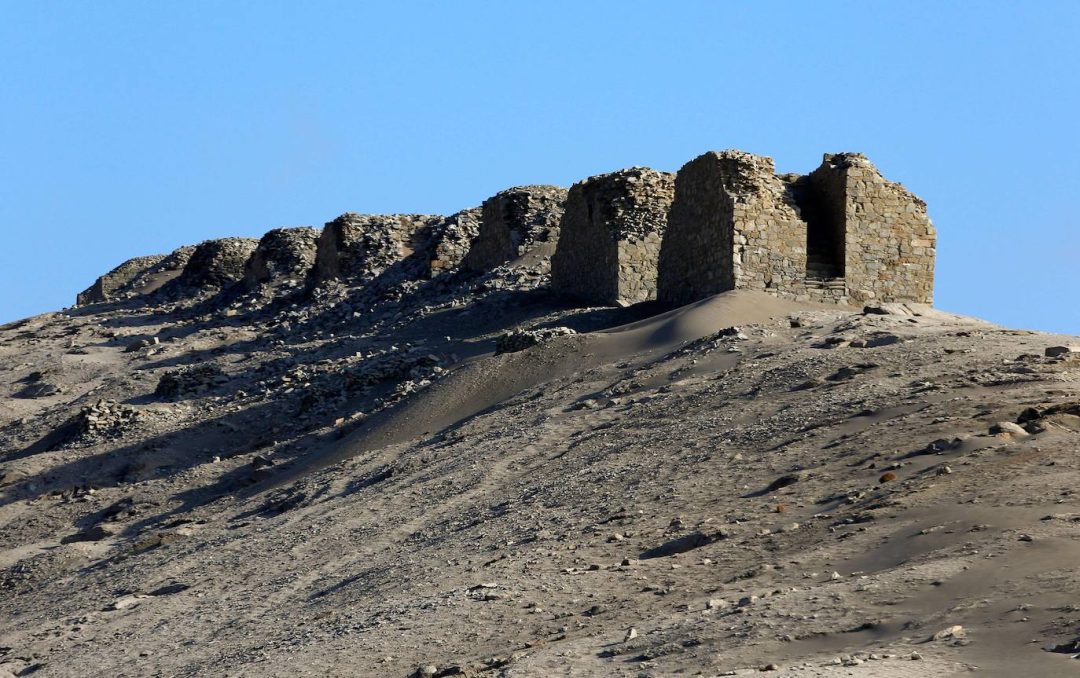
The towers were not simply functional markers but monumental expressions of cosmological order. Their equal spacing suggests that ritual symbolism may have been as important as mathematical precision. The act of watching the sun rise or set behind a tower was likely a hierophany, a manifestation of divine order, staged for both elites and the broader community. The towers thus served as instruments of both science and spectacle, embedding astronomical knowledge into public ritual and elite authority.
The Newly Excavated Square Structure: Extending the Chronology
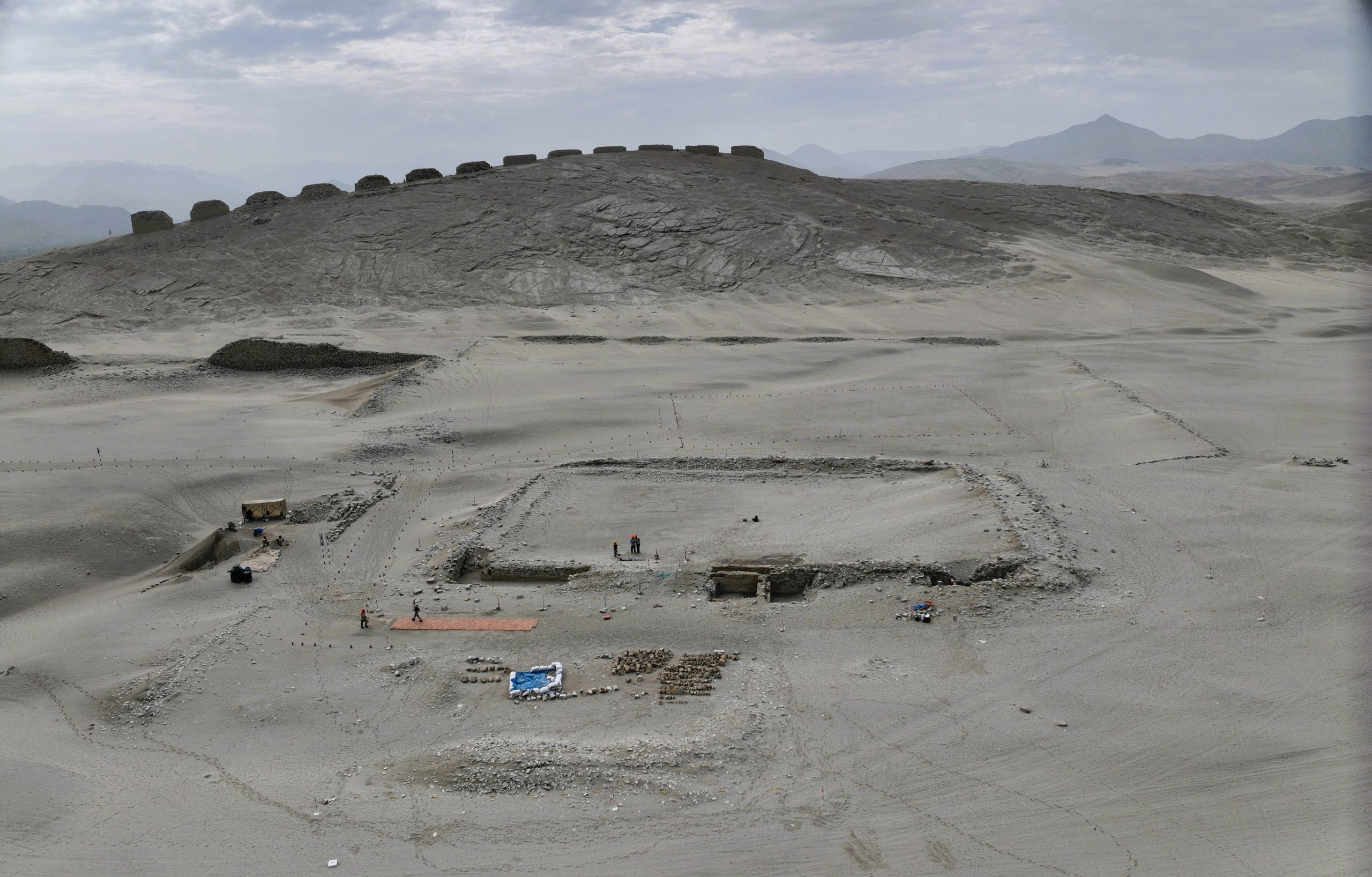
The latest excavations by Peru’s Ministry of Culture have revealed a square structure predating the Thirteen Towers (400 B.C.). Stratigraphy, construction materials, and solar orientation indicate that this building had an astronomical function, making it one of the earliest records of architectural planning oriented toward the movements of the sun in the Americas. Its discovery significantly extends the chronology of astronomical development in the region, suggesting that organized solar observation began centuries before Chankillo’s towers were erected.
This square structure demonstrates that the builders of Chankillo were part of a longer tradition of astronomical architecture. Its orientation toward solar phenomena reveals that the conceptual framework for observing and ritualizing the sun was already established. The fact that it predates the towers challenges the assumption that Chankillo was the starting point of Andean astronomy. Instead, it appears to be the culmination of a tradition that began earlier, with experimental forms of solar architecture that evolved into the monumental horizon calendar of the towers.
Lunar Alignments and Diverse Astronomical Knowledge
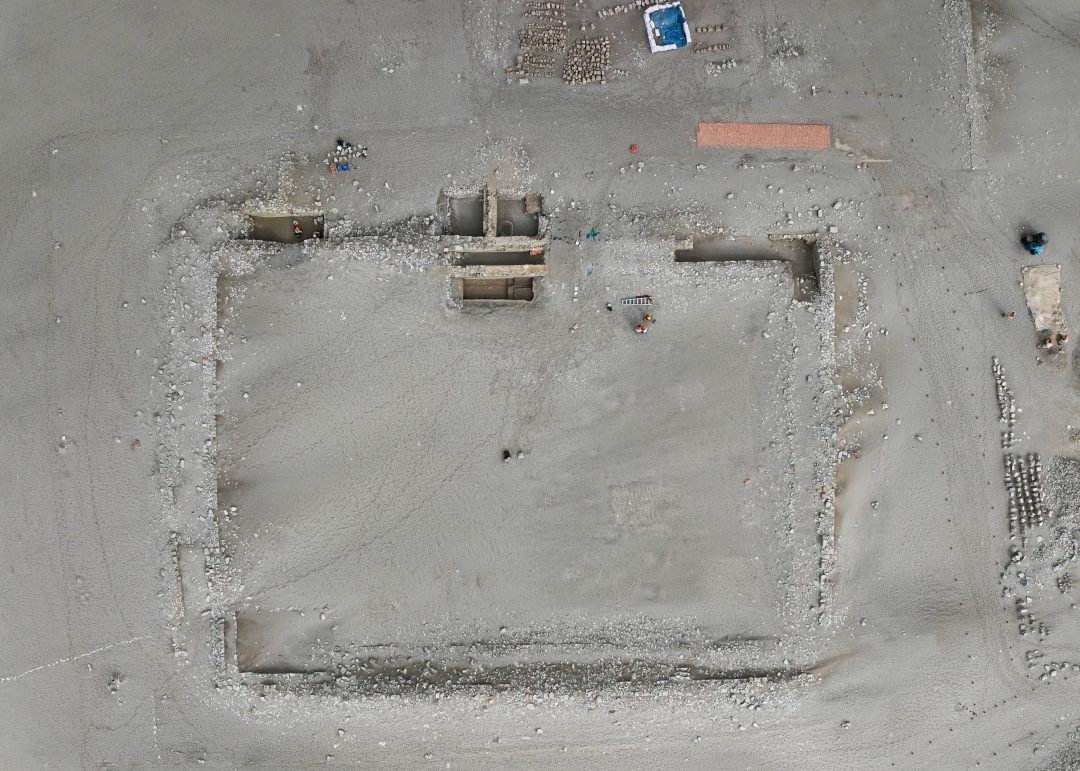
While Chankillo is best known for its solar observations, recent excavations have revealed evidence of lunar alignments as well. A corridor intentionally aligned with the lunar cycle was identified at the site, suggesting that the complex was used for both solar and lunar observations. This dual orientation demonstrates that astronomical knowledge in pre-Hispanic Peru was more diverse and advanced than previously understood. The ability to track lunar cycles would have been critical for ritual calendars, agricultural planning, and cosmological symbolism.
The possibility of lunar alignments also raises methodological questions. Unlike the precise solar arc marked by the towers, lunar cycles are more complex, with varying declinations and longer periodicities. The builders of Chankillo may have incorporated lunar observations into their architecture in symbolic or ritual ways, rather than strictly mathematical ones. This diversity of astronomical functions underscores the sophistication of Andean cultures, who integrated multiple celestial phenomena into their ritual landscapes.
Ceremonial Vessels and Elite Authority
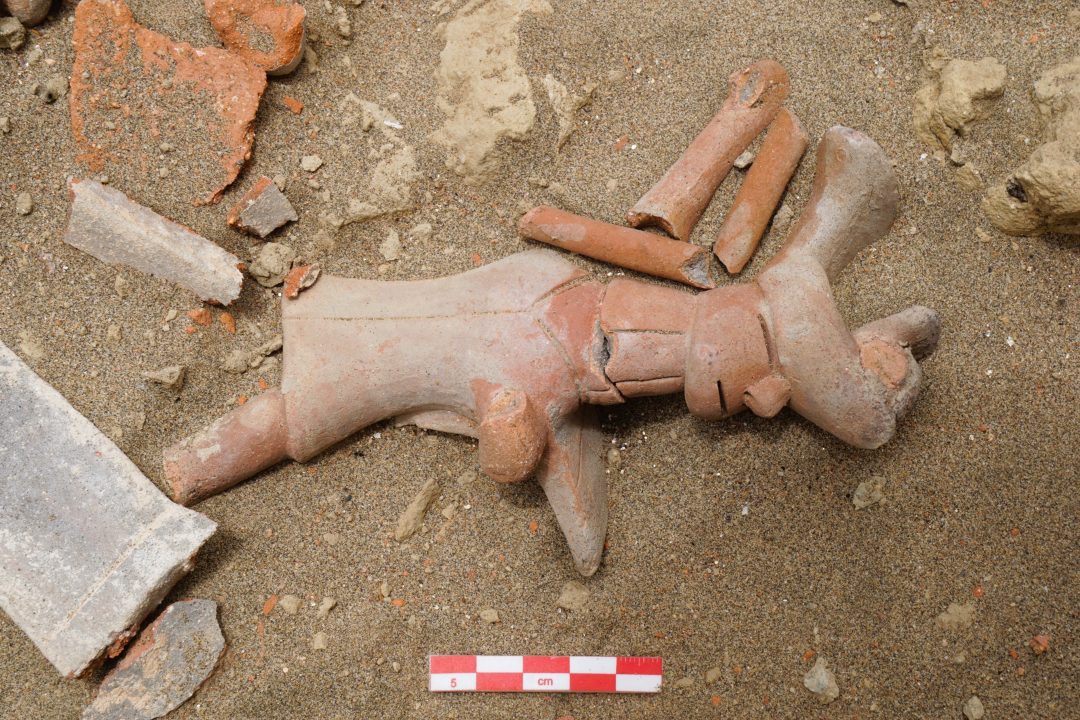
The discovery of the Patazca-style vessel near the observatory adds a material dimension to Chankillo’s astronomical function. Standing nearly a meter tall and decorated with warrior figures, the vessel was placed in an exclusive area, reinforcing the link between astronomy, ritual, and elite authority. Such vessels likely played a role in ceremonial feasts, offerings, and rituals that accompanied astronomical observations. Their presence suggests that elites used material culture to reinforce their control over cosmic knowledge.
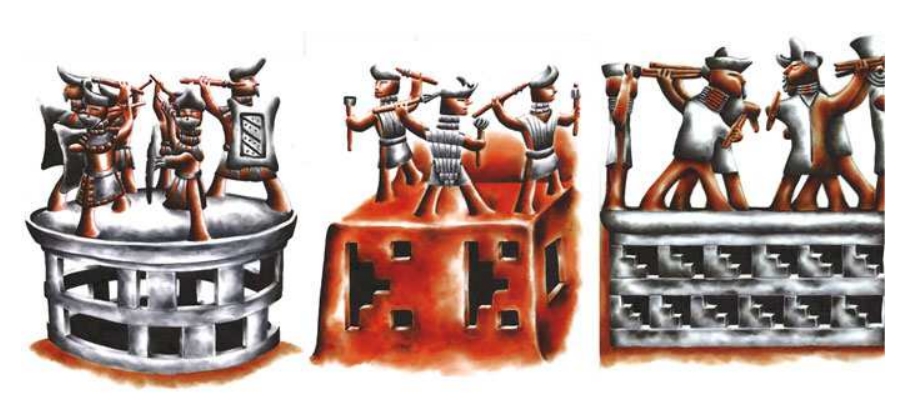
Other offerings found at Chankillo, including panpipes and Spondylus shells, further highlight the ceremonial richness of the site. These items, linked to music, trade, and ritual, show astronomy embedded in multisensory ceremonial practices. The vessels and offerings provide evidence that astronomy was ritualized and politicized, transforming knowledge into instruments of social power.
Chankillo in the Broader Andean Tradition
Chankillo’s significance lies in its local context and its role within broader Andean astronomical traditions. Nearly two millennia later, the Inca built “pillars of the sun” to mark solstices, continuing solar horizon observations. Chankillo demonstrates that this tradition had deep roots, extending back to the Early Horizon period. The discovery of the square structure predating the towers pushes this tradition even further back, suggesting that Andean astronomy was among the earliest in the world.
Casma, where Chankillo is located, now emerges as one of the most important ancient astronomical centers globally. The integration of solar and lunar observations, monumental architecture, vessels, and elite authority makes Chankillo uniquely inseparable. Its recognition as a UNESCO World Heritage Site in 2021 was a milestone, yet recent discoveries reveal even greater importance.
Conclusion: Rewriting Andean History
The synthesis of original research and recent discoveries reveals Chankillo as a site of extraordinary complexity. The fortified temple, the Thirteen Towers, the newly excavated square structure, and the ceremonial vessels together demonstrate that astronomy in the Andes was not a marginal activity but a central pillar of society. Solar and lunar observations were embedded in ritual, politics, and material culture, legitimizing elite authority and shaping communal life. The discovery of architecture older than the towers extends the chronology of Andean astronomy, rewriting the history of science in the Americas.
Chankillo stands as a testament to the ingenuity of pre-Hispanic Peru. A place where the movements of the sun and moon were inscribed into stone, ritual, and power. Its legacy challenges us to see astronomy not only as a scientific pursuit but as a cultural practice that shaped civilizations. As excavations continue, Chankillo will undoubtedly reveal more secrets. Further illuminating the deep roots of Andean cosmology and its enduring impact on human history.
For More on Ancient Archeoastronomy check out: Scorpion Observatory Mound Discovered in Tehuacán Valley
