
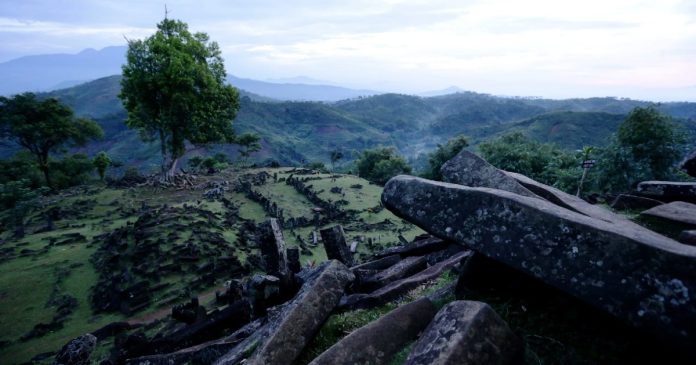
Nestled in the lush landscapes of West Java, Indonesia, Gunung Padang stands as a monumental enigma that continues to captivate archaeologists, geologists, and historians alike. This megalithic site, often shrouded in mystery and debate, has long sparked questions about its origins and age. In 2025, a groundbreaking study led by Universitas Indonesia, in collaboration with the Indonesian Ministry of Culture and the National Research and Innovation Agency (BRIN), unveiled new evidence that reaffirms the site’s astonishing antiquity.
Researchers delved into Gunung Padang’s layered structures through multidisciplinary approaches, including magnetic analysis, mineralogical examinations, and radiocarbon dating. Their findings suggest that buried layers at Gunung Padang could date back as far as 25,000 YBP, challenging conventional timelines of human civilization in Southeast Asia. This update not only confirms earlier controversial claims but also opens doors to rethinking prehistoric engineering capabilities.
The Enigmatic History of Gunung Padang
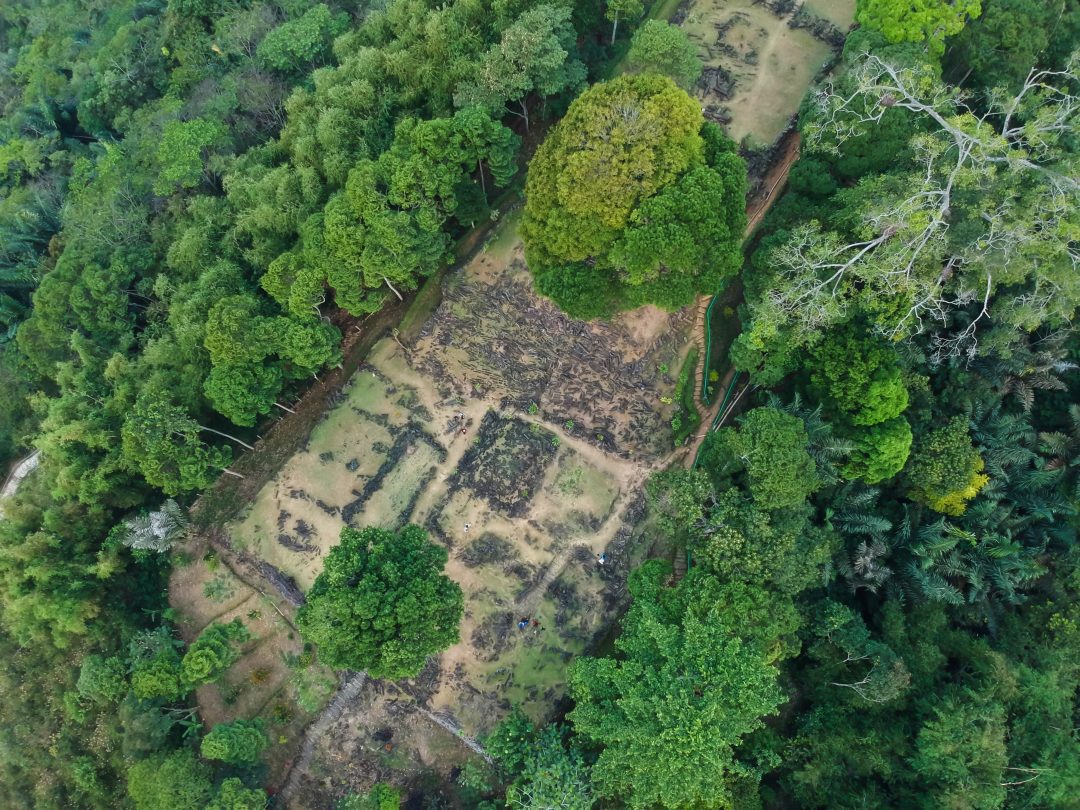
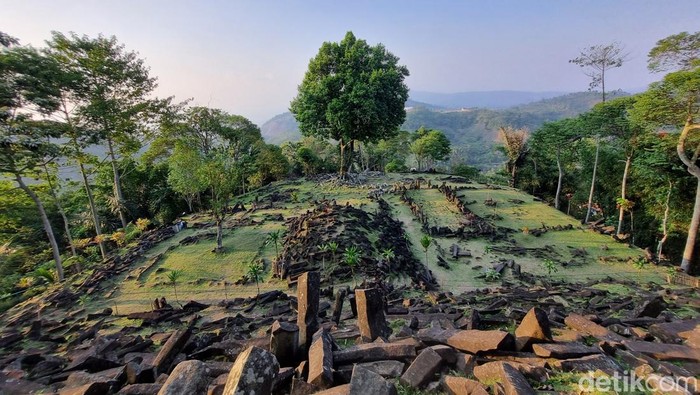
Gunung Padang has intrigued explorers since its discovery in the early 20th century, when Dutch colonial reports first documented its terraced stone formations. Local legends describe Gunung Padang as a sacred mountain where ancient kings held councils; moreover, indigenous Sundanese communities regard it as a spiritual hub connected to ancestral rituals. Over the decades, excavations revealed columnar andesite rocks arranged in stepped terraces, prompting theories that Gunung Padang represents Southeast Asia’s largest megalithic structure. However, debates raged over whether these features resulted from natural volcanic processes or deliberate human construction.
Archaeologist Lutfi Yondri initially dated surface elements of Gunung Padang to around 2,000 YBP through pottery and tool artifacts; nevertheless, deeper probes in the 2010s hinted at much older layers. A 2023 study, though later retracted due to methodological concerns, proposed dates extending to 27,000 YBP based on soil samples. The 2025 investigation builds on this foundation, employing refined techniques to address past criticisms. Researchers now assert that Gunung Padang’s core may indeed trace back to the Paleolithic era, with multiple construction phases evident in its stratified design. This historical context underscores why Gunung Padang remains a focal point for global scholarly interest.
Launching the 2025 Multidisciplinary Study
Universitas Indonesia spearheaded the 2025 technical pre restoration study on Gunung Padang, titled “Studi Teknis Pra-Pemugaran Situs Cagar Budaya Nasional Gunung Padang,” which mobilized over 100 experts across 13 disciplines. The project, initiated in August 2025, aimed to prepare for sustainable site restoration while reevaluating its origins. Collaborators included BRIN, local universities in West Java, and the Ministry of Culture, ensuring a comprehensive approach that integrated archaeology, geology, and geophysics. Fieldwork commenced in September, extending through October, with laboratory analyses concluding in December; public dissemination occurred on December 29 and 30 in Cianjur.
This collaborative study advanced earlier investigations by focusing on direct mineralogical evidence rather than speculative interpretations. Researchers collected samples from the columnar joints and the dark filler material, then analyzed them using petrological methods and X‑ray diffraction. The results showed that the basaltic columns and the hydrothermal filler came from different geological sources, indicating intentional construction rather than natural formation. The work reflects coordinated contributions from geology, archaeology, and materials science, providing a clearer foundation for evidence‑based restoration planning.
Magnetic Analysis Reveals Hidden Clues
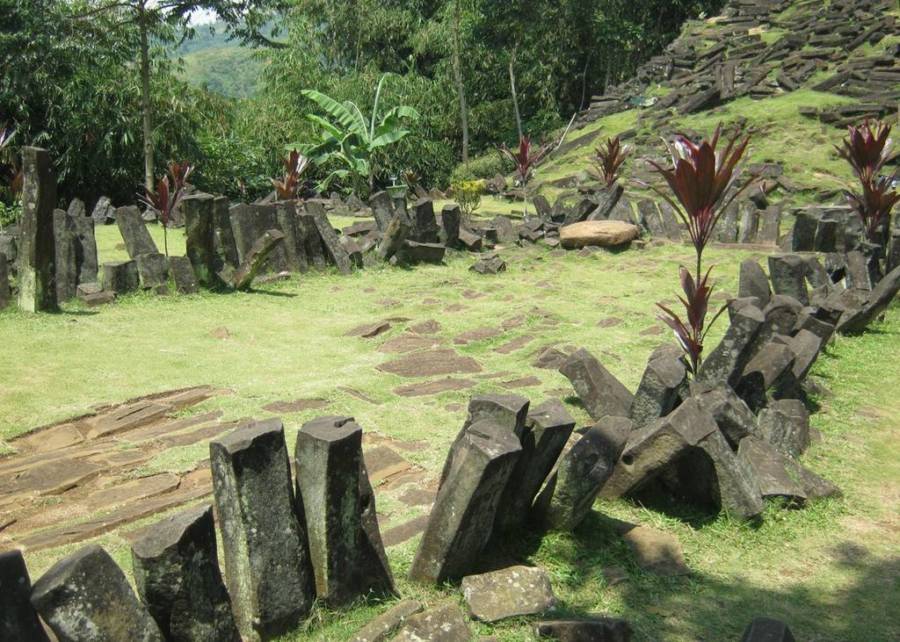
Dr. Reza Syahputra, from Universitas Indonesia’s Faculty of Mathematics and Natural Sciences, directed the magnetic susceptibility component of the 2025 Gunung Padang study. He posed a core question: do the columnar andesite rocks at Gunung Padang occupy their original natural positions, or did ancient humans rearrange them? To answer this, researchers analyzed magnetic minerals within the rocks, which record the Earth’s magnetic field direction at the time of solidification. Any deviations in orientation could indicate human intervention, such as rotation or relocation during construction.
The team conducted meticulous sampling from September to December 2025, adhering to protocols that preserved magnetic integrity. Laboratory tests evaluated these samples in multiple stages, comparing alignments against expected natural patterns from volcanic lava flows. While specific misalignment data awaits full publication, preliminary implications suggest that certain rocks at Gunung Padang show signs of deliberate positioning. This bridges geology and archaeology, offering insights into potential ancient modifications. Furthermore, such findings influence restoration decisions; if human alterations predominate, cultural heritage protocols take precedence over purely geological conservation.
Mineralogical Evidence Supports Artificial Origins
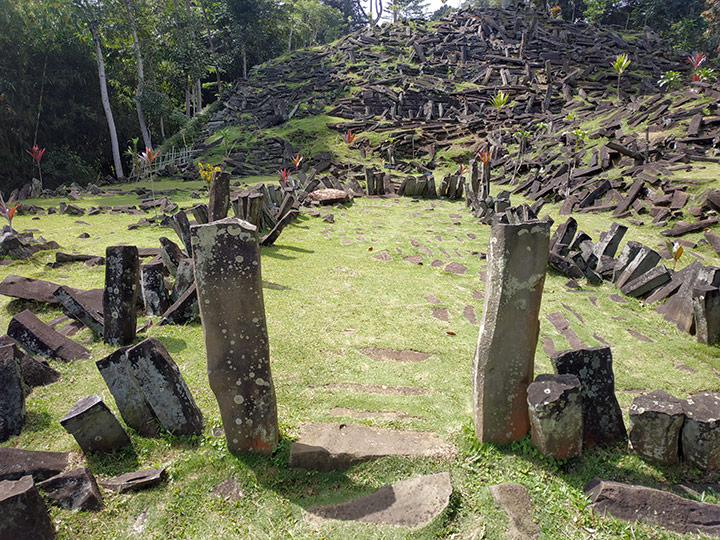
A peer-reviewed paper from the 2025 Gunung Padang study, published in the IOP Conference Series: Earth and Environmental Science, detailed mineralogical analyses of the site’s rocks and fillers. Authors, including Bagus Endar B. Nurhandoko and Danny Hilman Natawidjaja, used petrological methods and X-ray diffraction to characterize materials. They found that columnar joint rocks consist primarily of volcanic minerals like Plagioclase and Feldspar; in contrast, filler cements feature hydrothermal elements such as Quartz and Kaolinite.
These compositions indicate separate sources for the rocks and fillers, strongly supporting the theory that ancient builders at Gunung Padang intentionally assembled the structures. Natural formations would typically show uniform mineral origins, but the discrepancies here point to advanced construction techniques. This evidence challenges views of early human societies as rudimentary, suggesting sophisticated knowledge of materials at Gunung Padang. Additionally, the study refutes purely geological explanations, bolstering arguments for its megalithic status.
Radiocarbon Dating Confirms Ancient Layers
Although the 2025 Universitas Indonesia studies focused on mineralogy and magnetic orientation, the broader scientific picture also draws on earlier radiocarbon work conducted in 2023. That research analyzed buried soils and organic materials from stratified units at Gunung Padang, producing dates ranging from roughly 2,000 YBP at the surface to as deep as 24,000–25,000 YBP in the lowest engineered layers. These results, despite past debate over sample association, were tied directly to structural contexts rather than loose sediments, strengthening the case for multi‑phase construction.
The chronology suggests that Gunung Padang evolved over many millennia: Paleolithic‑age core layers potentially form an early stepped foundation, while later Neolithic modifications appear around 9,000 YBP. This long developmental arc positions the site within global conversations about early monumental architecture, inviting comparisons to places like Göbekli Tepe and reshaping our understanding of human ingenuity during the late Ice Age.
Implications for Global Prehistory
Taken together with the earlier 2023 radiocarbon study, the 2025 investigations at Gunung Padang carry profound implications for our understanding of prehistoric civilizations. The 2023 radiocarbon study, which places the deepest engineered layers between 20,000 and 27,000 years before present, suggests that human activity at Gunung Padang may predate Egypt’s pyramids by more than twenty millennia. If these dates continue to hold under ongoing scrutiny, they imply that late‑Pleistocene communities in Southeast Asia possessed the organizational capacity for large‑scale construction long before the rise of agriculture.
For more ancient mysterious sites check out: Huaca Yolanda: Gobekli Tepe of the Americas Unearthed
