
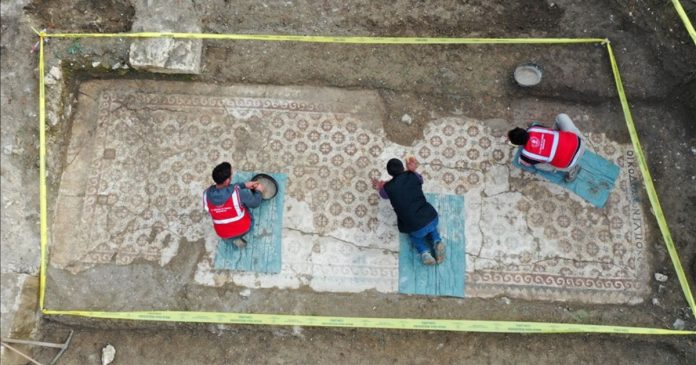
During foundation work at a reconstruction site in Hatay, Türkiye, archaeologists have uncovered a significant Late Antiquity mosaic floor featuring a Greek inscription. The discovery occurred in Antakya’s Maşuklu neighborhood, where a three-storey building had collapsed in the February 6, 2023 Kahramanmaraş-centered earthquakes.
Workers halted the construction project after exposing a mosaic surface during debris removal at the collapsed structure site. In response, the Hatay Archaeology Museum launched a systematic rescue excavation in March to properly investigate and preserve the find.
17.5-Metre Greek-Inscribed Mosaic Dated to the 5th–6th Centuries AD
Archaeological teams have since revealed a 17.5-metre-long mosaic floor decorated with geometric patterns and bearing a Greek inscription, dating it to the 5th and 6th centuries AD, corresponding to the Late Antiquity period.
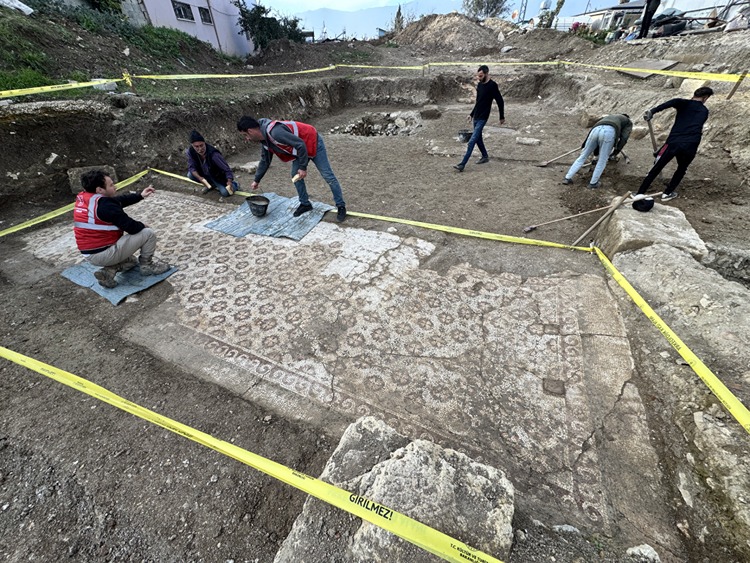
According to archaeologists on site, the size, craftsmanship, and inscription suggest that the structure belonged to a residence of high social status rather than an ordinary dwelling. Excavation Director Ozan Demir noted that the mosaic remains in a single, well-preserved piece and shows signs of historic repair work, underlining its significance.
The team currently consists of museum archaeologists and workers dedicated to uncovering additional architectural elements and associated artifacts in the area. A second mosaic and other structural remains may yet be revealed as the project continues.
Plans are underway to transfer the mosaic to the Hatay Archaeology Museum in 2026 for conservation and display, ensuring long-term protection and public access to this extraordinary testament to the region’s rich cultural past.
