
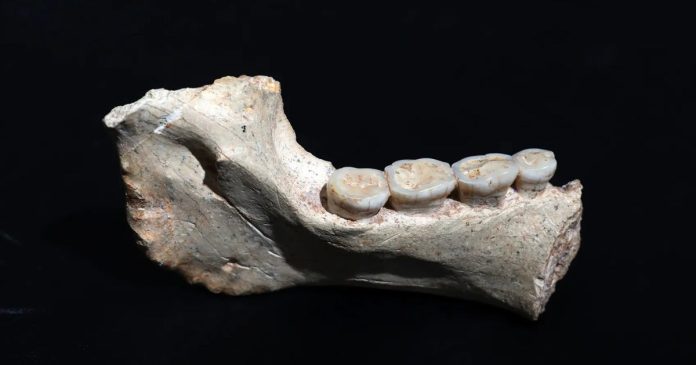
A newly analyzed set of hominin fossils from Thomas Quarry I (Casablanca, Morocco) has been dated with unusual precision to ~773,000 years ago, using a sediment record that captures the Matuyama–Brunhes geomagnetic reversal. The remains show a mix of archaic and more derived features, and researchers argue they represent an African population close to the ancestral branching point that ultimately led to Homo sapiens in Africa and to Neanderthals and Denisovans in Eurasia.
Why This Finding Matters for Dating and Interpreting the Early–Middle Pleistocene Human Record
Human evolution between roughly 1 million and 600,000 years ago is notoriously hard to pin down because the fossil record is sparse and many sites are difficult to date precisely. The Thomas Quarry I fossils help address both problems at once: they add physical evidence from a poorly sampled interval, and they are anchored to a globally recognizable magnetic “timestamp” recorded in the surrounding sediments.
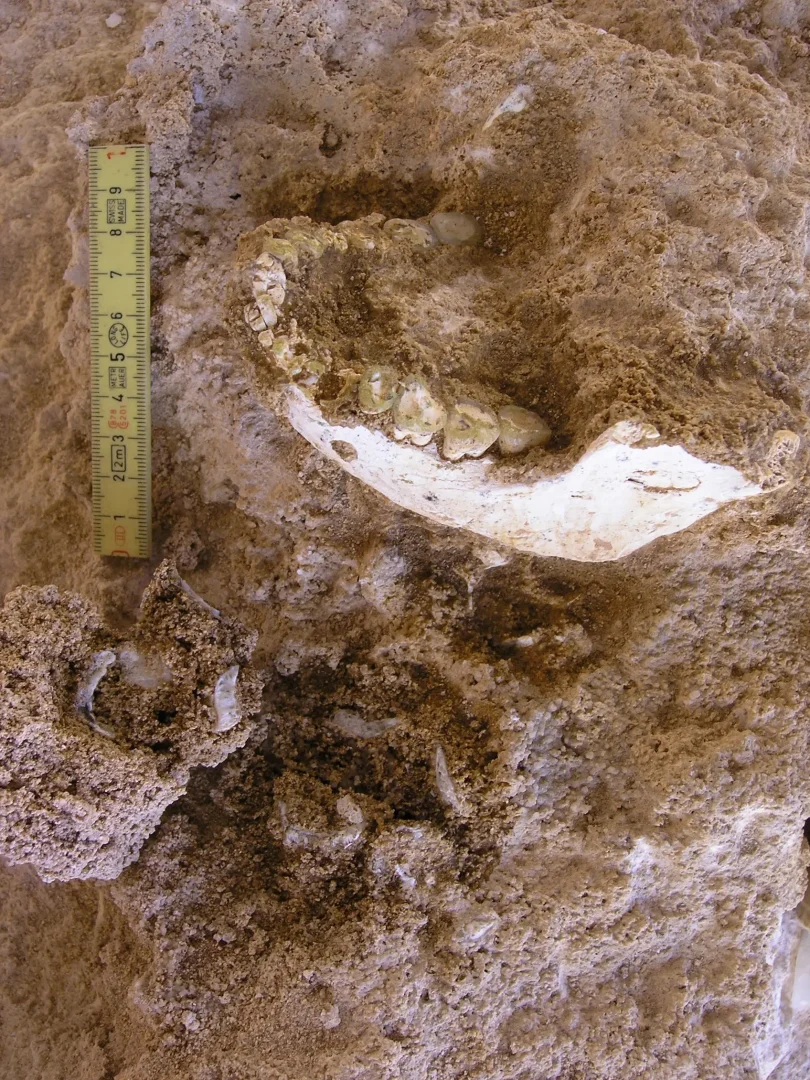
© J.P. Raynal, Programme Préhistoire de Casablanca
The site: Thomas Quarry I and the “Cave of Hominids”
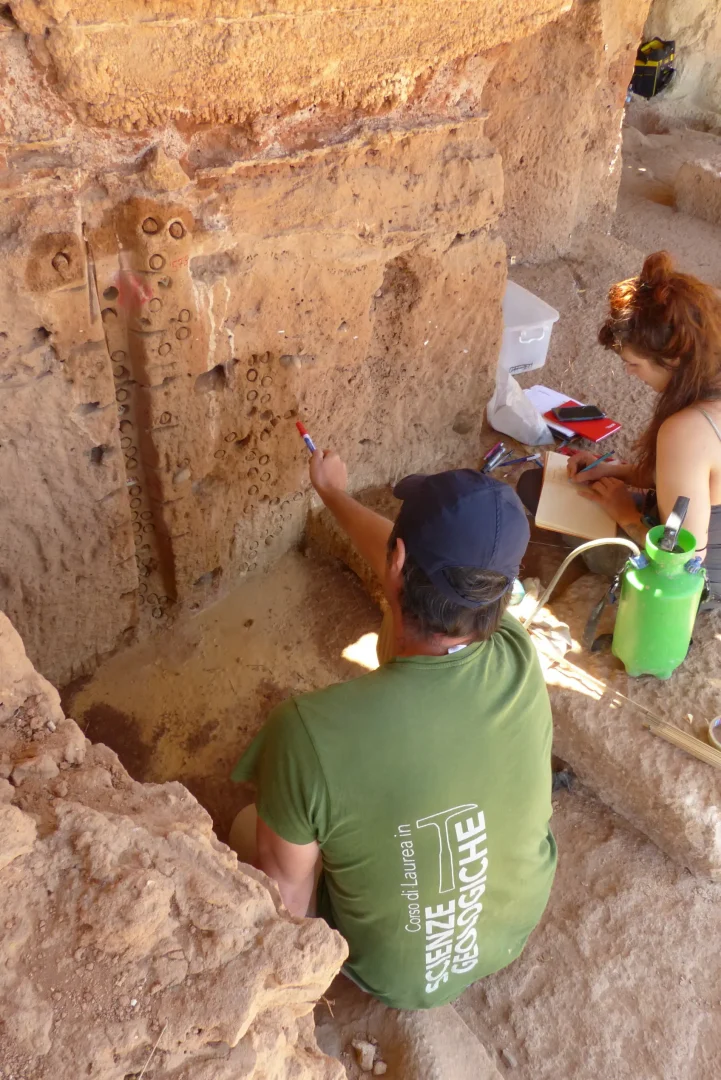
Thomas Quarry I sits in the Casablanca coastal region, an area shaped by repeated sea-level changes, dunes, and cave systems that can preserve fossils and archaeology exceptionally well. Within the quarry, the Grotte à Hominidés (Cave of Hominids) is described as a cave system later filled with sediments that kept the fossils in a secure stratigraphic context.
The wider Casablanca sequence is also known for early stone-tool traditions in northwest Africa, including Acheulean industries reported from nearby contexts in the same regional formations.
Fossil Evidence Recovered: Mandibles, Teeth, Vertebrae, and Carnivore Damage in the Assemblage
The newly analyzed hominin assemblage includes:
- At least two adult mandibles (one nearly complete, one partial)
- A child’s mandible
- Isolated teeth and several vertebrae
- A femur that shows gnawing consistent with consumption by a carnivore
Multiple reports describe the cave context as consistent with a carnivore den that hominins visited only intermittently, with predators (such as hyenas) likely responsible for at least some bone modifications.
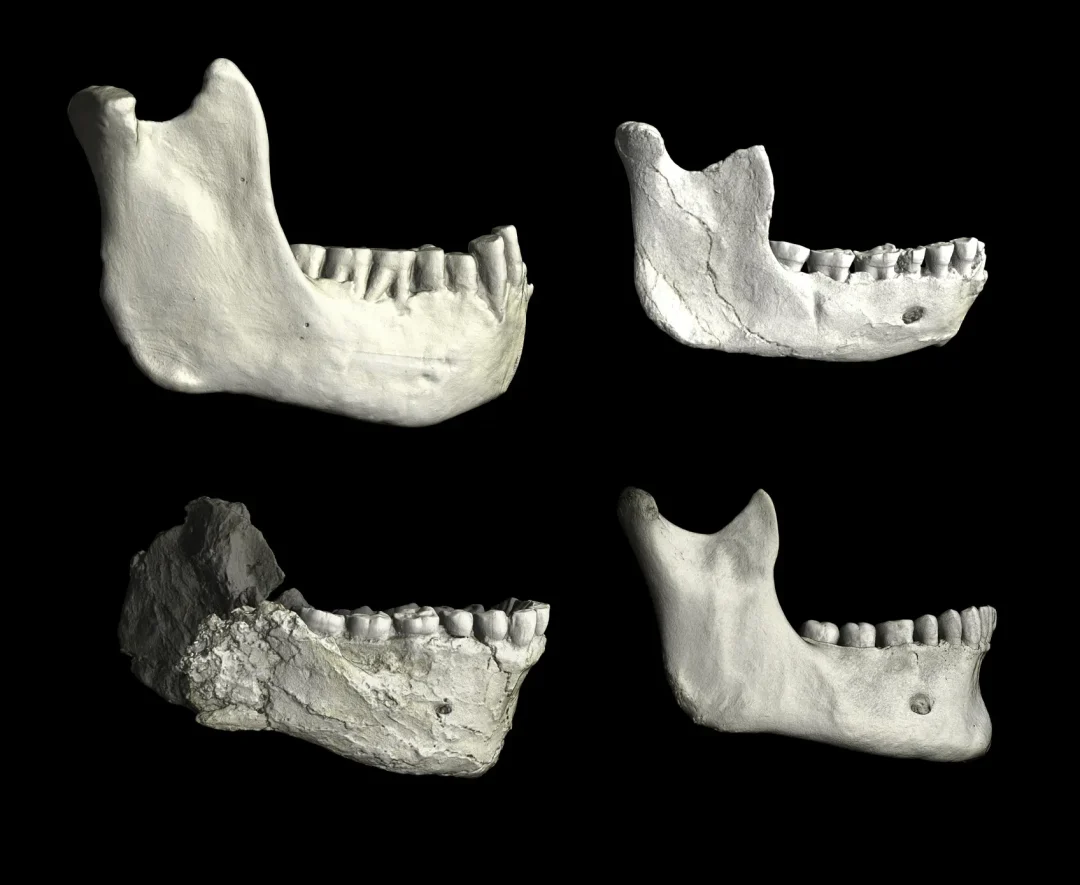
© Philipp Gunz, MPI for Evolutionary Anthropology
The dating: a rare level of precision for Early–Middle Pleistocene Africa
The headline date—~773,000 years ago (± ~4,000 years, per the press material)—comes from high-resolution magnetostratigraphy. The sediments in the cave record the Matuyama–Brunhes transition, the last major reversal of Earth’s magnetic field polarity, which occurred around 773,000 years ago.
Researchers emphasize the unusual detail of the magnetic record at the site, citing extensive sampling and the value of capturing the reversal within the same sedimentary package that contains the fossils.
The anatomy: a mosaic that doesn’t cleanly match familiar labels
Morphological analyses reported by the team used micro-CT imaging, geometric morphometrics, and comparative anatomy. A key focus was dental structure—especially the enamel–dentine junction, an internal feature that can remain informative even when outer enamel is worn.
The team reports two important (and slightly tensioned) takeaways:
- Some features resemble similarly aged fossils from Gran Dolina (Atapuerca, Spain)—often discussed under the label Homo antecessor—raising the possibility of very ancient connections between northwest Africa and southern Europe.
- At the same time, dental analyses suggest the Moroccan fossils are distinct from both Homo erectus and Homo antecessor, consistent with a population that could sit near the base of the lineages later leading to Homo sapiens in Africa and archaic Eurasian groups.
External commentary echoes the caution: the fossils are significant candidates for proximity to the shared ancestral node, but classification at this depth of time remains difficult and will likely evolve as more evidence accumulates.
Evolutionary Implications: What These Fossils Suggest About the Timing of the Last Common Ancestor
Genetic research has long implied that the last common ancestor of Homo sapiens, Neanderthals, and Denisovans lived somewhere in the broad range of roughly 765,000–550,000 years ago (as discussed in the reporting around this study). The Moroccan fossils sit close to the older end of that interval and, in the authors’ view, align well with what we would expect for an African population near that divergence.
The bigger narrative impact is geographical: these finds strengthen the case that key evolutionary steps toward the Homo sapiens lineage were unfolding within Africa, including in northwest Africa, rather than requiring a primarily Eurasian “origin point” for the traits that later define our species.
Why Northwest Africa keeps showing up in the story
North Africa is already central to modern-human origins because Morocco also hosts Jebel Irhoud, where widely discussed early Homo sapiens fossils date to around 315,000 years ago (noted in mainstream reporting and background discussion). The Thomas Quarry I fossils push the regional record far deeper—into a period when the human family tree was likely branching into the lineages that later become more visible in Eurasia and Africa.
Researchers also highlight that Pleistocene climate swings could periodically create ecological corridors across areas that are harsh barriers today, complicating any simple “sealed-off” picture of regions like the Sahara through time.
Next Research Steps: Expanding the Sample, Testing Hypotheses, and Refining Evolutionary Placement
Even with precise dating, the evolutionary placement of fragmentary fossils is rarely “final.” The next steps are typically:
- expanding the fossil sample from securely dated contexts,
- integrating more comparative datasets (including dental and mandibular shape variation),
- and applying additional laboratory analyses where preservation allows.
The study’s authors and external commentators alike frame this as an important new anchor point—one that sharpens the timeline and improves the geographic balance of evidence—rather than a single discovery that “solves” the entire middle-Pleistocene puzzle.
Sources:
- Max Planck Society (mpg.de). “Early hominins from Thomas Quarry I (Morocco).” Press release, January 7, 2026.
- Hublin, J.-J., et al. “Early hominins from Morocco basal to the Homo sapiens lineage.” Nature, January 7, 2026.
- Reuters. Coverage on the Thomas Quarry I Morocco fossils and dating context, January 7, 2026.
- National Geographic. Reporting and explanatory context on the discovery and its implications, January 7, 2026.
