
Mohenjo-Daro in present-day Pakistan was occupied and developing urban features far earlier than previously believed. In a landmark announcement that has sent ripples through the world of archaeology. New excavations and radiocarbon dating conducted in 2025–2026 by Pakistan’s Sindh Directorate General of Antiquities & Archaeology (DGAA) have pushed the city’s origins deep into the Early Harappan (Kot Diji) Phase. With evidence of substantial settlement dating back to around 3300 BCE. And the first phases of a massive mudbrick city wall constructed by 2700–2600 BCE. This discovery reframes the story of how complex cities emerged in South Asia. It shows a gradual evolution rather than a sudden “urban explosion” around 2600 BCE. Once thought to represent the peak of the mature Indus Valley Civilization, Mohenjo-Daro now stands revealed as a place with deeper roots. Rivaling the earliest cities of Egypt and Mesopotamia in antiquity
The Lost City of the Indus: What We Thought We Knew
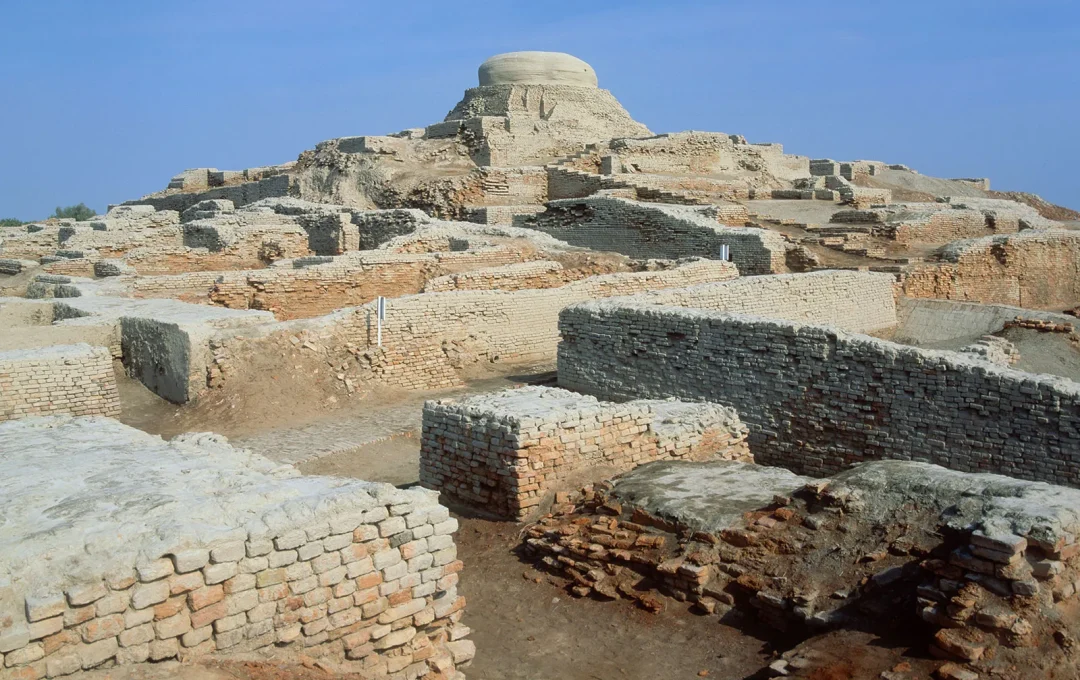
Mohenjo-Daro, meaning “Mound of the Dead” in Sindhi, was one of the two largest settlements of the Indus Valley Civilization, alongside Harappa. Rediscovered in the 1920s by British and Indian archaeologists, the site sprawls across more than 590 acres. Laying on the banks of the Indus River in Sindh province. It features meticulously planned grids of streets, standardized baked-brick buildings & sophisticated drainage systems. Along with public baths (most famously the Great Bath), and advanced water infrastructure. That has long fascinated scholars. At its height, the city is estimated to have housed up to 40,000 people. Making it one of the world’s earliest major urban centers.
For decades, the conventional timeline placed Mohenjo-Daro’s founding firmly in the Mature Harappan Phase. Beginning around 2600 BCE and flourishing until roughly 1900 BCE. Then the civilization entered a period of decline. Earlier phases of the Indus Valley Civilization were known from smaller sites. But Mohenjo-Daro itself was seen as a product of that mature urban flowering. Sir Mortimer Wheeler’s influential 1950 excavations identified a large mudbrick structure around the western Stupa Mound. But interpreted it primarily as a flood-protection embankment rather than a deliberate city wall. This view shaped interpretations for generations. Mohenjo-Daro was portrayed as a planned metropolis that appeared almost fully formed in the mid-third millennium BCE.
The absence of palaces, temples, or clear evidence of kings and priests only deepened the enigma. The civilization left behind an undeciphered script on thousands of seals, traded widely with Mesopotamia. Which maintained remarkable uniformity across hundreds of settlements. Yet its political and religious structures remained elusive. Until now, the story of its origins seemed relatively straightforward. The new findings upend that narrative, demonstrating that urban life at Mohenjo-Daro had far older foundations.
Excavating the Past: The 2025–2026 Joint Mission
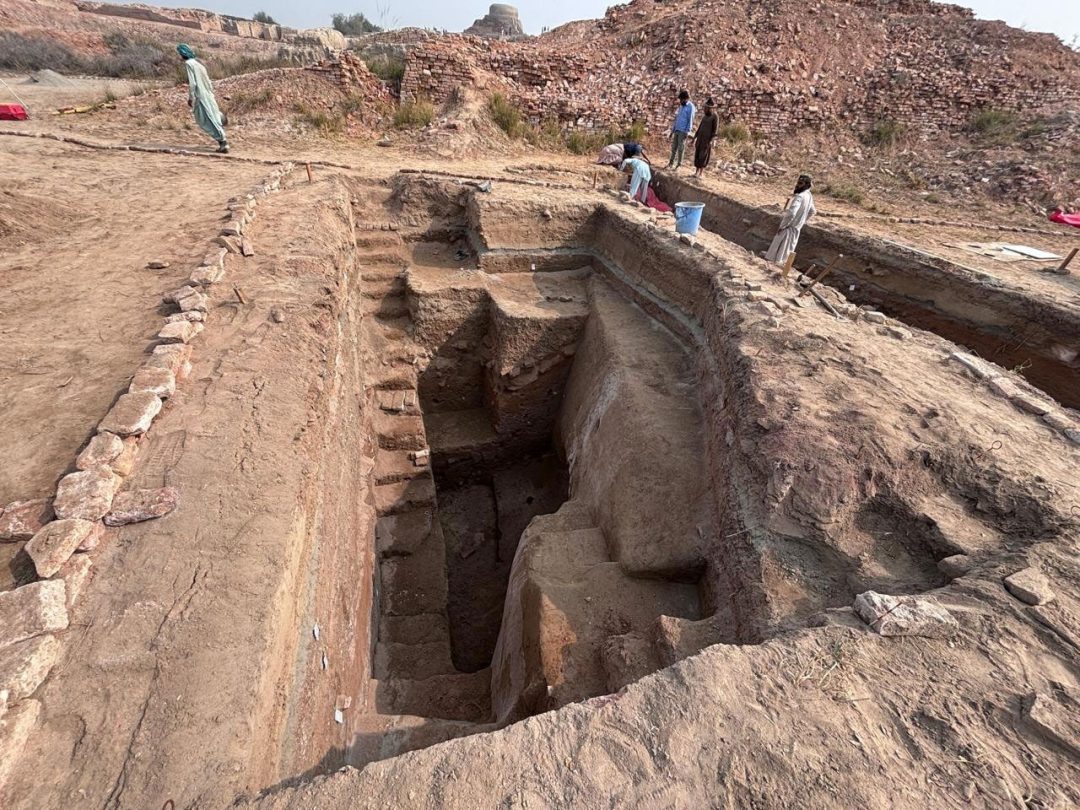
The breakthrough came from a collaborative effort between the Sindh Directorate General of Antiquities & Archaeology. Assisted by the Sindh Exploration and Adventure Society (SEAS), and international partners. Led by Pakistani archaeologists Dr. Asma Ibrahim and Ali Lashari, alongside American archaeologist Dr. Jonathan Mark Kenoyer of the University of Wisconsin-Madison, the team conducted excavations west of the famous Stupa Mound during the summer of 2025 and winter of 2025–26. Their focus was the very same mudbrick structure Wheeler had examined decades earlier.
What Wheeler had called a revetment or bund turned out, upon re-examination with modern stratigraphic methods, to be a multi-phase city wall built and expanded over centuries. The team reopened trenches, performed deep coring, and collected samples from the lowest occupation layers. Some of which are now perilously close to the water table. Because Pakistan lacks domestic radiocarbon dating facilities, the five key samples were analyzed in the United States. The results were striking. Pottery and carbon from the lowest levels, of the first wall, dated its initial construction to the end of the Early Harappan (Kot Diji) Phase. Around 2700–2600 BCE, approximately a century before the traditional start of the Mature Harappan Period. Even deeper coring revealed Kot Diji-style pottery, confirming a substantial pre-wall settlement.
Upper layers of the wall showed continued construction and maintenance well into the Mature Harappan Phase. With expansions lasting until at least 2200 BCE and possibly longer. The wall was not a hasty defensive measure but a carefully engineered urban boundary that grew alongside the city itself. Future work will trace the wall’s full circuit around the Stupa Mound in search of gateways, helping archaeologists understand traffic flow, defense, and how the city managed its expanding population.
Radiocarbon Revelations: From Kot Diji to a Mature Metropolis
The Kot Diji Phase (roughly 3300–2600 BCE) represents the Early Harappan period. A time of emerging villages, craft specialization, and early fortifications across the Indus region. Sites like Kot Diji itself, Rehman Dheri, and now Mohenjo-Daro show that the cultural and technological foundations of the later civilization were already in place centuries earlier. The new dates place Mohenjo-Daro’s urban roots squarely within this formative era. With evidence of organized settlement, pottery production, and monumental construction predating the classic grid layout and baked-brick boom.
This is not an isolated revision. Similar early fortifications have been documented at Harappa, and other Indus sites continue to yield older dates. The implications are profound: urbanism in the Indus Valley was not a sudden event triggered by a single innovation or external influence. Instead, it was the result of a slow, organic process spanning hundreds of years. Mohenjo-Daro evolved from an Early Harappan community into a mature megacity, refining its famous planning, sanitation, and standardization over generations. The discovery also underscores the challenges of excavating the site. Because much of the deepest, earliest layers remain submerged or unexamined due to rising groundwater. This leaves open the tantalizing possibility that even older evidence awaits future technological advances.
What It Means for the Indus Valley Civilization and Global Urban History
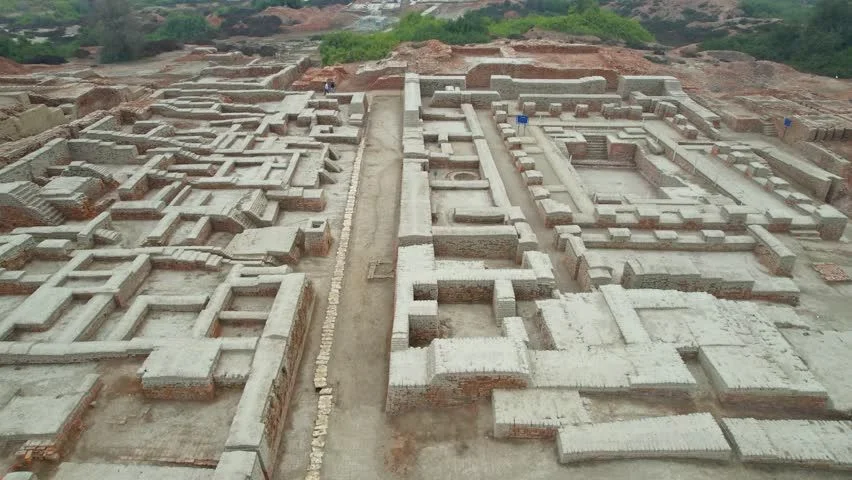
By confirming occupation as early as 3300 BCE, Mohenjo-Daro now stands alongside the earliest urban experiments in Egypt and Mesopotamia. It challenges older textbook models that portrayed the Indus Civilization as a somewhat later, derivative development. Instead, it highlights parallel but independent trajectories of urban growth across the ancient world during the fourth and third millennia BCE.
The findings also illuminate broader questions about how early cities formed without the clear hierarchies seen elsewhere. Mohenjo-Daro’s lack of obvious royal or priestly monuments, combined with its emphasis on public infrastructure and uniformity, suggests a more collective or distributed form of social organization. One that may have prioritized practical governance, trade, and ritual bathing over monumental displays of power. The discovery reinforces the Indus Valley’s status as one of the three “pristine” urban civilizations of the Old World. Alongside Mesopotamia and Egypt, each developing city life on its own terms.
For Pakistan and global heritage, the news arrives at a critical moment. Mohenjo-Daro faces ongoing threats from erosion, salinity, and climate change. Renewed international interest and scientific investment could help preserve the site while unlocking more of its secrets. The 2023 discovery of fused Kushan-era coins near the Stupa (dating to the 2nd–5th centuries CE) already showed the mound’s long life as a place of continued significance long after the Indus decline. Now, the city’s story stretches even further into the past.
Conclusion
The latest chapter in Mohenjo-Daro’s long excavation history reminds us that even iconic sites can still surprise us. What was once viewed as a mature Harappan masterpiece is now understood as the culmination of a much longer urban journey. One that began in the Early Harappan world around 3300 BCE and continued to evolve for nearly a millennium. As archaeologists prepare to map the full extent of the ancient city wall and probe deeper layers, Mohenjo-Daro promises to reveal even more about the birth of South Asian civilization and the universal human drive to build cities.
In the end, the “Mound of the Dead” is very much alive with possibility. Its newly extended timeline deepens its wonder. Proving that the roots of one of humanity’s earliest experiments in urban living run much older and richer than we dared imagine. Future digs, improved dating techniques, and perhaps even the day the Indus script finally speaks will continue to rewrite the story. For now, this discovery stands as a powerful testament to the enduring power of archaeology to illuminate our shared past.
