
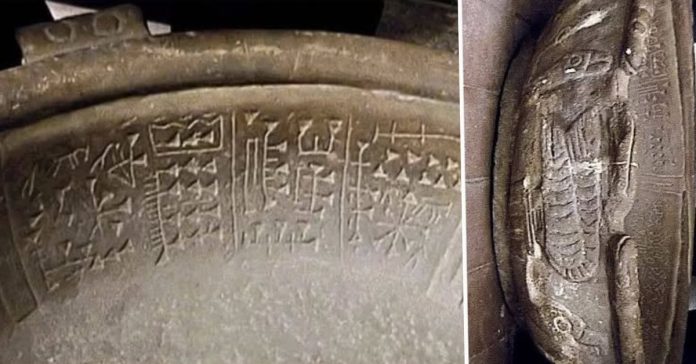
In 1950, a farmer near Lake Titicaca, Bolivia, unearthed a stone vessel while tilling his land. Dubbed Fuente Magna, this artifact has since become a focal point of debate among archaeologists, epigraphers, and alternative history enthusiasts. Its alleged inscriptions—resembling proto-Sumerian script—have sparked claims that it could “rewrite history” by challenging conventional narratives about pre-Columbian transoceanic contact. This article examines the evidence, critiques the claims, and explores the broader implications of such controversies for archaeological scholarship.
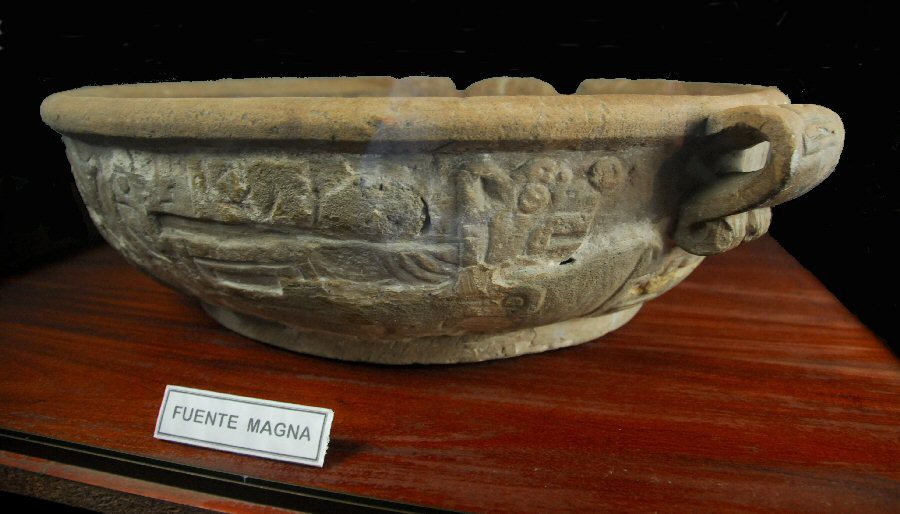
Background: Discovery and Initial Claims
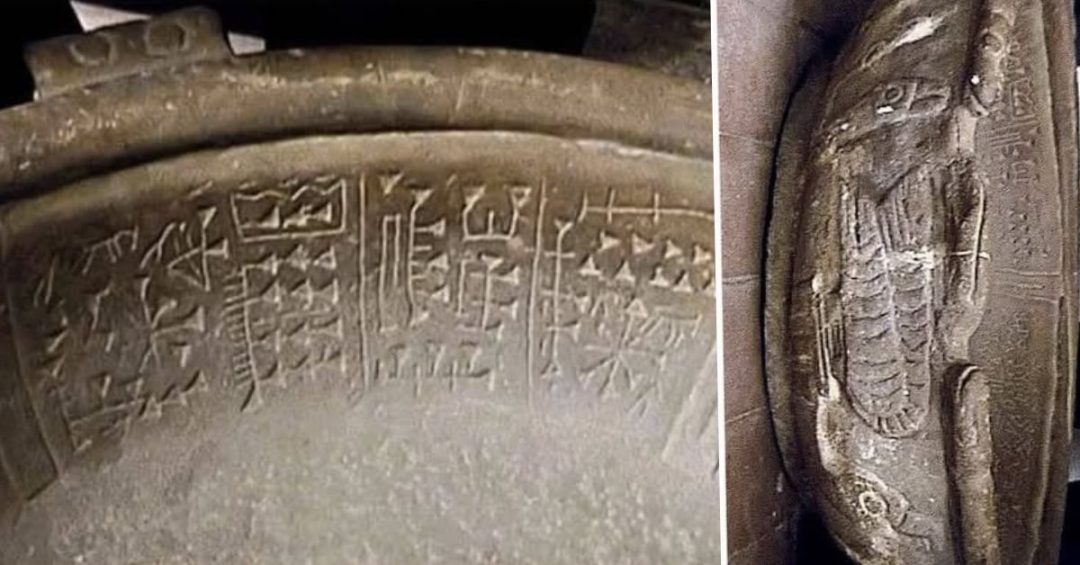
The bowl’s discovery in the Chua region of Bolivia was serendipitous. Initially repurposed as a pig trough, it languished in obscurity for decades until researchers identified markings on its interior. These symbols, resembling cuneiform and proto-Sumerian glyphs, led to bold assertions: Could this artifact link ancient Mesopotamia to the Andes, separated by oceans and millennia?
Proponents like epigrapher Clyde Ahmed Winters argue that the inscriptions share similarities with Sumerian, Dravidian, Elamite, and Berber scripts. Bolivian archaeologist Max Portugal Zamora further speculated the bowl’s age at 5,000 years, aligning it with Mesopotamia’s early dynastic period. Such claims, if validated, would imply unprecedented cultural exchange or maritime capabilities among ancient civilizations.
Critical Analysis: Evidence and Skepticism
- The Inscriptions:
The core controversy lies in the interpretation of Fuente Magna’s symbols. While Winters’ comparisons to Sumerian script are provocative, mainstream scholars note critical flaws:- Lack of Context: No other artifacts with Sumerian-like writing have been found in South America. The Tiwanaku and Inca civilizations, dominant in the region, left distinct iconographic records unrelated to Mesopotamian systems.
- Methodological Issues: Winters’ analyses often bypass peer review, and his cross-script comparisons rely on superficial visual parallels rather than linguistic or contextual rigor. Similar critiques apply to claims linking the bowl to Dravidian or Berber scripts.
- Dating and Provenance:
Zamora’s age estimate lacks scientific validation. Radiocarbon dating or thermoluminescence testing—standard for ceramic or stone artifacts—has not been publicly conducted. Without secure stratigraphic context (the bowl was surface-found), its provenance remains speculative. - Transoceanic Contact Theories:
Hypotheses about Sumerian sailors or Sundaland migrants traversing the Pacific hinge on circumstantial evidence:- Maritime Feasibility: While ancient Polynesians reached South America (as evidenced by chicken DNA and sweet potato diffusion), no evidence ties these voyages to Mesopotamia.
- Cultural Diffusion vs. Independent Innovation: Similar symbols (e.g., zigzag patterns, circles) may arise independently. The “coconut palm” argument cited by proponents lacks archaeological or genetic corroboration.
Broader Implications for Archaeology
The Fuente Magna debate underscores tensions between academic caution and public fascination with “history rewritten.” Key takeaways include:
- The Role of Pseudoarchaeology: Claims of lost civilizations or advanced ancient technologies often thrive in media but falter under scholarly scrutiny. Fuente Magna’s popularity in alternative circles highlights the allure of narratives that challenge “established” history.
- Ethics of Interpretation: Researchers must balance open-minded inquiry with methodological rigor. Extraordinary claims, per Carl Sagan’s axiom, require extraordinary evidence—a bar Fuente Magna has yet to meet.
- Indigenous Context: Overemphasis on transoceanic theories risks overshadowing Bolivia’s rich indigenous heritage. The Tiwanaku, for instance, developed sophisticated cosmology and engineering without external influence.
Conclusion: A Cautionary Tale
Fuente Magna remains an enigma. While its inscriptions are tantalizing, the absence of corroborating evidence—stratigraphic, linguistic, or genetic—renders its purported Sumerian links untenable. Mainstream archaeology rightly demands more than symbolic resemblances to upend historical paradigms.
Yet, the artifact’s legacy is instructive. It reminds us that archaeology thrives not on sensationalism but on painstaking collaboration across disciplines—from epigraphy to archaeometry. Until Fuente Magna undergoes rigorous, peer-reviewed analysis, it will remain a footnote in the annals of fringe theories, a testament to the complexities of interpreting humanity’s fragmented past.
Further Reading
- Frauds, Myths, and Mysteries: Science and Pseudoscience in Archaeology (Kenneth L. Feder, 2018)
- National Geographic’s stance on transoceanic contact theories.
- Peer-reviewed journals: Antiquity, Latin American Antiquity.
