
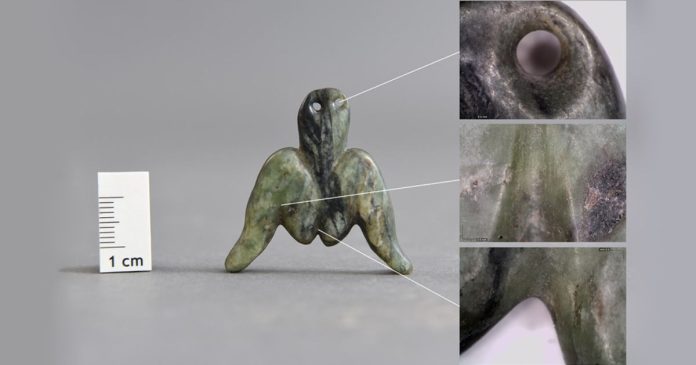
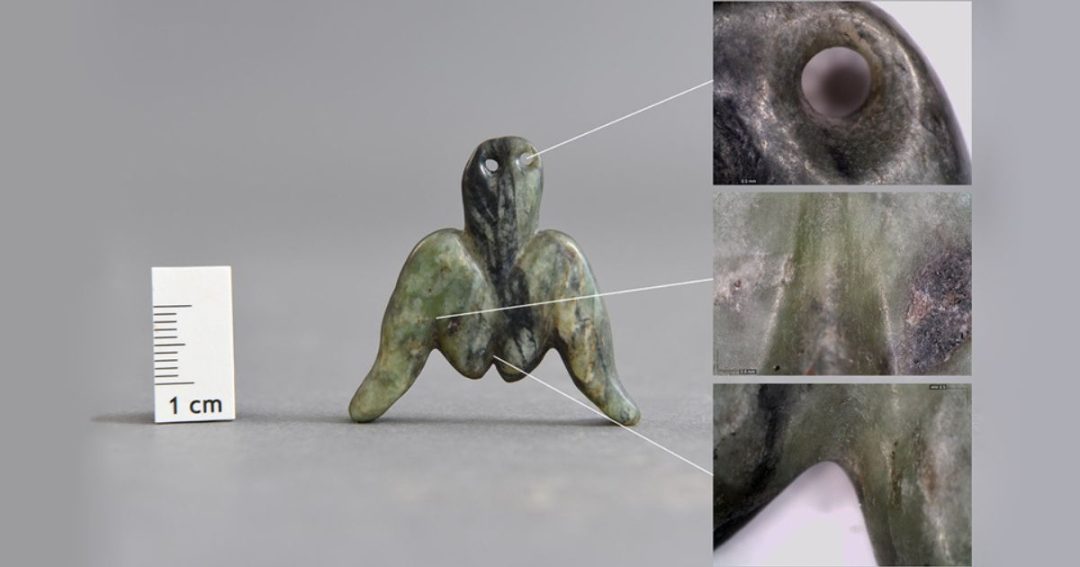
Recent archaeological excavations at the Svinjarička Čuka site in Serbia have uncovered a rare Neolithic artifact—a jade pendant estimated to be around 7,600 years old. Researchers suggest that the pendant, which features a distinctive shape resembling either a frog or a birthing woman, may hold symbolic significance (Horejs et al., 2025). The journal Antiquity recently published the findings.
Cultural Context
The Balkan Peninsula has historically played a crucial role as a conduit between Asia and Europe due to its geographical location. During the 7th millennium BCE, early agricultural practices spread from Anatolia into Europe, marking the transition from hunter-gatherer societies to settled farming communities (Horejs, 2019). This process, known as Neolithization, followed two main migration routes: one through the Danube Corridor into Central Europe and another along the Mediterranean coast. However, many details regarding these early migrations remain unclear (Krauß & Bánffy, 2020).
Barbara Horejs et al. / Antiquity, 2025
Analysis
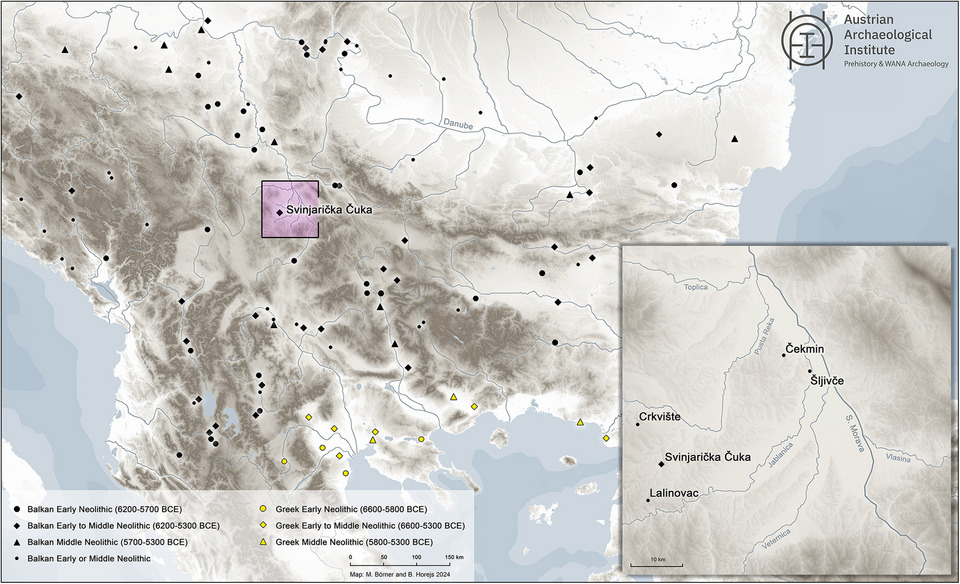
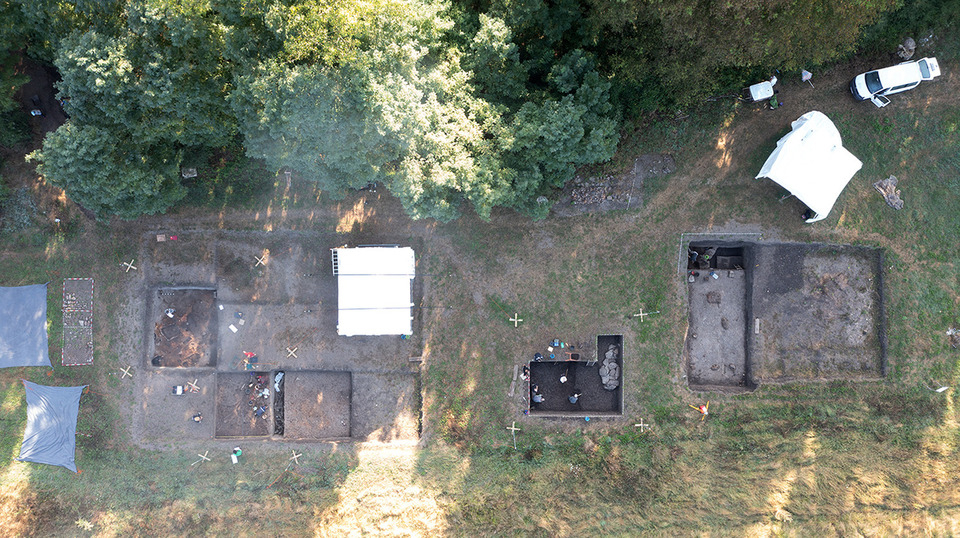
In an effort to better understand these movements, the NEOTECH research project was launched in 2017 by archaeologists from Austria and Serbia. Led by Barbara Horejs of the Austrian Archaeological Institute, the project has identified several previously unknown prehistoric sites in southern Serbia, including Svinjarička Čuka, located in the South Morava River basin (Horejs et al., 2025). Excavations at this site suggest it was inhabited during multiple periods. The earliest settlements being dating between 6100 and 5500 BCE. Unlike temporary campsites, settlers built permanent structures in these villages, showing long-term occupation (Bánffy & Oross, 2021). Communities returned during the Bronze and Iron Ages and again in the 3rd millennium BCE.
Barbara Horejs et al. / Antiquity, 2025
Discoveries
Among the discoveries at Svinjarička Čuka, archaeologists uncovered 115 clay figurines dating to the Neolithic period. However, the most extraordinary find was a jade pendant. The pendant measured approximately 37 millimeters in height and width, with a thickness of 5 millimeters. It was found near a house built around 5600 BCE, is notable not only for its unusual design but also for its material. The only known source of jade in the Balkans is in present-day southern Bulgaria. This suggests that the artifact may have been imported or part of a long-distance trade network (Horejs et al., 2025).
Barbara Horejs et al. / Antiquity, 2025
The pendant’s design has sparked debate among researchers. While some believe it represents a frog, others suggest it could depict a woman or a symbolic figure in a birthing position. Similar figurines have been found at Neolithic sites in Greece, Turkey, North Macedonia, and Bulgaria, though they were typically made from materials such as marble, black stone, or clay (Bánffy, 2018).
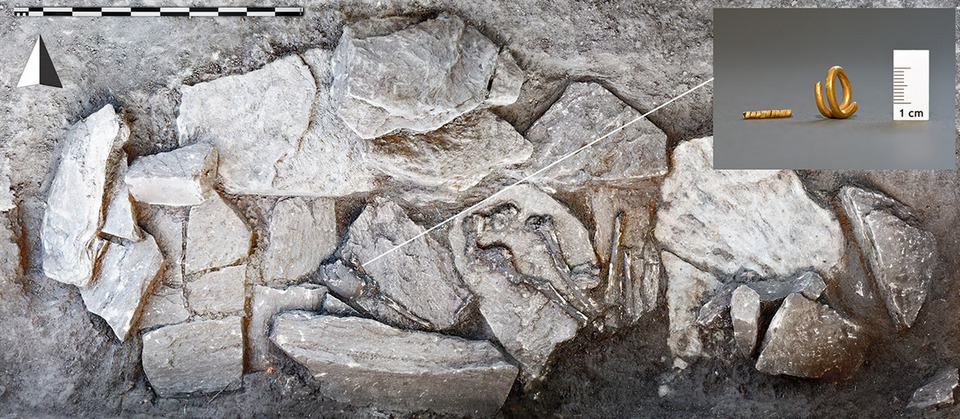
In addition to the pendant, another significant discovery at the site dates to the Early Bronze Age. A burial of an adult individual in a rectangular stone-lined grave. The individual, who lived between 2470 and 2290 BCE, was buried with a pair of gold ornaments near the skull. Along with more than 30 gold beads placed near the chest. This type of burial is considered unusual for the region. The burial may be linked to a cultural tradition from the Lower Danube area during the early 3rd millennium BCE (Krauß, 2023).
These findings contribute to a broader understanding of Neolithic and Bronze Age societies in the Balkans. Providing insights on settlement patterns, long-distance trade, and symbolic practices in prehistoric Europe.
References:
- Bánffy, E. (2018). Neolithic Cultures of Southeastern Europe: Symbols and Material Culture. Cambridge University Press.
- Bánffy, E., & Oross, K. (2021). The Spread of Early Farming Communities in the Balkans: A New Perspective. Journal of European Archaeology, 28(2), 112–135.
- Horejs, B. (2019). Anatolian Migrations and the Neolithization of Europe. Vienna Institute of Archaeology.
- Horejs, B., et al. (2025). Prehistoric Settlements in Serbia: Findings from the NEOTECH Project. Antiquity, 99(1), 45–67.
- Krauß, R. (2023). Burial Practices of the Early Bronze Age in the Lower Danube Region. Oxford University Press.
- Krauß, R., & Bánffy, E. (2020). Pathways of the First European Farmers: Danube and Mediterranean Routes Revisited. Archaeological Studies of Europe, 15(3), 78–102.
