
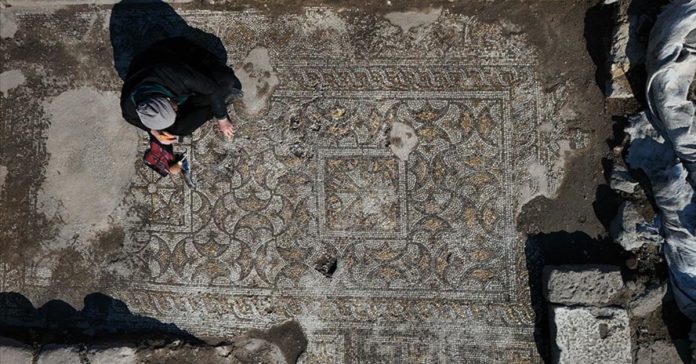
The ancient city of Pergamon, a UNESCO World Heritage Site in Türkiye’s İzmir, continues to reveal its layered history through ongoing excavations. A Roman-era residential complex called the “Mosaic House” was recently discovered in the Bergama Multi-Layered Cultural Landscape Area. The site contains traces of prehistoric, Hellenistic, Roman, Byzantine, Beylik, and Ottoman civilizations. Turkey’s Ministry of Culture and Tourism now leads year-round excavation and restoration under the Heritage for the Future Project.
Uncovering a Grand Roman Residence
Professor Yusuf Sezgin, who leads the excavation team and chairs the Archaeology Department at Manisa Celal Bayar University, described the Mosaic House as a peristyle dwelling with a central stone courtyard and pool. He believes builders constructed it in the 2nd or 3rd century AD. He emphasized that elite members of society typically occupied such structures. The house’s intricate mosaic floors, adorned with geometric and floral patterns in vibrant colors, highlight its significance.
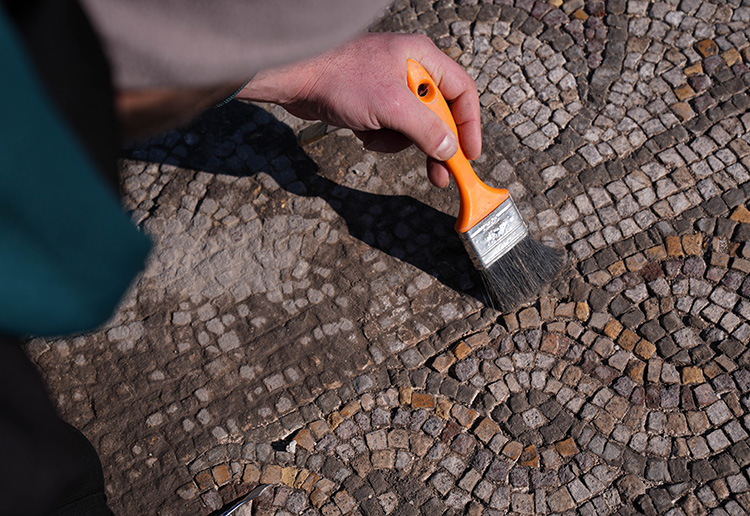
Evidence suggests the building remained in use during the early Christian era, coinciding with the conversion of the nearby Red Basilica (originally a Temple to Egyptian Gods) into a church. However, the complex was abandoned after a devastating fire during 7th-century Arab raids, as indicated by charred roof tiles and pottery.
Royal Seals and Heartbreaking Relics
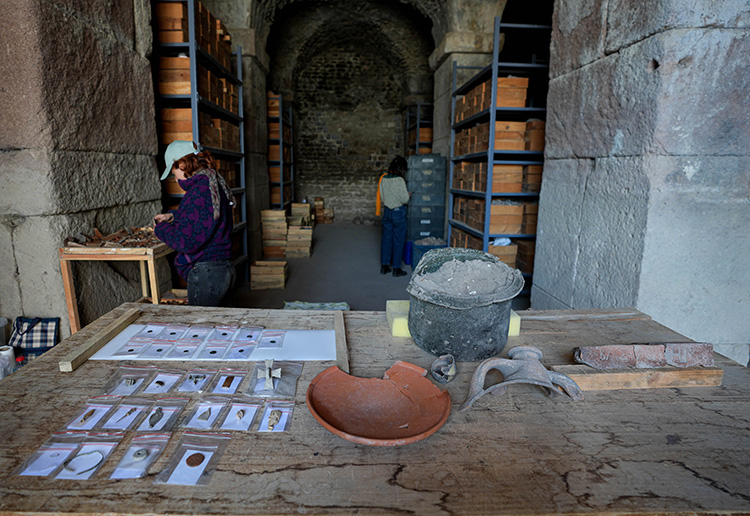
A remarkable find was a Hellenistic-era roof tile fragment stamped with the Greek word Basilike (“royal”). “This seal confirms ties to Pergamon’s royal structures,” Sezgin said, noting it’s the first intact example of its kind. The tile’s reuse in the Roman-era house hints at recycling practices across eras.
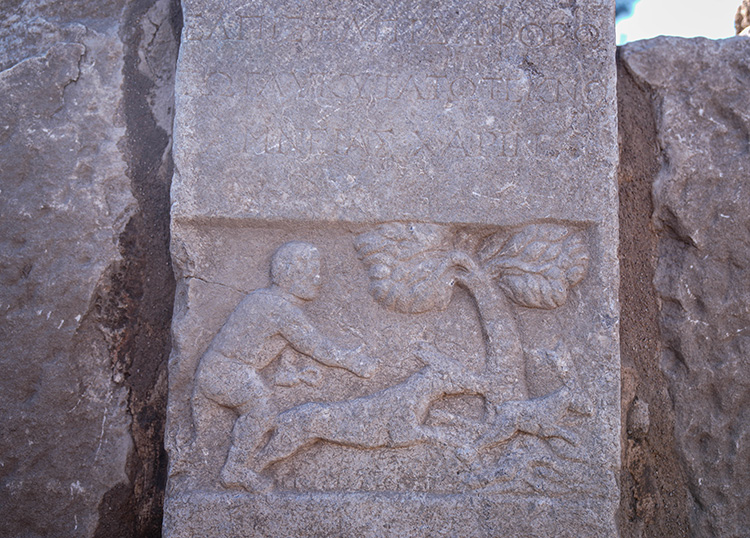
Equally poignant was the discovery of a repurposed gravestone in the courtyard pool. Carved with a grieving mother’s tribute to “the sweetest child in the world,” it depicts a boy with his dog on a rabbit hunt. “This artifact offers a touching glimpse into personal loss and social life,” Sezgin remarked.
Byzantine Burials and Artifacts
Post-abandonment, the site became a Byzantine cemetery. Multiple burials in single graves suggest strained living conditions before Turkish settlement. Excavations also uncovered Roman and Byzantine-era kitchenware, weapons, jewelry, and coins, many slated for display at the Bergama Museum.
Broader Restoration Efforts
Beyond the Mosaic House, the project includes restoring the Dionysus Temple and installing night lighting at the Asklepion and Acropolis to enhance visitor experiences. As work continues—with only 20% of the complex unearthed so far—Pergamon’s layers of history promise further insights into Anatolia’s rich past.
Source: AA
