
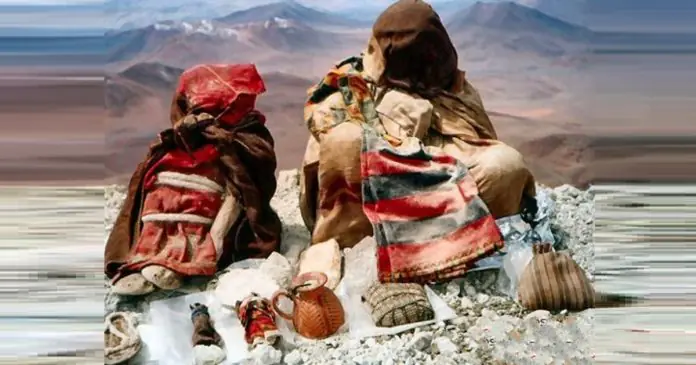
The discovery of frozen Inca sacrificial victims atop some of the highest volcanoes in the Andes has quietly been public for decades. Some accounts often frame these children as honored participants in a sacred religious tradition, emphasizing the ceremonial aspects of the capacocha ritual while downplaying the reality that these individuals were selected, transported across vast distances, subjected to extensive ritual preparation, and ultimately killed in service to state religion.
A recent study by Dagmara Socha and colleagues revisits eight infamous Inca sacrificial victims from Peru and Argentina using modern toxicological methods. The results reveal consistent evidence for the administration of psychoactive substances before death. While the authors interpret some of these substances as potentially improving comfort and mood, the findings also raise difficult questions about coercion, ritual control, and the human cost of one of the Inca Empire’s most celebrated religious practices.
The Capacocha Ritual: Human Sacrifice on an Imperial Scale
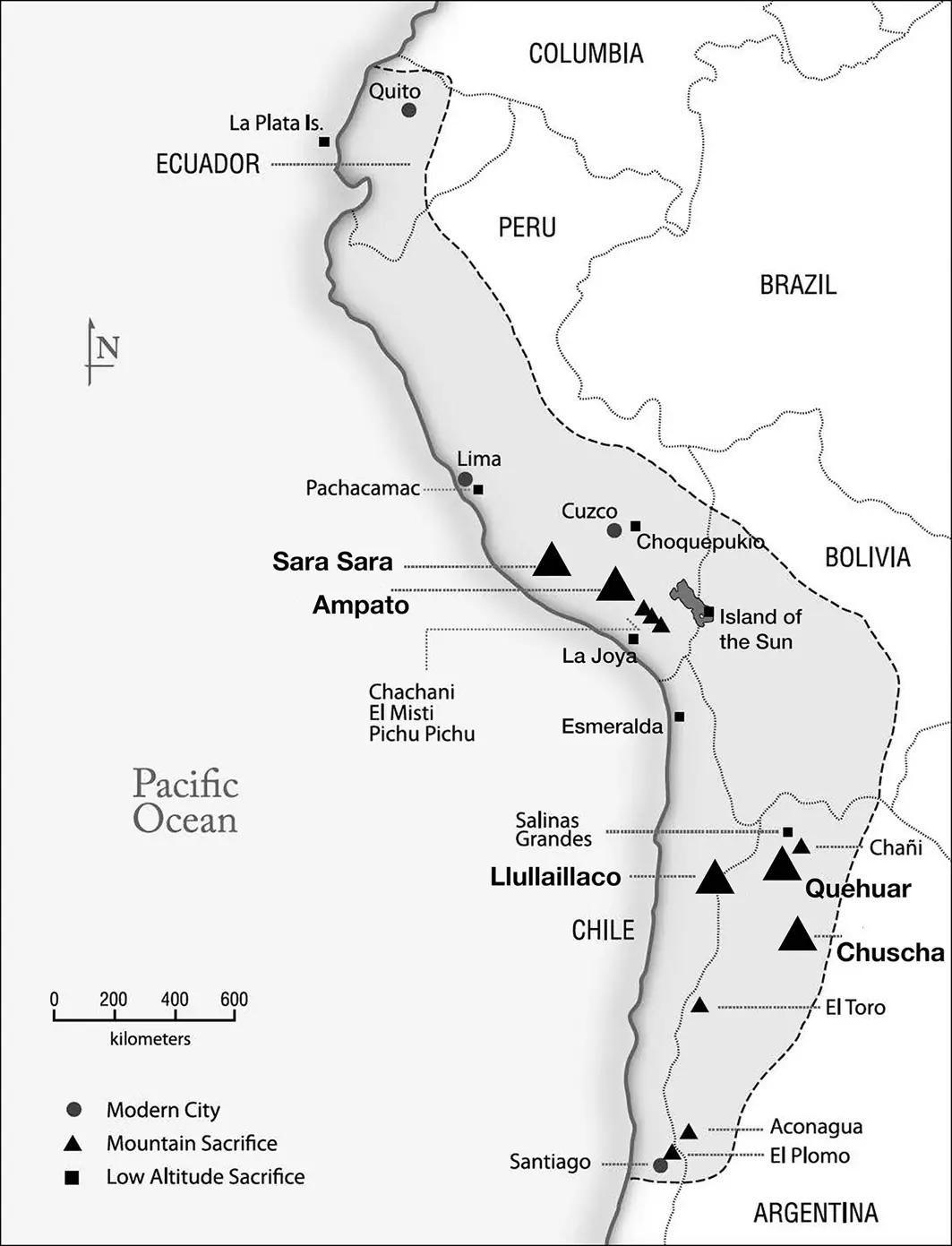
The capacocha ritual occupied a central place in Inca state religion. Children and young women were selected from across the empire and offered to important deities, particularly mountain gods known as Apus. Historical accounts indicate that sacrifices occurred during periods of political instability, drought, famine, or other events believed to threaten cosmic order
The religious purpose of the ceremony often receives the greatest attention. The children were presented as messengers between the living and the divine world. Yet the ritual also served political objectives. By controlling major religious ceremonies, regulating sacred sites, and directing offerings to local deities, the Inca state reinforced its authority across a vast and diverse empire. The sacrifice of children functioned as both a theological act and a demonstration of imperial power
This dual role deserves emphasis. Human sacrifice was not an isolated spiritual event. It operated within a system that linked government, religion, and social control. Children were transformed into instruments of state ideology long before they reached the mountain summits where they died.
The Frozen Victims Examined in the Study
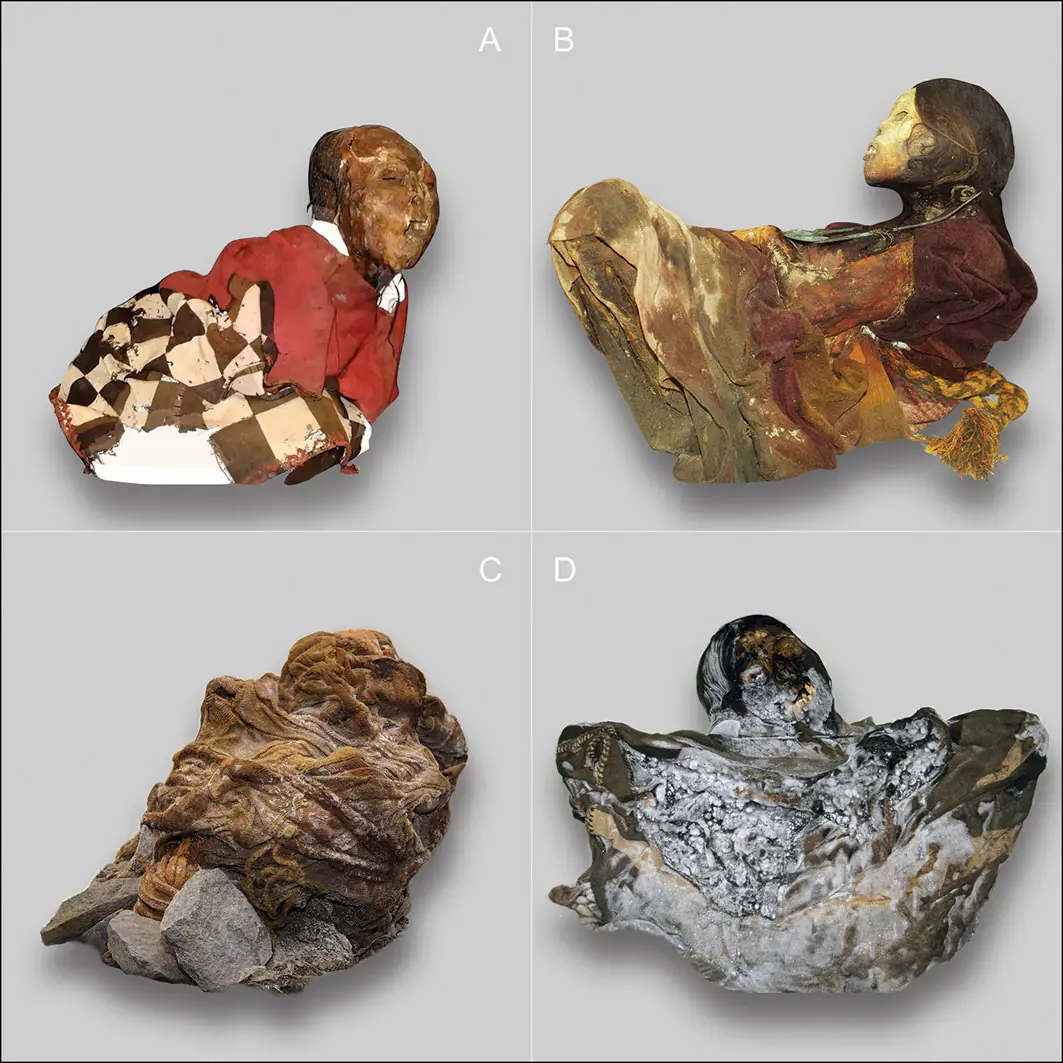
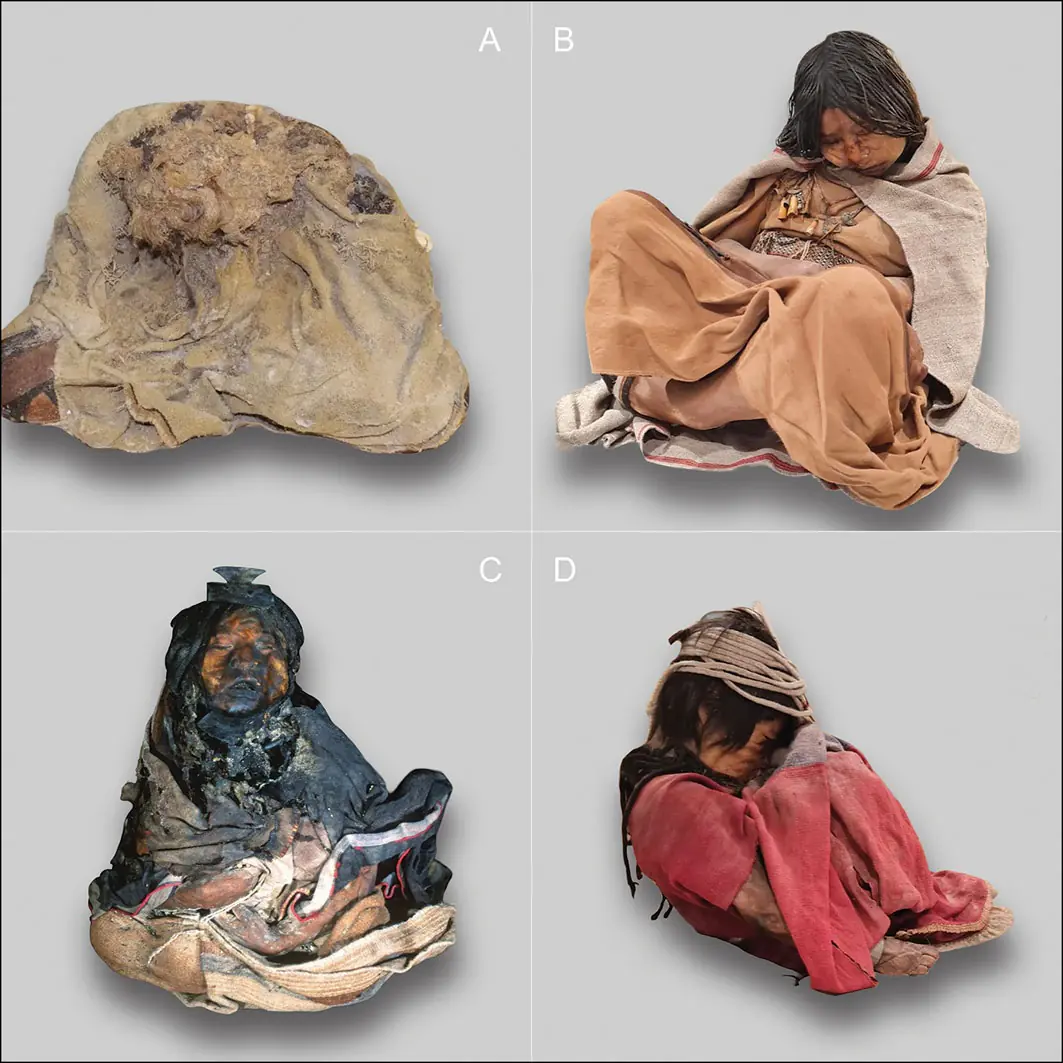
The research focused on eight individuals recovered from several famous archaeological sites, including Ampato, Sara Sara, Llullaillaco, Quehuar, and Chuscha. These sacrifices ranged from approximately six to fourteen years of age. Most were girls, although boys were also represented.
Many of these individuals are among the best-preserved human remains ever discovered. The freezing conditions at elevations exceeding 6,000 meters protected hair, nails, clothing, and internal tissues with remarkable effectiveness. These preserved tissues allow researchers to investigate what the children consumed during their final weeks and months of life.
The Llullaillaco site remains especially significant. Located at 6,715 meters above sea level, it is currently considered the highest archaeological site in the world. Three remarkably preserved children recovered there have become morbid examples of Inca child sacrifice
Using Modern Toxicology to Investigate Ancient Rituals
The authors analyzed hair and nail samples using liquid chromatography-tandem mass spectrometry, a highly sensitive technique capable of detecting trace amounts of drugs and their metabolites. The approach allows scientists to identify substances that entered the body before death and became incorporated into growing hair and nails.
Unlike earlier generations of testing, modern equipment can detect extremely small concentrations of compounds. This advancement proved important because several individuals who had previously produced negative results now tested positive for psychoactive substances. The findings highlight how scientific conclusions can change as analytical tools improve.
One particularly valuable case involved the Chuscha mummy. Researchers divided the hair into segments representing different months of life before death. That process created a rough timeline of substance consumption leading up to the sacrifice.
Coca Use Was Widespread Among the Sacrificial Victims
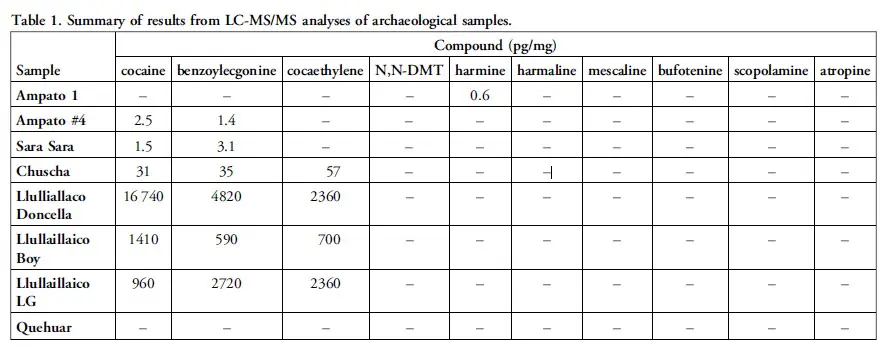
The toxicological evidence indicates that coca consumption was widespread among the sacrificial victims. Cocaine and its metabolite benzoylecgonine appeared in every hair sample analyzed. That pattern suggests the use of coca was not an isolated custom restricted to a single mountain or a single ceremony. It was a recurring element of the capacocha process.
The conventional description of coca often focuses on its practical benefits. It can reduce hunger, increase endurance, and help people function at high altitude. Those effects were real. Yet focusing exclusively on physiology risks missing the human experience behind the data. These were not adult pilgrims undertaking a chosen religious journey. They were children who had been removed from ordinary life and sent on a one-way procession across hundreds of miles toward an unknown fate.
By the final stages of that journey, many of these children must have understood that something extraordinary was happening around them. The ceremonies grew larger. The attention directed toward them increased. The isolation from normal family life became more pronounced. The evidence suggests coca accompanied this transition. Whether administered gradually or frequently, the result was likely a child experiencing the world through an altered mental state while moving deeper into a ritual from which there would be no return.
The local narrative often portrays these victims as serene participants in a sacred honor. The toxicological evidence supports a more troubling interpretation. An empire selected children, separated them from their communities, elevated them as ritual offerings, and supplied psychoactive substances throughout the process. Regardless of the religious justification, the system depended upon coercing the minds and bodies of minors before killing them.
Alcohol Appears During the Final Stages of Some Rituals
The discovery of cocaethylene may be one of the most significant findings in the study. This compound forms only when alcohol and cocaine are present in the body at the same time. Researchers detected it in several individuals, demonstrating that some children consumed alcohol in addition to coca before death.
The Chuscha mummy offers the clearest example. Hair segment analysis revealed cocaethylene only in the final month of life. Earlier segments lacked the compound. Something changed as the sacrifice approached. The administration of intoxicants appears to have intensified during the final phase of ritual preparation.
This finding deserves more attention than it often receives. Alcohol does not simply alter chemistry. It affects perception, balance, judgment, memory, and emotional processing. Combined with coca, it may have left some victims disoriented, detached from their surroundings, or less capable of fully understanding the reality unfolding around them. The archaeological evidence cannot tell us exactly what any individual child felt. It cannot measure fear, confusion, resignation, or distress. What it does show is that mind-altering substances were entering their bodies as the moment of death drew near.
Viewed from that perspective, the romantic image of willing child messengers ascending peacefully into the mountains begins to unravel. The evidence instead suggests a carefully managed ritual in which children were progressively moved into altered states before being sacrificed. That reality is uncomfortable, but it is also difficult to avoid. If an ancient empire supplied psychoactive substances to minors during the final weeks preceding their ritual execution, modern observers should refrain from describing the practice as noble, compassionate, or spiritually uplifting.
Evidence for Additional Psychoactive Compounds Remains Limited
The study also searched for hallucinogenic substances such as mescaline, N,N-DMT, bufotenine, atropine, and scopolamine. None were detected in the hair samples. Researchers did identify a small amount of harmine in the nails of one individual, Ampato #1. Harmine is associated with plants used in ayahuasca preparations and other psychoactive mixtures. However, the evidence remains limited, and the exact source cannot be determined with confidence.
The absence of stronger evidence for hallucinogens does not necessarily prove they were never used. The authors note that some compounds incorporate poorly into hair and nails. The current data simply indicate that coca and alcohol were by far the clearest and most consistent substances detected across the sample group.
A More Difficult Interpretation of the Evidence
Many discussions of capacocha emphasize that sacrificed children were honored, revered, and elevated to sacred status. Those claims reflect aspects of Inca religious belief. They do not erase the central fact that children were killed as part of a state-sponsored ritual system.
The toxicological findings reinforce this reality. These were not spontaneous acts of devotion carried out by willing adults. The victims were minors. Psychoactive substances were administered during the period leading up to their deaths. Regardless of whether coca reduced fatigue or alcohol lessened anxiety, the practical effect was to alter the mental and physical state of children being prepared for sacrifice.
Modern observers should be cautious about romanticizing this process. The existence of sincere religious belief does not make the practice humane. The ceremonial setting, rich grave goods, and sacred symbolism cannot remove the underlying violence inherent in child sacrifice.
A Requiem for Simplistic Historical Narratives
The findings also invite reflection on a broader problem in popular history. Contemporary narratives frequently divide the past into moral categories where indigenous societies are portrayed as inherently virtuous while European colonizers occupy the role of exclusive villain. That framework collapses when confronted with evidence such as capacocha. The Inca Empire produced extraordinary achievements in engineering, administration, agriculture, and architecture. At the same time, it institutionalized child sacrifice on a large scale. Both realities existed together.
Recognizing this complexity does not erase Spanish violence, conquest, forced labor, or cultural destruction. Those actions remain part of the historical record. Yet an honest reading of the evidence requires equal scrutiny of the societies that existed before European arrival. Human behavior does not sort neatly into indigenous good and colonial bad.
The frozen children on these mountains serve as a reminder that power, belief, coercion, compassion, brutality, reverence, and exploitation can coexist within the same civilization. The past was never a struggle between moral absolutes. It was a world populated by people capable of both remarkable accomplishments and profound cruelty.
Final Statement
These children weren’t floating on some supernatural high and peacefully transitional into to an ethereal realm. They were on mental high alert, sick to their stomach, frightened but unable to fend for themselves and left to die from hypothermia. There is nothing romantic about this at all. That is the banality of evil.
