
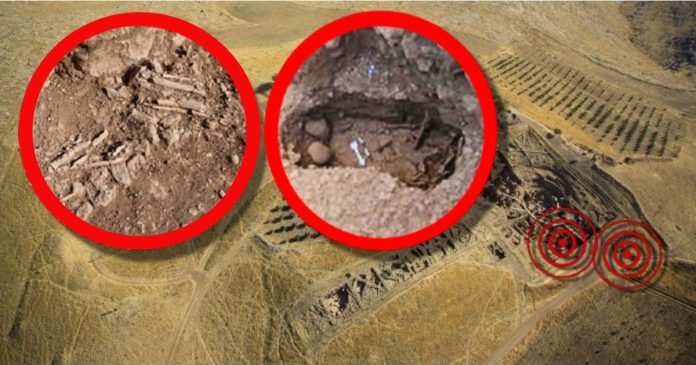
The first intact burials at Göbekli Tepe have been quietly known for nearly a decade. The mound rose for about 1,600 years, from the Pre Pottery Neolithic A (9600 to 8700 BCE) into the Early and Middle Pre Pottery Neolithic B (8700 to 8000 BCE). UNESCO listed the site in 2018 for its T shaped pillars and carved animals. For years, teams treated the place mainly as a ritual center. Newer work shows houses and daily activity across the sequence. A 2026 PLOS One paper by Julia Gresky and Lee Clare reports the first two intact burials from Pre Pottery Neolithic B layers and uses those graves to test why hundreds of loose human bones sit in the fills of the monumental buildings.
Scattered Bones and a Long Debate
Since excavations began in 1995, crews have picked human bone out of rubble, artefacts, and animal remains. Gresky began osteological work in 2009. The loose collection, not counting the two new graves, holds 928 mostly unrelated pieces. Fragments come from males and females of every age group. They turn up inside the special buildings and in the soil between them. Most pieces lack a clear original context.
Two accounts competed. One held that people placed selected bones on purpose as a secondary or tertiary rite. Supporters pointed to an excess of skull pieces (408 cranial fragments against 283 postcranial ones) and to a few crania with deep midline cuts. Stone images of headless bodies, detached stone heads, and animals gripping human heads seemed to fit a focus on the skull. High numbers of corvid bones also raised the idea of open air exposure.
The second account treated the scatter as debris. Buildings in the Southeast Hollow sit in a dip. Higher parts of the tell press downslope. Rain, extra building weight, and possible earthquakes could send soil, plaster, and graves sliding into the hollows. In that model the special buildings filled with mixed domestic waste, not with staged offerings. The two intact graves let the authors compare damage patterns instead of arguing from distribution alone.
The Collective Grave in Trench DR1
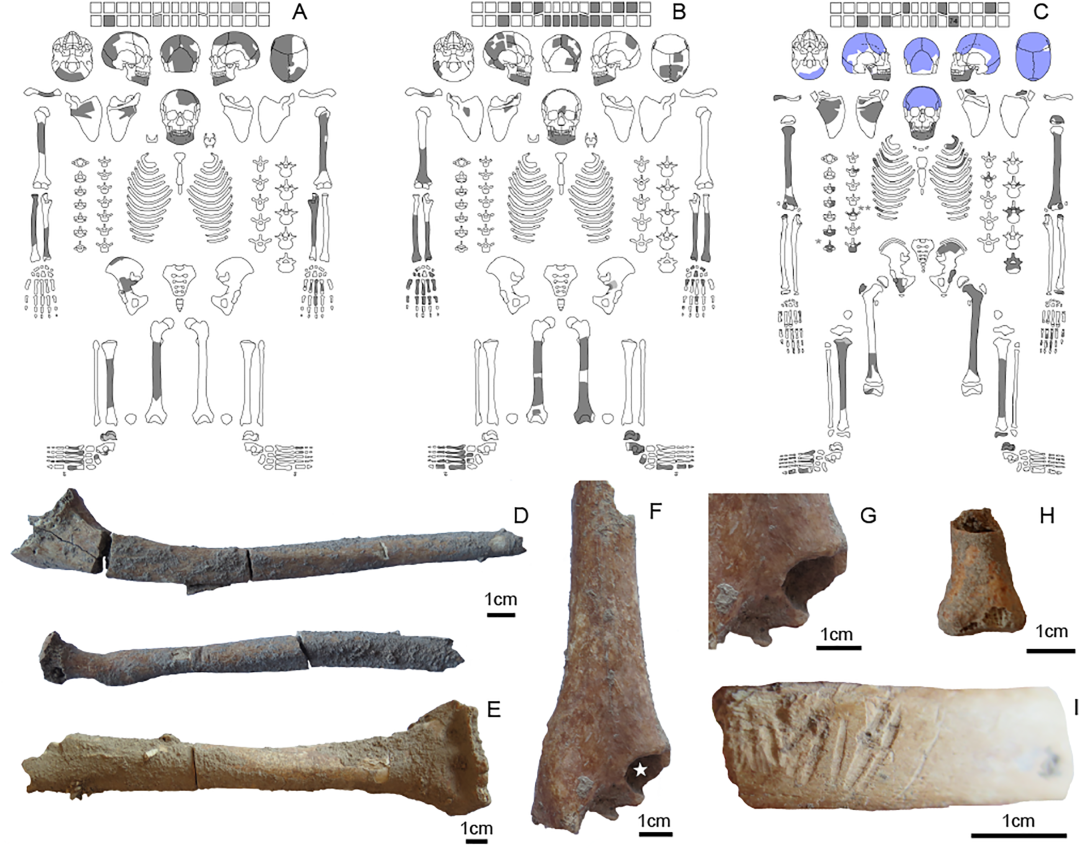
Workers hit the first grave in 2017 while cutting a drainage channel for the permanent shelter over the main excavation area. A kidney shaped pit cut the plaster floor of a rectangular Pre Pottery Neolithic B building. An earlier plaster floor formed the base of the pit. The pit held at least three people. One was a woman at least 35 years old. Another was a man between 20 and 30. One was a girl between 11 and 14. A fourth person may be present. One skull looks too mature for the adolescent, and two metatarsals have unusually round shafts.
Almost nothing stayed in original order. The three skulls sat in the southeast corner. Postcranial bones piled toward the centre. Some long bones lined the west wall. Only the distal left arm of one person still lay in place on the floor. Small bones of hands and feet survive. That pattern means complete bodies, or at least complete limbs, entered the pit. The pit is too small for three bodies at once. A simple reading is that people placed one body, then shifted bones aside for the next, then rearranged the pile after the last burial and closed the grave.
No cut marks, burning, or ochre appear on these bones. Fragile parts such as ribs, vertebrae, and pelvises are scarce. Soil pressure and mineral crusts explain that loss better than deliberate removal.
The Single Grave Beside Building A
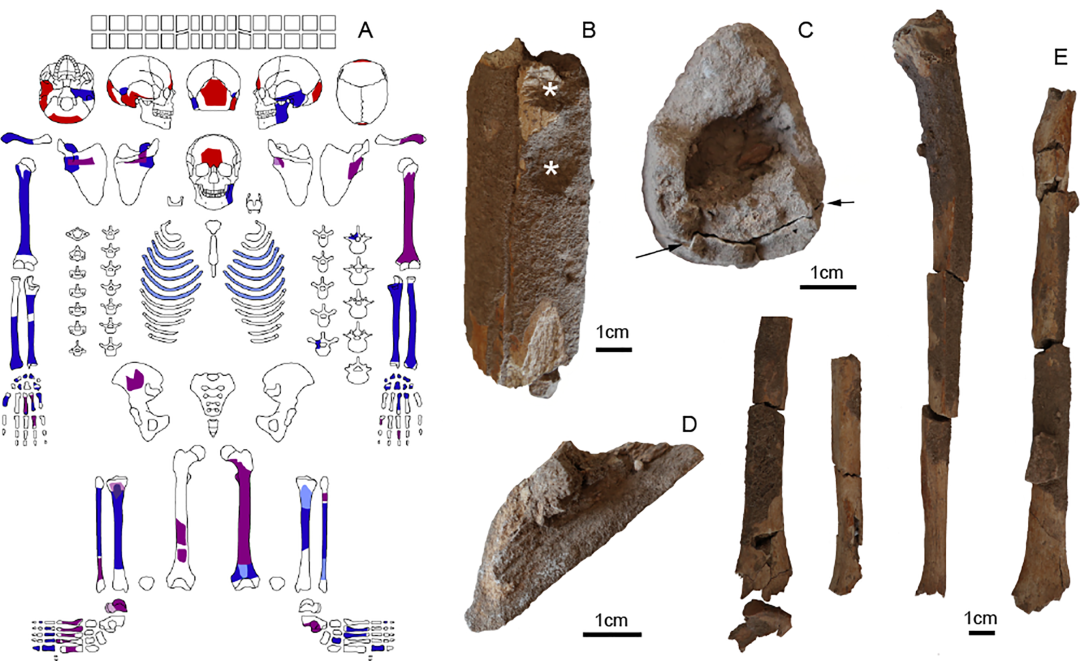
The second grave lay against the east wall of a small room just west of Special Building A. Diggers found it in 2012, sealed it for lack of time, and finished the work in 2022. The woman, between 20 and 30 years old, lay flexed on her left side and faced east. She rested on a bed of fist sized stones. No sharp pit edge showed.
Most of the skeleton stayed in place except for some foot bones that had drifted toward the midshafts of the right tibia and fibula. Soil above the grave mixed loose fragments from the room fill with the top of the burial, so a few 2012 cranial pieces may belong to another person, possibly a man. The mandible and the postcranial bones point to a woman.
About 10 centimetres below the main level, diggers found pieces of the left mandible, right parietal, and left petrous bone near the skull. Another 20 centimetres down, fragments of the right ulna and right fibula appeared in the chest area. The sediment under the body was dense and full of stones, plaster patches, flint chips, and animal bone. No open animal burrows showed, though later soil movement could have filled them.
Matching Damage on Bones
Both graves display the same surface and fracture pattern that marks the 928 loose fragments.
Calcareous crust covers most surfaces. In the DR1 group the crust coats 61.4 percent of 189 recorded pieces and often covers 70 to 100 percent of each surface. It locks the left radius and ulna of the adolescent in slight pronation and fuses several right hand bones. In the L09-65 skeleton the same crust coats shafts and fracture edges.
Long bones break after death. Adult epiphyses snap off and vanish. Shafts survive as a few large pieces, sometimes three main segments. Many breaks have serrated edges from soil load. A smaller set shows smooth helical breaks, which form while some collagen remains. Rodent gnawing pits appear on the adult male in DR1 and as patches on the L09-65 tibia and ulna. One rib from the adolescent carries parallel scratches that look recent because their colour differs from the bone.
These changes start inside a closed grave. Overburden cracks large bones. Lime rich sediment eats into the matrix. Rodents find gaps. The single primary burial in L09-65 proves the point. The body was never taken apart for display, yet the long bones still lost their ends and split.
Slope Collapse as a Transport Mechanism
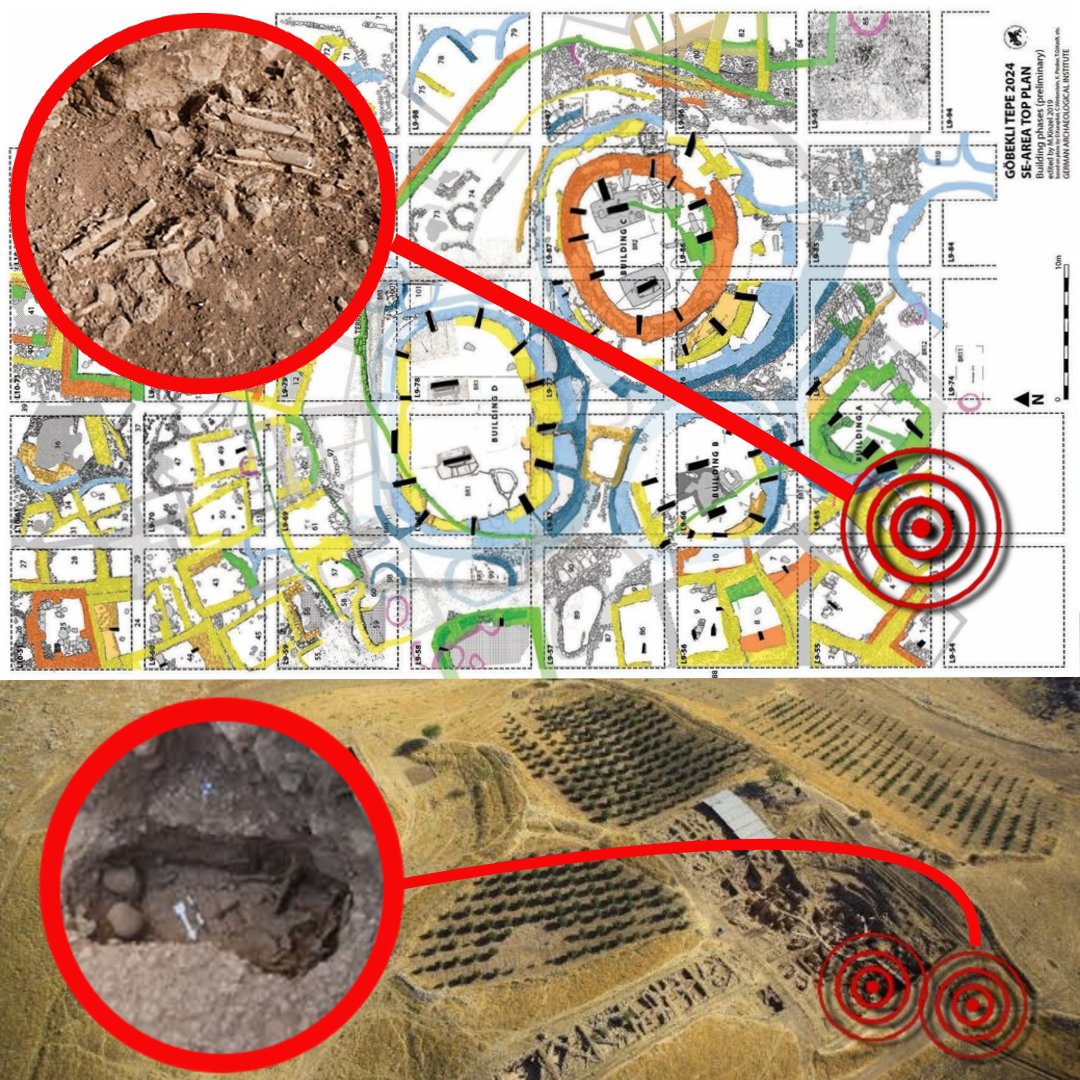
Special Buildings A through D occupy a depression. Tell deposits climb on the west, north, and east. The L09-65 room sits on that western slope and looks down on Building A. The DR1 grave sits under a later plaster floor in the same southeastern sector. If houses on the higher slopes held under floor graves, a slide would dump mixed bone into the hollows. The result would look random: single pieces, small clusters, every age and sex, every skeletal region, and every layer of fill. That is the pattern recorded across about 3,000 square meters of the main area.
Intentional placement usually concentrates material. Sefertepe offers a clear contrast. One skull sat in floor plaster inside a niche. A small cell held at least 21 skulls set on their bases and almost all facing southeast. Çayönü Tepesi stored dozens of skulls in its Skull Building. Karahantepe produced about 70 fragments, many of them modified skull pieces, from special buildings and nearby houses. Göbeklitepe’s scatter does not match those tight deposits.
The authors therefore treat slope movement as the main source of the uncontextualized fragments. They do not close the door on other rites. A handful of crania still carry deep incisions. Those pieces may mark a separate treatment of selected heads. The two new graves simply show that ordinary under floor burial already produces the dominant damage signature.
Parallel Practices Across the Taş Tepeler Sites
The Taş Tepeler project, launched in 2021 by Türkiye’s Ministry of Culture, now links Göbeklitepe with Karahantepe, Sayburç, Sefertepe, Çakmaktepe, and Mendik. Burial habits vary from site to site and even from room to room. At Sayburç, dated to the ninth millennium BCE, human bone sat in wall niches. In one house, remains of at least 19 people, mostly skulls and long bones, some burned, lay on and in front of a stone bench. The excavators think people pulled the bones from niches before they left the building.
Karahantepe shows cut, incised, scraped, and burned skull fragments. Sefertepe adds both a single plastered niche burial and the packed skull chamber. These finds sit in the same centuries as the Göbeklitepe PPNB graves. The region used more than one method at the same time: primary flexed burial, collective rearrangement inside a pit, niche storage, and focused skull deposition.
Göbeklitepe now belongs on that list instead of standing apart as a place without ordinary graves. The two burials also add weight to the revised picture of the mound as a lived settlement, not only a stage for monuments.
Limits of the Current Evidence
The paper records position with photography, structure from motion models, and drawings. Age and sex rest on standard osteological criteria: dental wear, suture closure, joint change, epiphyseal fusion, long bone length, and dental development. Many diagnostic parts are missing, so some assignments stay cautious. The L09-65 skull pieces from 2012 still sit in a grey zone.
No new radiocarbon dates appear in the article. The graves sit in Pre Pottery Neolithic B architecture, but the modified crania from earlier seasons lack a tight phase. Further dating and a full catalogue of cut marks versus accidental breaks will decide how many rites ran in parallel.
Conclusion
The first two intact Pre Pottery Neolithic B burials at Göbeklitepe carry the same crusts, breaks, and gnaw marks as the 928 loose fragments from the special building fills. One grave is a rearranged collective pit under a plaster floor. The other is a flexed primary burial on a stone layer beside Building A. Both look like domestic under floor interments of the kind known across Anatolia and the Levant.
Slope slides from higher houses can move such graves into the hollows that hold the monuments. That process accounts for the wide, mixed, and poorly contextualized scatter. It does not erase the few deliberately cut skulls or the richer skull deposits at neighbouring sites. Göbeklitepe used more than one way to treat the dead. The new graves fix one of those ways in place and show that daily life and monumental building occupied the same hill.
