
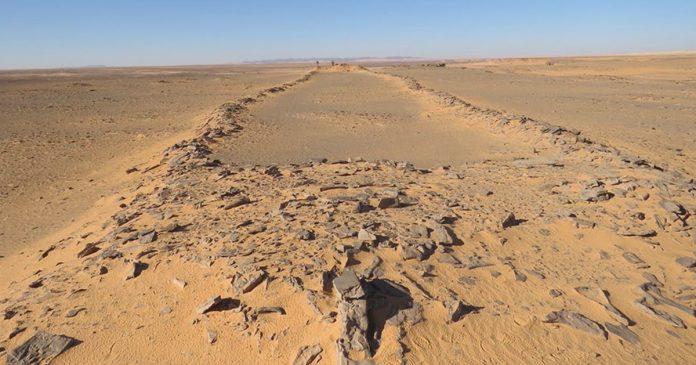
Structures, known as mustatils, represent one of the earliest large-scale examples of monumental stone architecture anywhere in the world. Now, imagine a time when the deserts of northern Arabia were not endless dunes but a mosaic of lakes, grasslands, and seasonal wetlands. Between roughly ten thousand and six thousand years ago, increased rainfall transformed the region during what scientists call the Holocene humid period. In this greener landscape, early pastoral communities began building something extraordinary: hundreds of massive stone structures that still stretch across the desert today. A detailed 2020 study published in the journal The Holocene examined one hundred four of these monuments in the southern Nefud Desert and delivered the first firm radiocarbon date for them.
Arabia During the Green Period
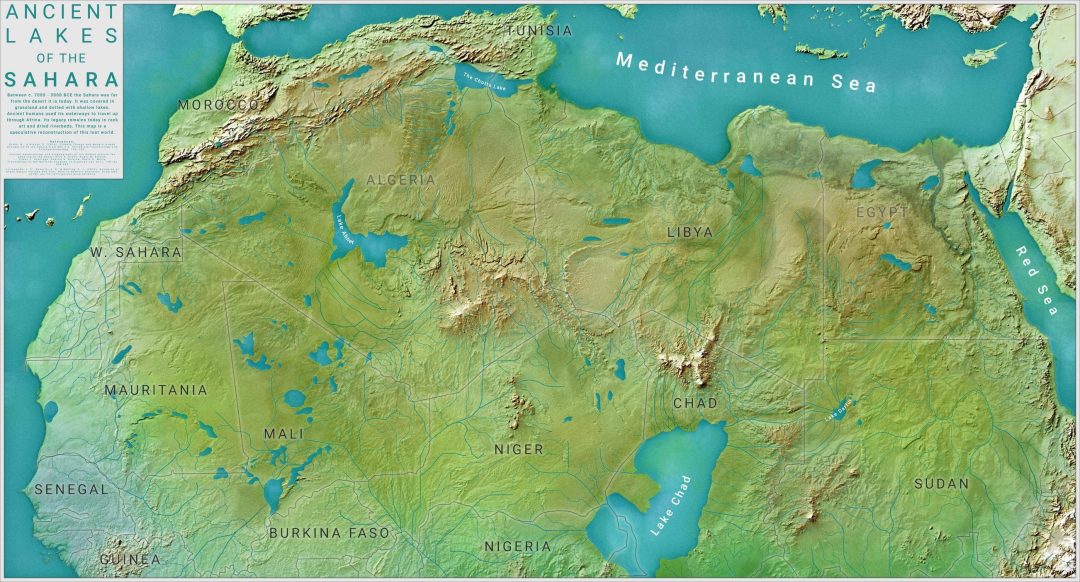
The transition to the Neolithic in Arabia unfolded against a backdrop of climatic amelioration. Rainfall supported lakes and wetlands while grasslands expanded, especially in northern areas such as the Al-Nefud. Archaeological evidence from sites like Jebel Oraf shows pastoral groups herding animals and moving across the landscape to exploit water and pasture. These communities faced variable conditions even during wetter centuries, with droughts still possible. Social changes accompanied environmental shifts. People began marking territory more visibly, constructing cairns and other features that suggest growing attachment to specific places. The mustatils fit into this dynamic moment when pastoralism took hold and groups negotiated resources in a still challenging environment.
What the Mustatils Look Like
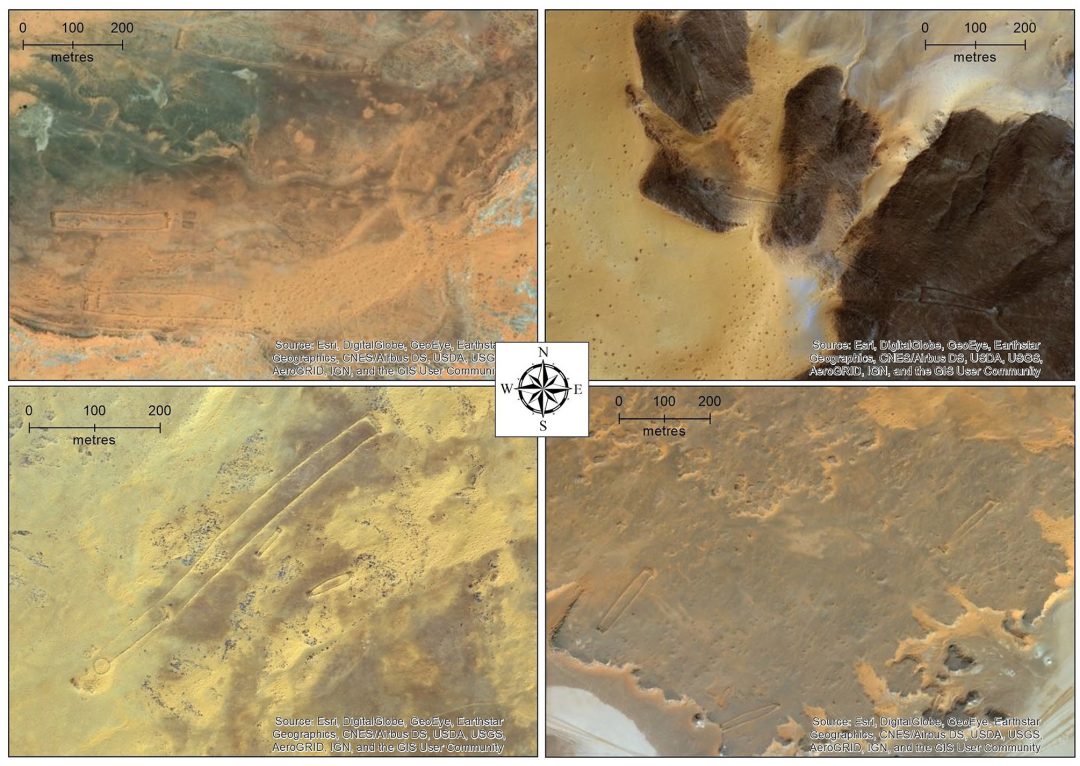
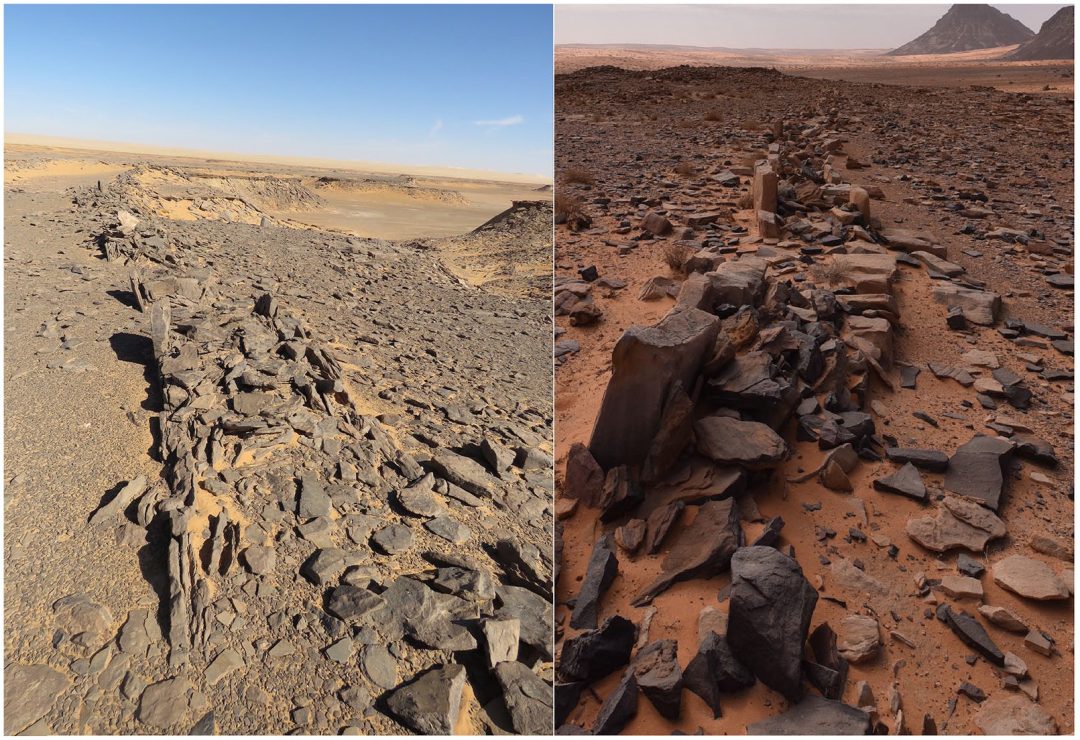
Mustatils are elongated rectangular stone constructions defined by two flat topped platforms at either end connected by long, low parallel walls. In the study area almost all examples have two long walls, though a few have three. The walls stand less than half a meter high even before accounting for collapse or stone removal. Construction often involved placing vertical upright slabs along the outer edges with rubble filling the core. The platforms themselves can be substantial; one measured around thirty meters long by ten meters wide and rose more than a meter high, containing hundreds of tonnes of rock.
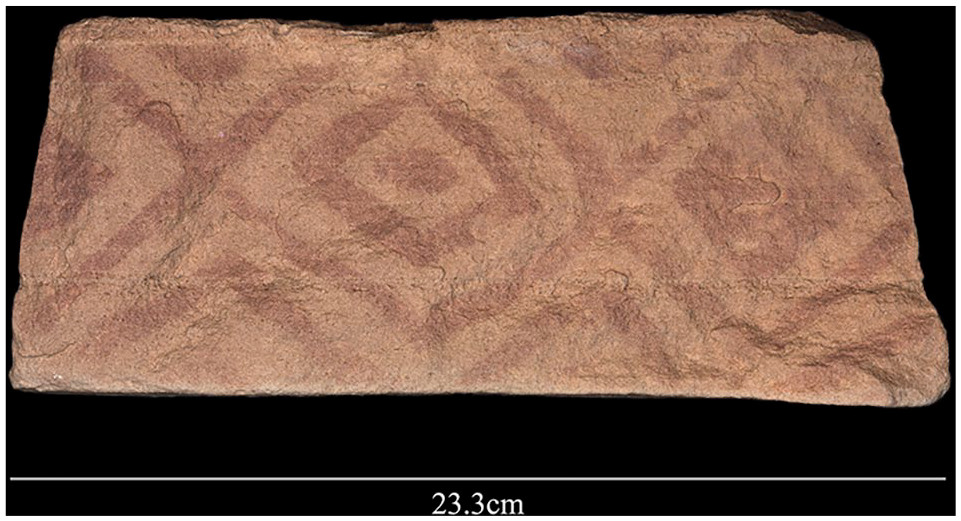
Ground surveys reveal that the platforms, not the walls, give the structures their primary architectural character. Where later disturbance has not altered them, the platforms show neatly faced stone. One striking find was a geometrically painted sandstone block incorporated into the interior face of a platform, visible to anyone standing inside the space defined by the walls and platforms. The overall form creates a defined yet permeable rectangle rather than a fully enclosed building. No evidence suggests roofing or long term habitation.
Their Place in the Desert Landscape
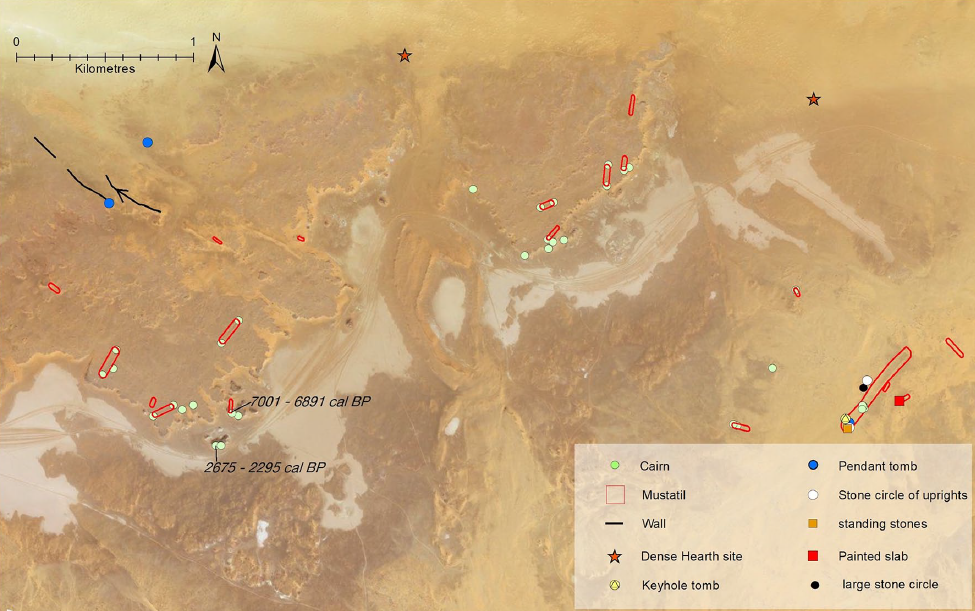
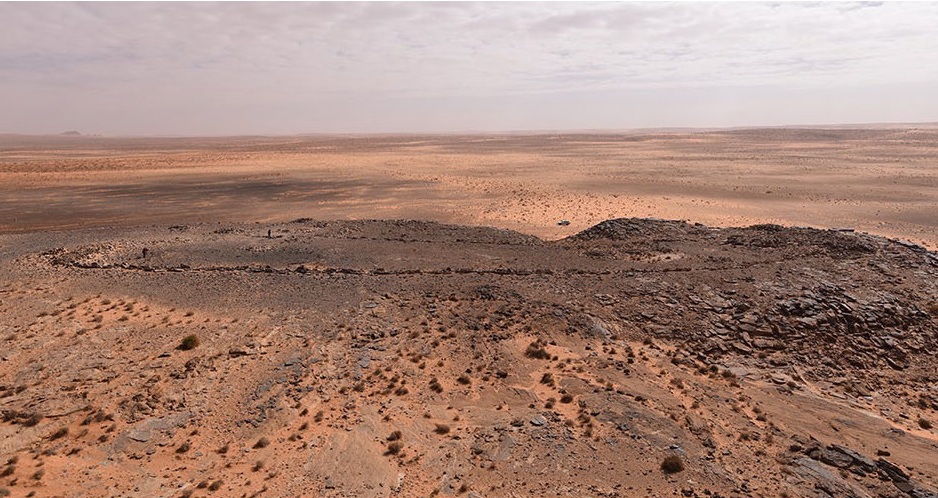
The one hundred four mustatils mapped in the southern Nefud occur across a range of elevations but show a concentration between nine hundred and nine hundred twenty meters above sea level. Many sit on slightly raised ground or rocky outcrops that supplied building stone. A notable pattern places many near ancient playas and wetlands that would have held water after rains. Median distance to the nearest potential water source was just over one kilometer, though some stand farther away.
The structures frequently appear in clusters, with a median distance of only one hundred sixty five meters between neighbors. Groups sometimes align in roughly parallel orientations or form linear arrangements along landscape features. Within local clusters, orientations often match, though broader regional patterns vary. The study area alone contains more than thirty kilometers of walls built from thousands of tonnes of stone. The largest recorded example reaches six hundred sixteen meters in length and covers more than twenty two thousand square meters. From satellite imagery the rectangles appear as faint but unmistakable shapes scattered across the desert margins.
Establishing When They Were Built
Mustatils consistently underlie later stone structures in the landscape. Later people reused their stone to build cairns, keyhole tombs, pendant tombs, bullseye cairns, and irregular cell like features. In at least eighty three percent of cases clear evidence of such reuse exists. This relative sequence indicates mustatils belong to an earlier phase than most other visible monuments.
The 2020 study provided the first absolute date. Charcoal recovered from inside a platform at one mustatil, exposed by recent unauthorized digging, yielded a radiocarbon age of 5052 to 4942 calibrated BC. This places construction around five thousand BC, making the dated structure the oldest large scale stone monument known from the Arabian Peninsula. A cowrie shell from a nearby cairn dated much later, to the Iron Age between 726 and 346 calibrated BC, confirming continued use of the same landscapes long after the mustatils were built.
What Was Found Inside and Around Them
Material culture proved remarkably scarce. Ground visibility was excellent because most mustatils rest directly on bedrock with little sand cover, yet only a handful of nondiagnostic quartz flakes and two groundstone axes appeared. This absence contrasts sharply with contemporaneous habitation sites in the region and suggests the mustatils were not places of prolonged daily living.
Inside the platform of the dated mustatil, researchers recovered fragmented animal bones representing at least four individual bovids. Identifiable remains include upper molars consistent with Bos, possibly domesticated cattle or wild aurochs, along with elements matching Arabian oryx. The bones show weathering consistent with exposure in a desert setting. No butchery marks survived, but their presence inside a platform points to deliberate placement rather than casual discard. The painted block mentioned earlier further hints that the interior surfaces held meaning for people who entered the defined space.
Searching for Their Original Purpose
The low height of the long walls, lack of clear entrances or breaks, and absence of domestic debris rule out practical functions such as animal corrals or water storage. The emphasis on substantial platforms at the ends, sometimes decorated on their inner faces, suggests the structures served to create a special space rather than to enclose something physically. The sheer number of mustatils built close together implies that the act of construction itself carried social importance, requiring community cooperation and shared effort.
The authors propose that mustatils functioned as ritual or ceremonial loci tied to the adoption of pastoralism and emerging territorial behaviors. In a variable environment where access to pasture and water mattered, groups may have gathered at these monuments to affirm collective identity, negotiate relationships, or perform ceremonies involving animals. Comparisons with rectangular cultic sites in the southern Levant and platform structures in southern Arabia, such as the cattle skull circle at Shi b Kheshiya around 4400 BC, place the mustatils within a broader pattern of Neolithic monumentalism linked to social aggregation and resource defense. The mustatils appear to represent an early northern Arabian expression of these developments.
How Later People Used These Ancient Stones
Over subsequent millennia the mustatils became quarries. Stones taken from their platforms and walls built highly visible cairns and tombs, often positioned along scarps where they stood out against the skyline. This reuse marks a shift toward structures designed for maximum visibility from below. While some cairns in northern Arabia date to the Neolithic, many elaborate forms belong to the Bronze and Iron Ages. The mustatils thus anchored a long sequence of landscape marking that evolved as social and environmental conditions changed.
Mustatils Legacy
The mustatil phenomenon reveals a remarkable chapter in human prehistory. Around five thousand BC, pastoral communities in northern Arabia invested enormous labor in building hundreds of monumental stone structures that transformed the desert margins into a ritual landscape. These stone giants predate many famous monuments elsewhere and demonstrate that social complexity and symbolic expression flourished in Arabia during the Holocene humid period. Their platforms preserved rare glimpses of animal remains and interior decoration, while their clustering and architectural consistency speak to shared cultural practices across a wide area.
Much remains to learn. Future excavation of undisturbed platforms should clarify whether the bones reflect feasting, offerings, or other rituals and whether the structures saw repeated use or single events. Better understanding of regional variation and precise environmental conditions at the time of construction will refine interpretations. What is already clear is that these monuments challenge old assumptions about early Arabian societies. Far from peripheral or simple, the people who raised the mustatils created one of the world’s earliest large scale monumental landscapes, encoding cooperation, identity, and connection to place in enduring stone.
Conclusion
The mustatils stand today as quiet witnesses to a greener, more dynamic Arabia. They invite us to look beyond the modern desert and recognize the ingenuity and communal spirit of those who lived there five thousand years before the pyramids rose in Egypt. More fieldwork will undoubtedly add chapters to this story, but the 2020 study has already secured the mustatils a central place in the narrative of Neolithic monumental architecture.
For more ancient stone structures read: Masyoun Pre Pottery Neolithic Connection

