
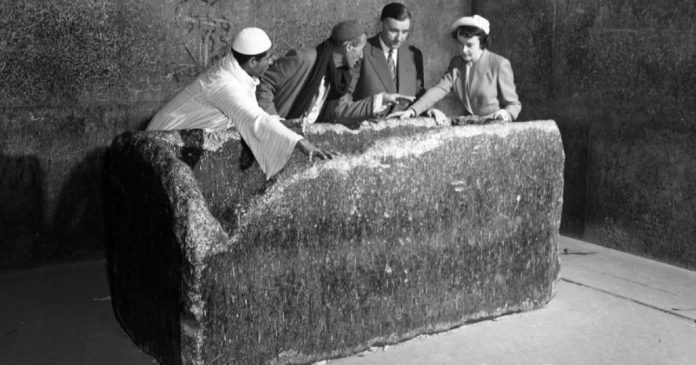
If you read a modern guidebook, or almost any documentary, the story of the Great Pyramid is simple. The King’s Chamber was found empty. The granite sarcophagus had no lid and no body. From that emptiness a lot of people have concluded that the pyramid was never a tomb at all. But That is the story that won. Writers have recorded more than one version of the story…
In the early thirteenth century, a scholar in Cairo named Jamāl al-Dīn Abū Jaʿfar Muḥammad ibn ʿAbd al-ʿAzīz al-Idrīsī sat down and wrote a book just about the pyramids. His full name is unwieldy, so writers usually call him Idrīsī. He was an Egyptian, born in 1173, died in 1251. Friends asked him to gather everything he knew about Giza into one work. This article is about what that book contains.
Al-Ma’mun and the pyramid
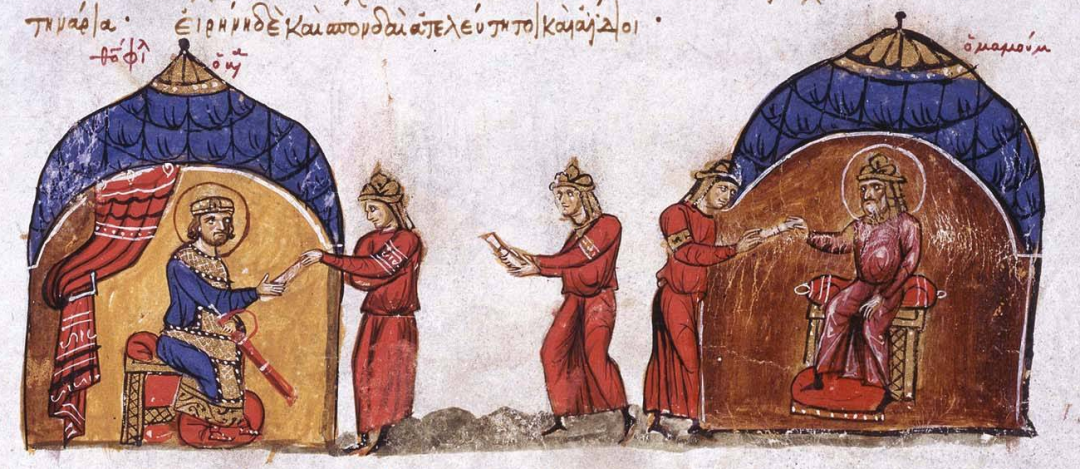
Abū al-ʿAbbās ʿAbd Allāh ibn Hārūn al-Rashīd, known as al-Ma’mun, was born in Baghdad on 14 September 786, the night later remembered as the night of the three caliphs. He ruled the Abbasid empire from 813 until his death in 833. He came to Egypt in early 832, to put down the Bashmuric revolt in the Delta. With him traveled Dionysius of Tell Mahre, the Syriac Orthodox patriarch.
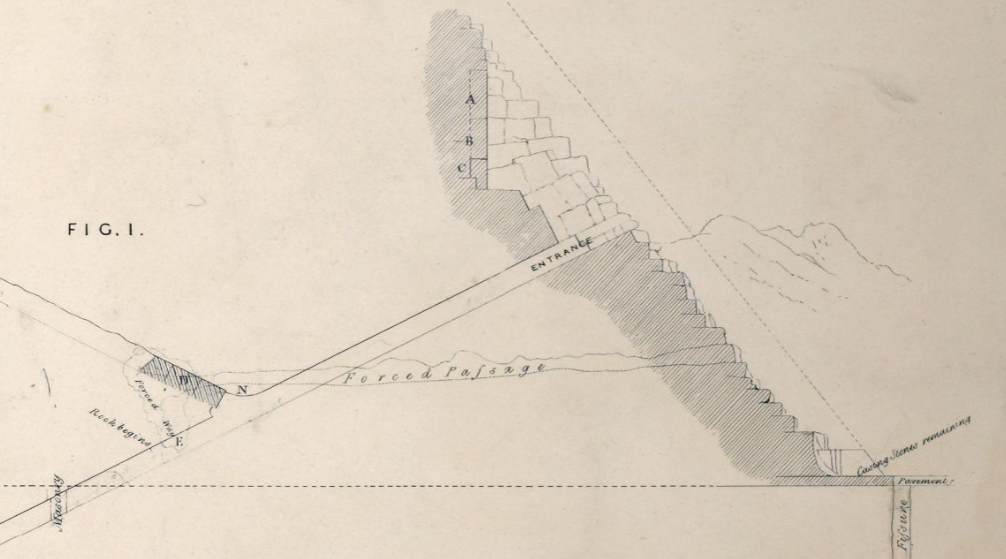
Arabic writers, in later times, stated their visit marked the moment they opened the Great Pyramid. After it had been sealed for millennia. The story, as it hardened in the twelfth and thirteenth centuries, runs like this. Builders had concealed the original doorway on the north face. So, Al-Ma’mun’s workmen attacked the masonry with fire, heating the limestone. Workers poured vinegar over the heated stone, cracking it. Then they drove iron wedges in to chop the stone away. After great expense they drove a rough horizontal tunnel into the core, a little below and to one side of the concealed entrance. That forced passage is the one visitors still walk through. Inside they found ascending and descending passages that were terrifying to pass, and above them a cubical room.
Some Medieval writers claimed the chamber held gold (and some even insisted it held jewels) whose value exactly matched the cost of the excavation. Another strand is poorer and pertinent. It says the sarcophagus held remains.
Empty Sarcophagus that rules the day.
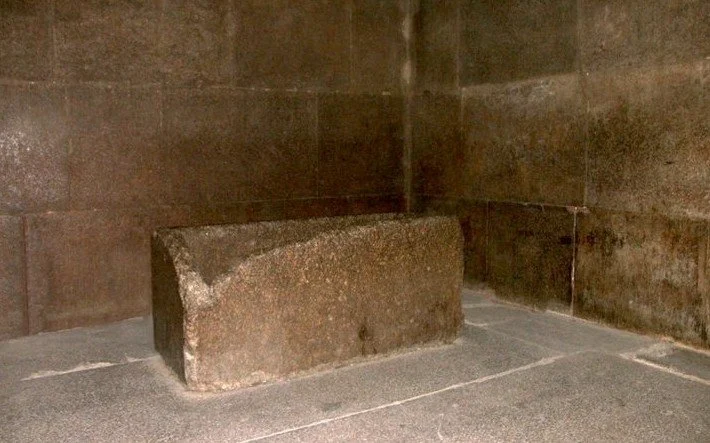
European travelers from the seventeenth century onward described the King’s Chamber much as it stands now: a granite room, a granite chest, no lid, no mummy, no grave goods. Eventually that absence led to speculation. If this was a tomb, where was the king?
Egyptology never treated that question as fatal. Thieves in antiquity robbed Old Kingdom royal tombs. The Great Pyramid’s portcullis system, plug blocks, and misplaced original entrance only make sense as measures against theft. The sarcophagus remains in place, too large to have been carried in after the chamber’s completion. But the popular argument ignores that architecture entirely. It starts from the modern emptiness and works backward. No body, therefore, no burial. No burial, therefore, not a tomb. From there the writer can call the building a granary, a power plant, a geodetic marker, or whatever else the argument requires.
A book that can change everything.
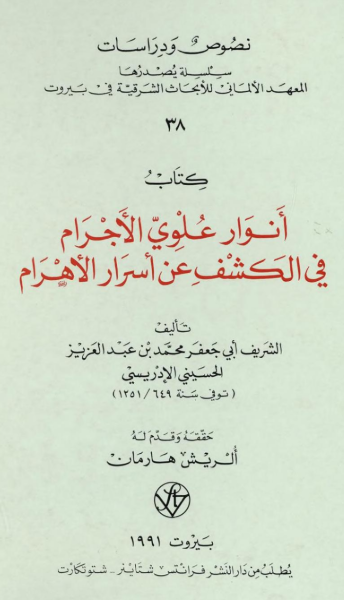
Kitāb Anwār ʿulwī al-ajrām fī al-kashf ʿan asrār al-ahrām: “Lights of the lofty bodies, on revealing the secrets of the pyramids”. Written by the aforementioned Idrīsī (abbreviated) was an Egyptian Ḥasanid scholar, a traditionist and genealogist. He started it in 1226 and finished it in 1232. The book is a compilation, Idrīsī copied reports and named his sources when he could. The volume contains antediluvian builder legends of Hermes and Sūrīd. Yet another describes human remains.
This comes from a letter written by Abū al-Ṣalt Umayya ibn ʿAbd al-ʿAzīz, an Andalusi scholar from Denia (born 1068, died 1134) Abū al-Ṣalt after visiting Egypt writes a letter about what he saw and what he had been told. That letter is called al-Risāla al-Miṣriyya, “the Egyptian Epistle”. Idrīsī compilation survived in manuscript copies. In 1991 Ulrich Haarmann published the first compiled edition of those manuscripts: the Arabic text of Idrīsī’s pyramid book, with notes on the copies he used. That edition is the printed source for the passages below.
The passage and its translation
The Arabic, as it stands in the Haarmann printing of Idrīsī quoting Abū al-Ṣalt, is this:
قال أبو الصلت في رسالته : ولما وصل المأمون إلى مصر أمر بنقبها فنقب أحد الهرمين المحاذيين للفسطاط بعناء شديد وعناء طويل فوجد داخلها مراقيَ ومهابط يهول أمرها ويعسر السلوك فيها ووجد أعلاه بيتا مكعبا طول كل ضلع من أضلاعه نحو ثمانية أذرع وفي وسطه حوض رخام مطبق فلما كسر غطاؤه لم يوجد فيه غير رمة بالية قد أنت عليها العصور الخالية فعند ذلك أمر المأمون بالكف عن نقب ما سواه. ويقال إن النفقة على نقبه كانت عظيمة والمؤنة شديدة.
Abū al-Ṣalt said in his epistle: When al-Ma’mun reached Egypt he ordered it to be breached. One of the two pyramids facing Fustat was pierced, after severe effort and long hardship. Inside they found ascents and descents whose state was terrifying and hard to pass through. At the top they found a cubical chamber, each side about eight cubits, and in the middle of it a covered marble basin. When its lid was broken, nothing was found in it but a decayed corpse, which the bygone ages had consumed. At that point al-Ma’mun ordered them to stop breaching any other. It is said that the cost of the breach was huge and the labor severe.
Eight cubits on a side is roughly the King’s Chamber as a medieval observer might round it. A covered basin of marble or stone is a fair description of a sarcophagus if the writer is not using the later Egyptological word. The match is close enough to take the passage as a memory of that room.
Conclusion
The obscure claim is not that a specific claim to Khufu’s remains were made. It is that a named medieval source, re-printed in 1991 from manuscripts that go back to the fourteenth century, preserves a report in which al-Ma’mun’s workmen opened a stone basin in an upper chamber of the Great Pyramid and found a body already destroyed by time.
That is as far as the document will goes, whether those remains were Khufu, a later burial, or a robbed internment, it’s a story you never hear. And cannot find in general research who’s results always return the same. No remains were ever found.
I want to dedicate this article to Jean-Pierre Houdin, from whom I first read this tale.
