
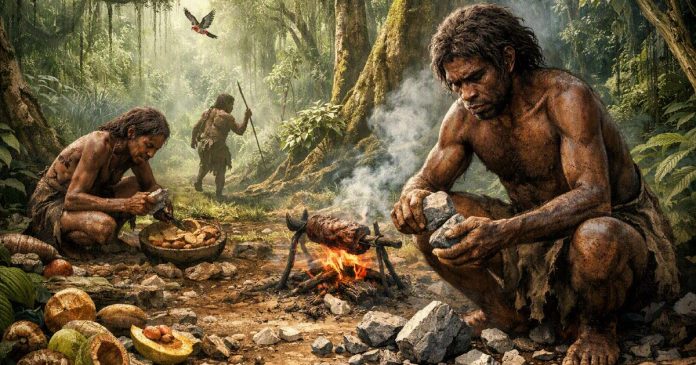
Most stories about early humans in Africa take place on open grassland or along the sea. A 2025 study from southern Côte d’Ivoire changes that picture. At a quarry site called Bété I, near Anyama and about 20 km north of Abidjan, stone tools sit in river soils that formed in a wet forest. The oldest of those tools date to about 150 thousand years ago. That is far earlier than the usual dates given for people living in African rainforest.
The finding matters because researchers long treated rainforest as hard country for early Homo sapiens. The new work says that barrier was already down in West Africa during a cold stretch of the ice ages. The people who left the tools were using a mix of large cutting pieces and smaller finished tools. Later layers at the same spot hold a more familiar Middle Stone Age kit. The forest signal does not vanish between those visits.
A quarry that ate the site
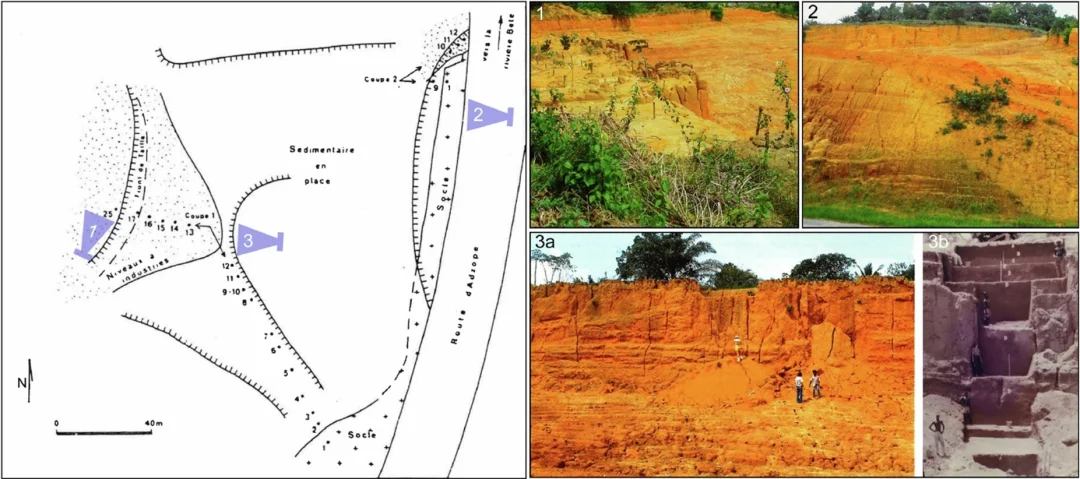
Bété I was never a cave. It was a river terrace cut open by sand and clay mining. In the 1980s and 1990s an Ivorian and Russian team dug a long stepped trench about 14 m deep. They logged soils from weathered bedrock at the bottom up to modern topsoil. The artefact rich layers sit in fine river deposits known locally as terre de barre.
Quarry work later wiped the face out. In 2020 researchers cleaned what was left, matched it to the old trench records, and took 37 sediment samples. Grain size and soil chemistry point to a calm river setting with pauses in flooding. Tiny chips from stone working were already noted in the first digs. Those chips make it hard to argue that every tool washed in from somewhere else.
Dates from grains of quartz
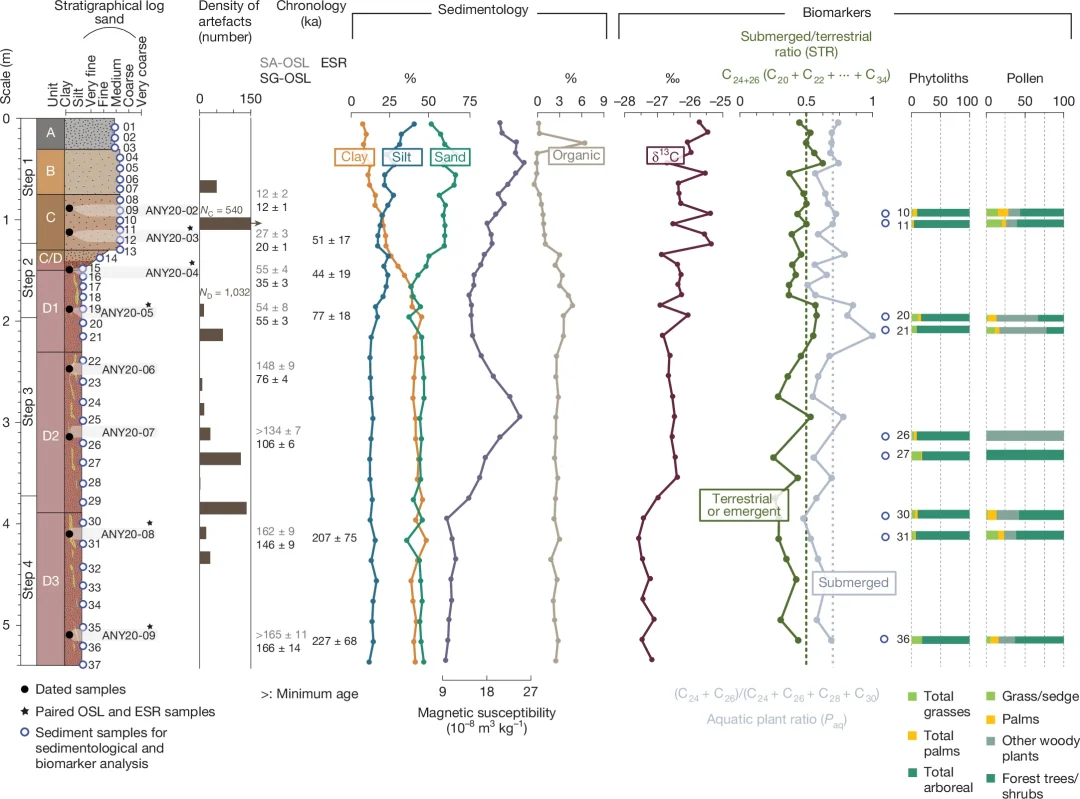
Bone and charcoal were not there to date. The team used two methods on quartz sand instead. One is optically stimulated luminescence, which clocks the last time a grain saw sunlight. The other is electron spin resonance, a second clock on the same mineral. They ran both on samples from the artefact layers.
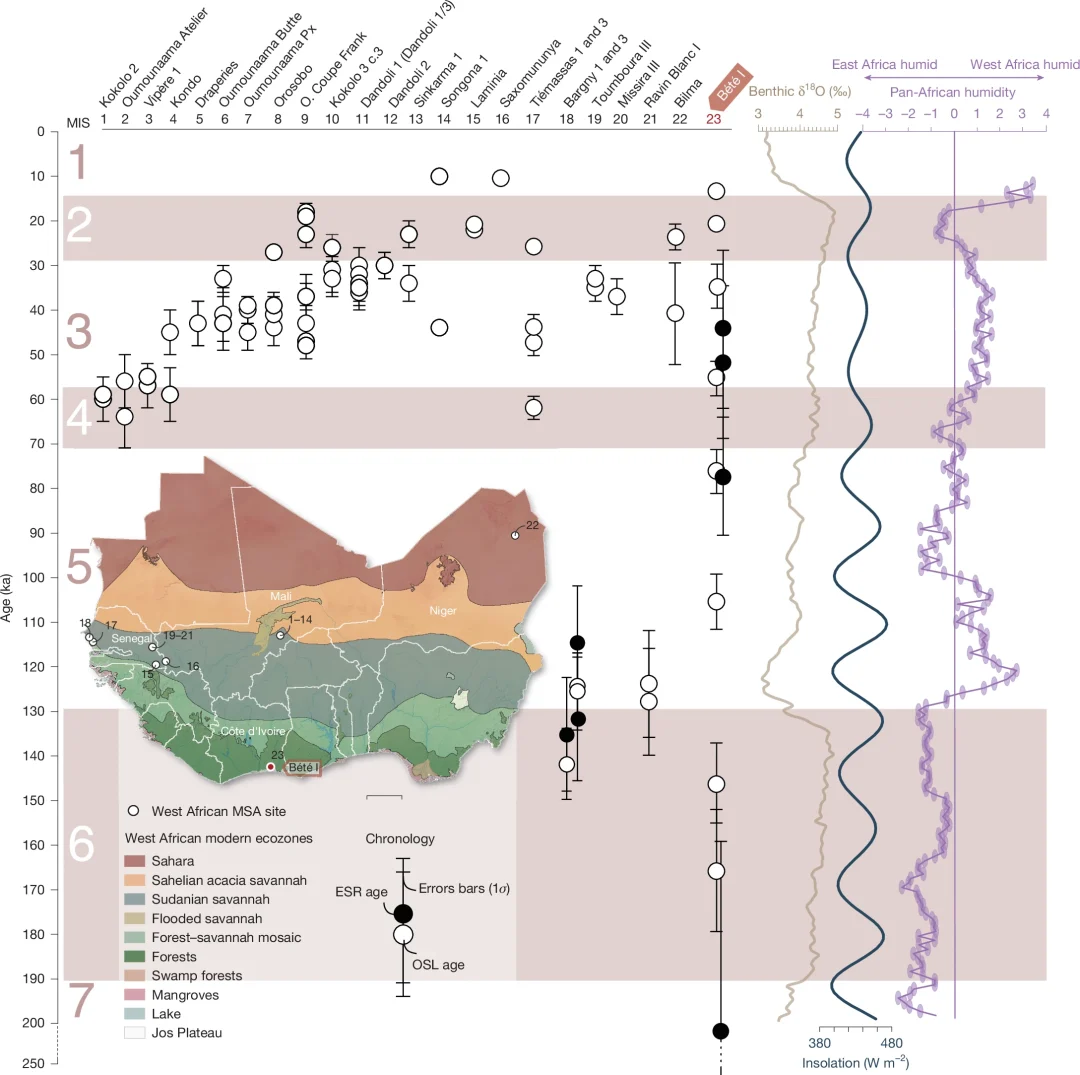
The most trusted ages come from reading grains one at a time. The deepest sample is about 166 thousand years old. The first clear tools sit beside a sample about 146 thousand years old. That is the basis for the headline date of 150 thousand years. The older tool set then runs up to about 55 thousand years. A change in the soils around 35 to 44 thousand years marks the shift to the younger tool set. Those later tools date to about 20 thousand to 12 thousand years ago. People kept coming back to the same river bend for a very long time.
Heavy tools in the older layers
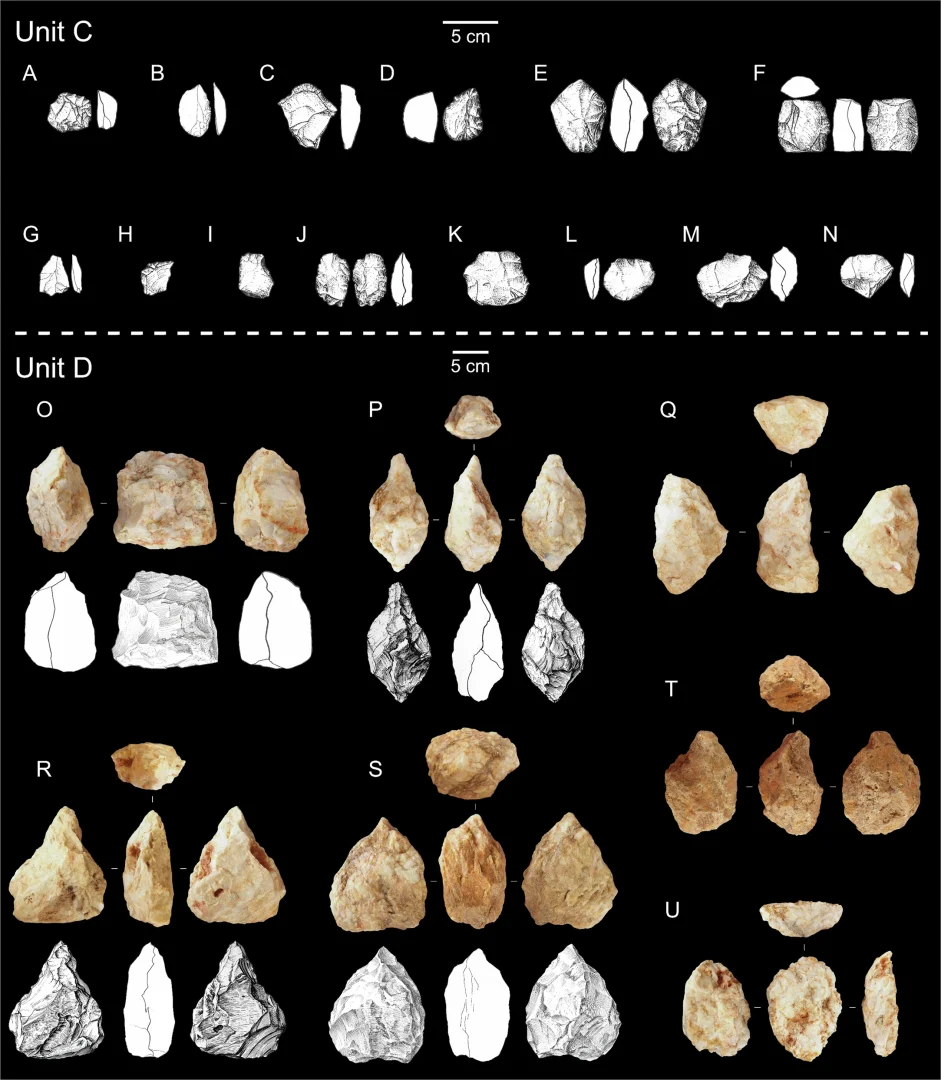
The older collection is the surprise. It is not only small flakes. It includes bifaces, a three sided biface, large cutting tools, and picks. Some picks have a flat body and a sharp tip with three or four faces. There are cores and a chopper worked on the side and the end. Small retouched pieces occur in the same soils.
Similar heavy tools turn up later in forested parts of West and Central Africa. Some archaeologists have argued those shapes were useful for wood, roots, and other forest work. Bété I now puts a mix of large and small tools in wet forest at 150 thousand years. The authors refuse to slap a neat industry name on the set. West Africa still has fewer well dated sites than other regions. They ask for more study before anyone treats the kit as a finished type list.
Water can move big stones. That risk is real on a floodplain. Fine chips in the same layers cut against the idea that the whole pile is junk swept in from older ground. The deepest tools also line up with the 146 thousand year sample. That pairing is why the team treats this as a real occupation, not a random dump.
A later, more familiar toolkit
The younger layers look like classic Middle Stone Age work. Makers prepared cores and struck Levallois flakes and points. They also made side scrapers and end scrapers. The published set includes a nosed scraper, a double ended scraper, a small handaxe, part of a thin biface, a combination tool, a scraper with a projecting spine, and a short leaf shaped biface. Cores are present too.
This is the kind of kit already known from other late Pleistocene sites in West Africa. It shows prepared core methods lasting here until the end of the ice age. But it is not the first chapter at Bété I. It is the next one. People returned after the older large tool phase and still found forest around them.
A forest, not open grassland
The soils did not test as dry savanna. Carbon from buried plant matter matches modern African rainforest soils and points to trees rather than open tropical grass. Three other tests back that reading. Plant waxes in the mud come mostly from wetland plants on a floodplain, with some input from land plants. Tiny silica bodies from plants are almost all from trees and shrubs, 82 to 96 percent of the count. Grass silica stays low even though grasses flood the record when they are common. Pollen names wet forest and river trees, including oil palm and Hunteria. Bits of actual anthers in one older sample show those flowers grew on the spot.
The picture is river forest, swamp forest, and wet rainforest. It is not open dry grass. That forest signal holds in the later layers as well. Southern Côte d’Ivoire may have kept trees even when much of Africa dried out.
Other camps of the same age sat in open country
About sixteen other African sites with Middle Stone Age tools fall in the same cold stage as the first Bété I occupation. They sit in savanna, near modern coasts, or in other open settings. West African examples include Bargny on the Senegalese shore. Others lie in North Africa, along the Nile and Red Sea, and in South Africa at places such as Florisbad, Pinnacle Point, Wonderwerk, and Border Cave.
Bété I is the odd one out. It is the first of that age group placed in wet forest rather than in the savanna belts of West Africa. Research on human origins has leaned on grass and shore for decades. Anyama adds a third kind of place at a date when our species was already living in several African regions. The paper does not say forest was the first or only home. It says forest was not closed to people by 150 thousand years ago.
What the tools now stand for
Bété I is a record of stone working in wet tropical forest beginning about 150 thousand years ago. The older layers hold large bifaces and picks plus smaller tools. The younger layers hold Levallois flakes, points, and scrapers from the close of the Pleistocene. River soils and plant remains agree on humid forest. Fine chips and dates that run in order from bottom to top support a camp on the spot, not a wash of older objects.
West Africa remains thinly mapped. The older collection requires a deeper study of tool manufacture and use. The quarry face is gone, but what survives is the oldest secure evidence of people in African wet forest. Early Homo sapiens used more of the continent than grassland stories allow. The stones from Anyama are the proof that rainforest was already part of that range.
