
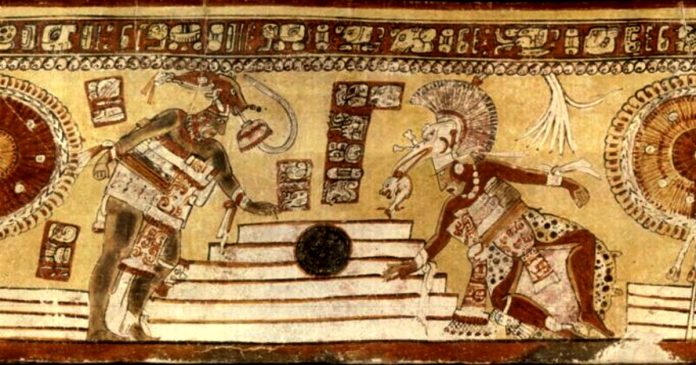
In 1988, residents digging fish ponds at the foot of a hill in southern Veracruz uncovered a set of offerings that had lain in wet ground for more than three millennia. Among jade axes and wooden busts were rubber balls. The site is El Manatí, about fifteen kilometers from San Lorenzo, in the heartland of the culture later named Olmec. The name itself comes from a Nahuatl phrase that means the rubber country. The balls date mainly to about 1600 BC, with a few closer to 1200 BC. They are the oldest rubber objects yet recovered in Mesoamerica.
A 2024 study in Archaeological and Anthropological Sciences examined fourteen of those balls. The authors combined portable imaging and spectroscopy with laboratory work on a small internal sample. They also tested four modern balls made in Acayucan from the same tree species still used in the region. The goal was to describe how the ancient objects were formed, what they are made of, and how burial and later storage changed them.
Rubber mattered in Mesoamerica for ritual and daily life. Spanish friars in the sixteenth century recorded its use for balls, sandals, and offerings. Sahagún wrote that the black gum called olli melts like fat on a spit and does not set again in the same way. Motolinía and Torquemada described tapping a tree in hot country, collecting white drops that darken and thicken, then shaping the mass into spheres that bounce. Those accounts match living practice in parts of Mexico and Central America, where teams still play variants of the old game and still form balls from Castilla elastica.
The El Manatí finds sit at the start of that long sequence. Four possible early courts exist nearby at El Mayacal. Later the court plan became the familiar double T shape seen from El Tajín to the Maya lowlands. The balls themselves vary in size from a few centimeters across to more than thirty. That range implies more than one kind of play at a single sacred spring.
The Site and the Collection
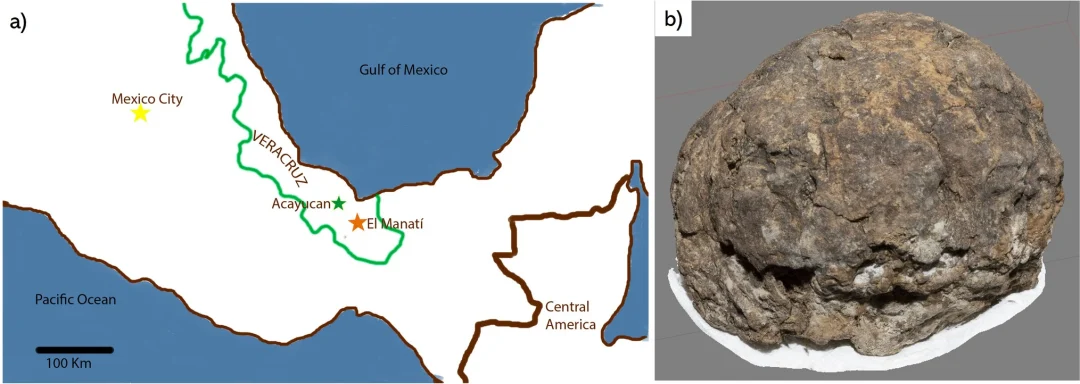
El Manatí occupies a floodplain beside the Coatzacoalcos River and several freshwater springs. Annual floods and peat sealed many offerings. Archaeologists divided the occupation into three stages. The earliest two, called Manatí A and B, hold most of the rubber. Carbon dates on associated plant matter and ceramics place the oldest balls near 1600 BC.
Fourteen balls were available for study. Some stayed wet after excavation. Others were slowly dried in Mexico City and later returned to Veracruz. Two large examples remain immersed in a preservative mix of formaldehyde, alcohol, and acetic acid. One dried ball still sits in its original block of soil. Several objects show holes cut in 1998 for an earlier chemical study. Current condition ranges from stable to crumbling. Cracks, loss of fragments, and microbial growth are common. Storage in plastic bags, room temperature, and high humidity in Veracruz all left marks.
The researchers named the dry balls ORD and the wet ones ORW. They also collected three soil samples from the offering area to separate sediment signals from the rubber itself.
How the Objects Were Examined
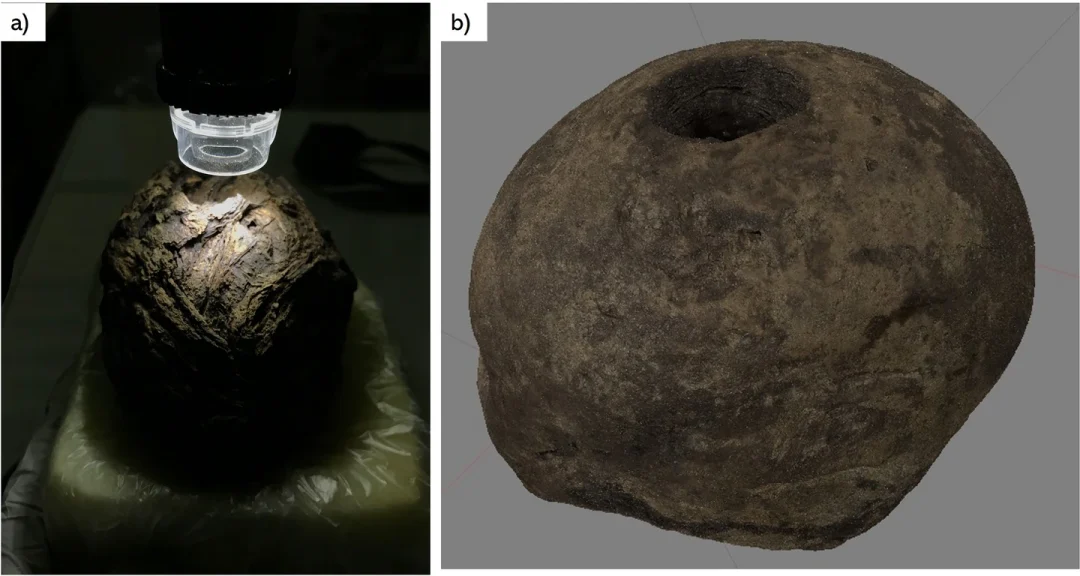
Because the balls are fragile, most work was done on site without cutting new samples. Radiography used an X ray tube and a digital detector. Distance and exposure were adjusted for thickness. Software compared gray levels in the images with models of rubber density. Short wave ultraviolet light produced visible fluorescence that marked both the rubber and surface microbes. A USB microscope recorded surface texture at low magnification.
Handheld infrared spectroscopy identified chemical groups on the surface. X ray fluorescence listed major and trace elements. After those steps, a fifty milligram piece was taken from the interior of one wet ball through the old 1998 hole. That fragment was split into an inner portion and a portion closer to the exterior. Laboratory infrared, solid state carbon NMR, combustion elemental analysis, and gas chromatography mass spectrometry were applied to those pieces.
Four contemporary balls served as reference. Two were made in 2020 and two in 2016. Local makers in Acayucan still tap remaining Castilla elastica trees, form a small core by hand, wrap rectangular strips of partly set latex around it, and finish with a thin outer coat.
From White Sap to Dark Sphere

Fresh latex is white. On contact with air it darkens to a deep brown. The same color shift appears in colonial texts. The liquid is mostly water. The rest is cis polyisoprene, proteins, and minor compounds. Infrared spectra of both ancient and modern balls show the bands expected for that polymer, including the cis specific signal near 831 inverse centimeters.
Radiographs of the dry archaeological balls reveal overlapping bands running in more than one direction. The same layered structure appears under the microscope. Some wet balls also show a possible thin outer film of latex. The modern balls are more compact, so the strips are harder to see, yet the makers describe the same sequence. The ancient interiors look denser than the outer zones. After excavation, water left the dry objects and the wraps began to pull apart. Soil then entered the gaps. Wet balls still hold their shape because water and fresh exudate fill spaces as the polymer slowly leaves the surface and resets.
Colonial writers said the Indians boiled the curdled milk in water. The present study did not reconstruct that step in detail. It did confirm that the finished form is a wrapped sphere rather than a solid cast mass.
What the Rubber Contains
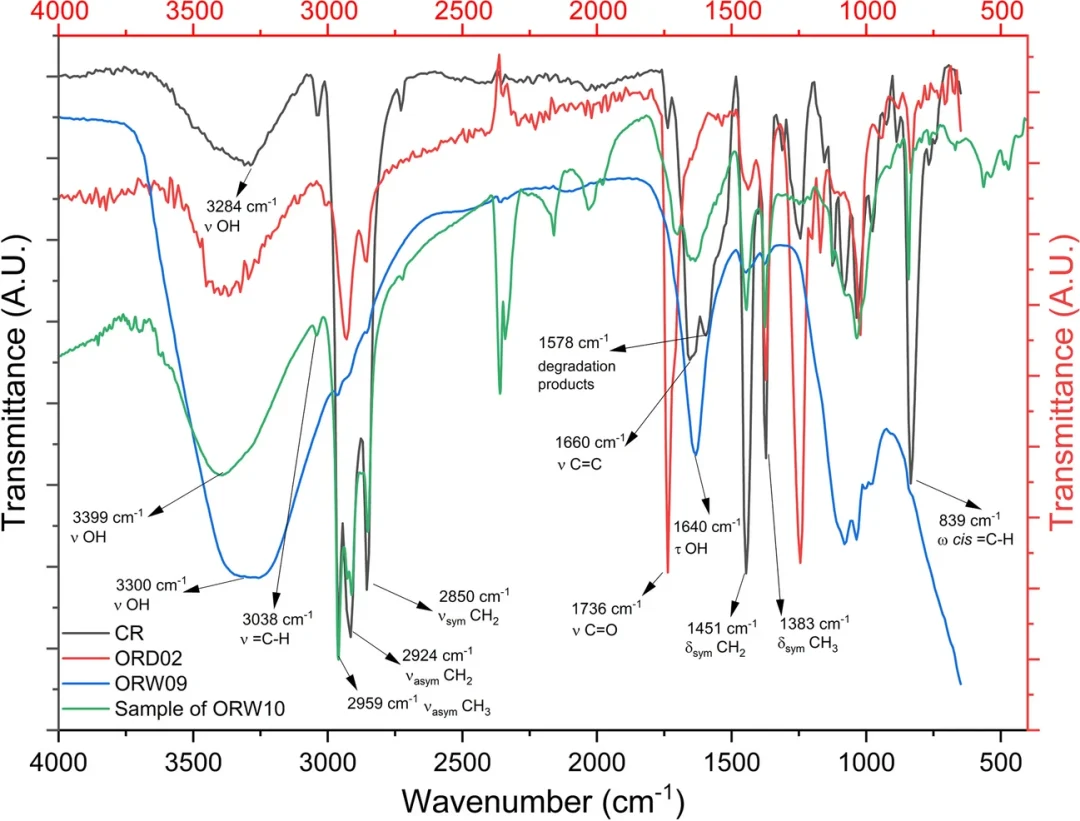
Infrared and NMR both identify cis polyisoprene as the main chain. Some broadening of NMR signals hints at limited conversion toward the trans form, more so in the inner sample. Bands and chemical shifts that would mark disulfide or polysulfide links are absent. Combustion analysis found only about 0.3 percent sulfur in the rubber and a modest amount in the burial soil. The tree itself contains sulfur. The data do not support a vulcanization process of the kind used in later industrial rubber.
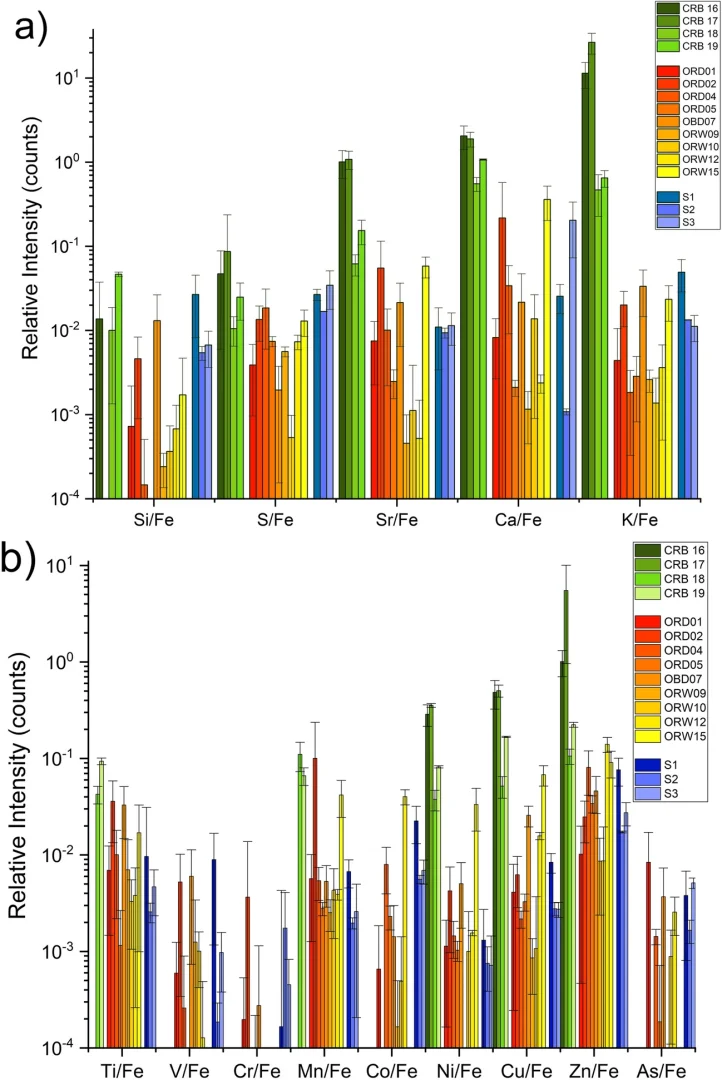
X ray fluorescence of modern balls lists calcium, potassium, sulfur, silicon, and strontium as the main inorganic elements. Trace metals include zinc and copper, which plants take from soil. The archaeological balls show the same suite, but relative amounts of potassium, calcium, copper, and zinc differ from ball to ball. Two objects look similar to each other. The rest vary. The authors suggest either different trees, different tapping seasons, or offerings made at different times. Balls made in the same year from the same local stock today look nearly identical in these elements.
More Analysis
Gas chromatography on the internal sample recovered only a handful of compounds. Fresh Castilla elastica latex yields more. Water moving through the spring site likely dissolved the rest. One unexpected compound, a derivative of the hormone estrone, is attributed to later cattle activity in the area rather than to the original recipe. No clear chemical markers of added plant juice survived. An earlier study had proposed that juice from Ipomoea alba was mixed with the latex to control bounce.
The new work neither confirms nor rules out that practice. Any such additives may have washed away.Surface infrared of dry balls shows strong carbonyl bands and loss of the carbon carbon double bond signal. Those changes mark slow oxidation. Wet balls, and the protected interior sample, look closer to fresh polymer. Four years of ordinary light on a modern ball already weaken the double bond bands and raise the carbonyl signal. The ancient objects were never meant to sit in daylight.
Time, Water, and Storage
Burial under peat and water kept the polymer chains largely intact. The main damage is physical. As the dry balls lost moisture, the wrapped strips separated and the material turned fibrous and brittle. Radiographs of one dry ball show a dense core and a looser, lower density rim. Simulations of X ray attenuation match that pattern. Wet balls appear more uniform because liquid fills the gaps and the surface still looks like a continuous polymer.
Ultraviolet images reveal yellowish or orange glow on lighter rubber and green glow where microbes grow. Some growth is invisible in ordinary light. Two large balls that were handled often after discovery suffered microbial attack before they were placed in preservative solution.
The authors note that infrastructure limits in Veracruz made ideal climate control difficult for years. Refrigeration at ten degrees Celsius now holds several wet objects. Anoxia bags protect some dry ones. The study treats these conditions as part of the objects’ recent history, not as a separate problem.
Living Practice and Ancient Method
Makers in Acayucan still tap the tree, wait for partial set, and wrap strips. They apply a final latex coat. The archaeological images match that logic even if every detail of timing and heat treatment remains unknown. Size variation among the El Manatí balls implies that more than one game or rite used the same material at the same spring. Later Mesoamerican sites, from Teotihuacan to the Sacred Cenote at Chichén Itzá to the Templo Mayor, also received rubber offerings. The El Manatí group stands at the beginning of that record.
The paper does not claim that every later ball was made the same way. Different regions had different trees and different habits. It does show that by 1600 BC the people of the Gulf lowlands already knew how long to wait after tapping, how to form strips, and how to build a sphere that would hold its shape under burial.
Conclusion
The El Manatí balls are wrapped constructions of Castilla elastica latex. Imaging shows the strips. Spectroscopy and NMR show cis polyisoprene without industrial style sulfur links. Element patterns hint that not every ball came from the same tapping event. Wet storage preserved chemistry better than drying. Drying opened the wraps, invited soil into the gaps, and left the objects fragile. Light starts a slow oxidation that modern copies already display after a few years.
Colonial descriptions of tapping, darkening, and shaping align with both the radiographs and the work of present day makers in Veracruz. Plant additives proposed in earlier research left no clear residue in the samples tested here, though running water at the spring could have removed them.
The collection remains rare. Further work on the preservative baths and on the microbes is still needed. The analytical sequence used on these balls, portable first and invasive only when a prior hole already existed, can serve other organic finds that cannot travel or cannot be cut. The objects themselves record a technology that was already mature when the first known courts were taking shape, and that still exists in the hands of people who tap the same tree.
