
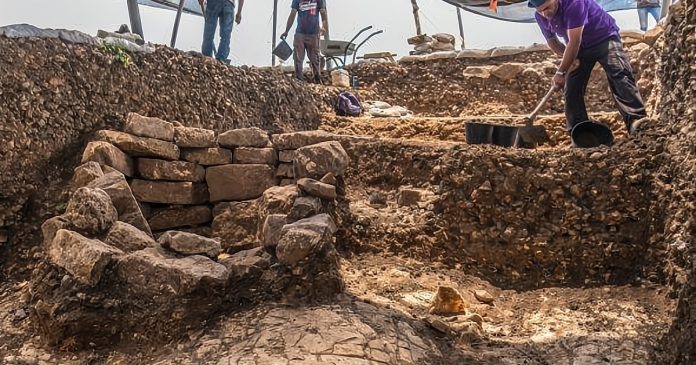
Ancient Dolomite Plaster Discovered. Around 9000 years ago in the hills west of Jerusalem, a Neolithic community demonstrated extraordinary skill in materials processing. Residents of the large settlement at Motza developed an advanced method for producing plaster floors by burning both limestone and local dolomite stone. This approach, detailed in a new study published in the Journal of Archaeological Science, pushes back the known history of dolomitic lime technology by roughly 8000 years and reveals a lost expertise that modern researchers consider remarkably sophisticated.
The Excavation at Motza
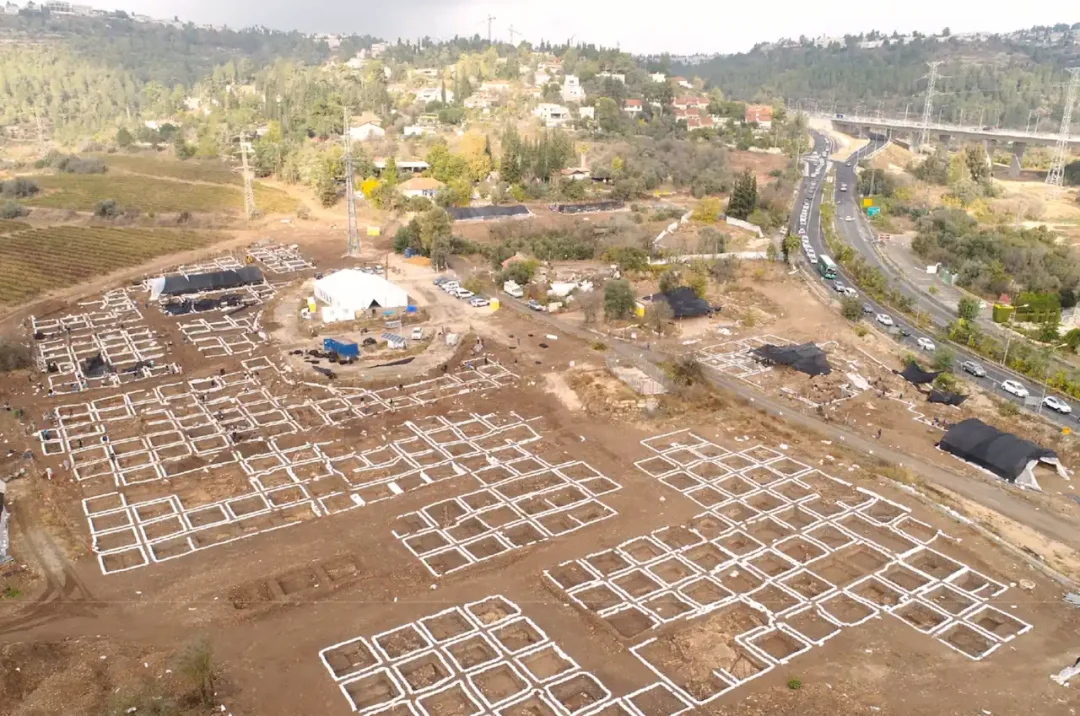
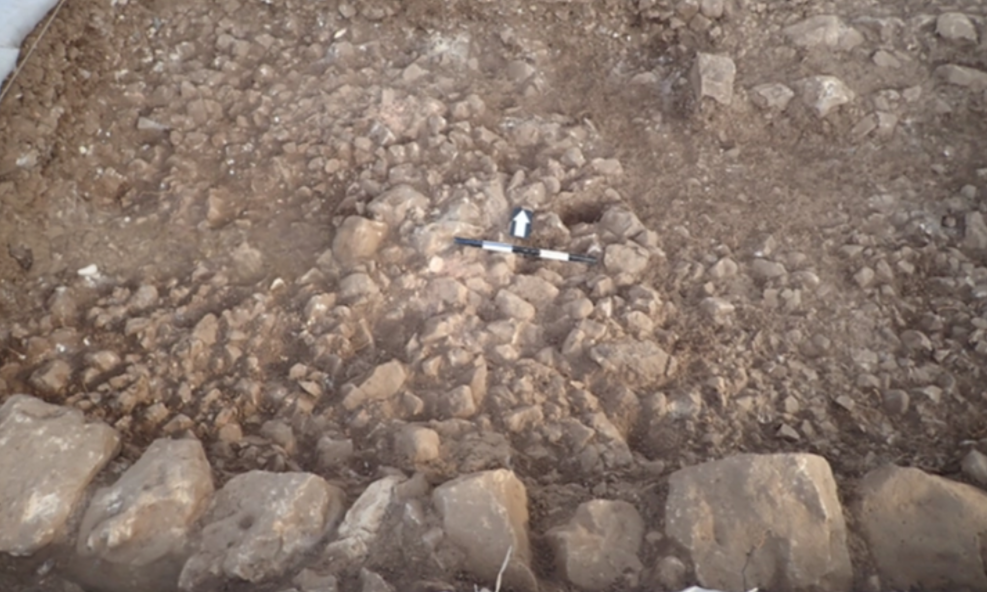
Extensive salvage digs at Motza uncovered more than 100 plaster floors from the Pre Pottery Neolithic B period (approximately 7100 to 6700 BC). Buildings featured thick preparation layers rich in dolomite beneath finer calcite topcoats, often finished with red pigment. Adjacent to these structures, archaeologists found large pit features filled with burnt stones. Some pits contained primarily calcite while a neighboring one held dolomite, indicating deliberate separation during processing. These pits, with their fire reddened edges and partially decarbonized stones, served as in situ kilns for large scale plaster production to support the community’s ambitious construction projects.
Mastering Raw Materials and Firing Techniques
The Motza craftspeople showed clear understanding of mineral properties. They selected dolomite for its potential to create stronger, more resistant to water binders compared to pure calcite plaster. By firing the stones separately, they likely controlled temperatures more precisely, with dolomite requiring somewhat lower heat than limestone. This specialization allowed them to optimize each material: dolomite provided durability in the structural base layers while calcite delivered a smooth, paint friendly surface on top. Experimental recreations using local stones confirmed the feasibility of producing usable plaster this way, mirroring the composition found in the ancient floors.
Rigorous Scientific Evidence
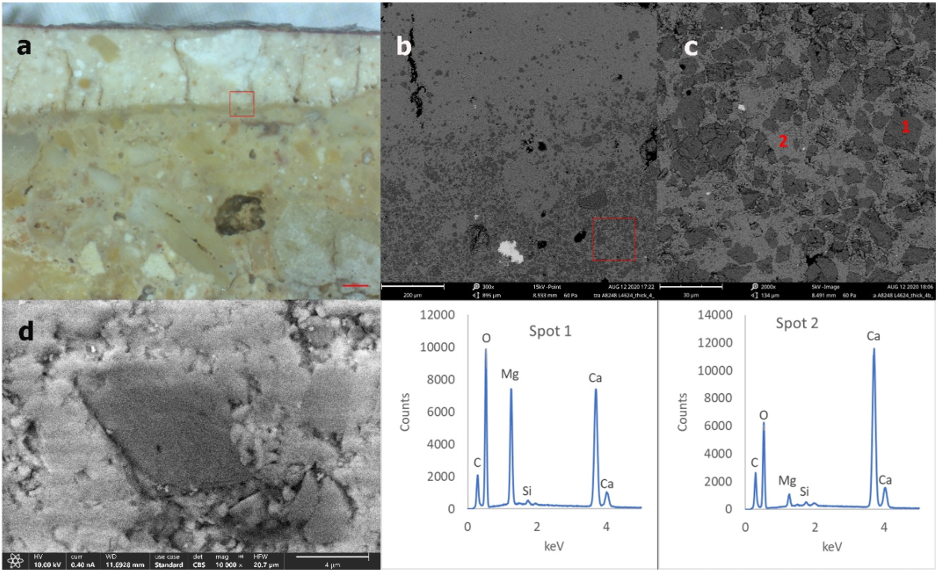
μm; (b) SEM image of um; (c) SEM image of prep-layer binder, numbers mark the spots of chemical analysis, scale bar 30μm. (d) SEM image of a single rhombohedral crystal in the prep-layer binder, scale bar 4 um. EDS graphs showing the chemistry of spots 1&2 in image (c). Image Source: https://doi.org/10.1016/j.jas.2026.106557
A suite of laboratory techniques including infrared spectroscopy, X ray diffraction, scanning electron microscopy, and thermogravimetric analysis supported the conclusions. Stones from the dolomite pit displayed increased atomic disorder and micro strain consistent with heating. In the plaster itself, small rhombohedral crystals evenly dispersed in the binder matched the shape of local dolomite yet showed signs of pyrogenic origin. Notably, these floors contained primarily calcite and dolomite with few of the alternative magnesium phases typical in later historical examples. This composition suggests the community may have achieved a complete cycle where decarbonized dolomite reformed as dolomite crystals in the set plaster, a challenging feat even today.
Why This Discovery Changes Our Understanding
The findings highlight impressive empirical knowledge among prehistoric people. They exploited local geology efficiently, saved fuel through lower temperature processing for dolomite, and engineered composite floors with tailored performance characteristics. The technology appears more advanced than anything documented until Roman times and may offer clues to the long standing geological puzzle of dolomite formation. Beyond history, it points toward sustainable modern applications such as lower energy building materials and better conservation methods for historic structures that used similar mortars.
Conclusion
The plaster floors at Motza stand as powerful evidence of innovation and expertise during the Neolithic transition to settled life. Far from primitive trial and error, this community practiced a refined form of materials science that combined observation, experimentation, and optimization to produce high performance construction materials. Their lost techniques remind us that ancient ingenuity often surpassed what we previously assumed possible and continue to inspire fresh perspectives on human creativity across deep time. This discovery not only rewrites the timeline of plaster technology but celebrates the sophisticated problem solvers who shaped the prehistoric world.
For more Ancient Material Science check out: Ancient Sumerian Composite Technology Discovered
