
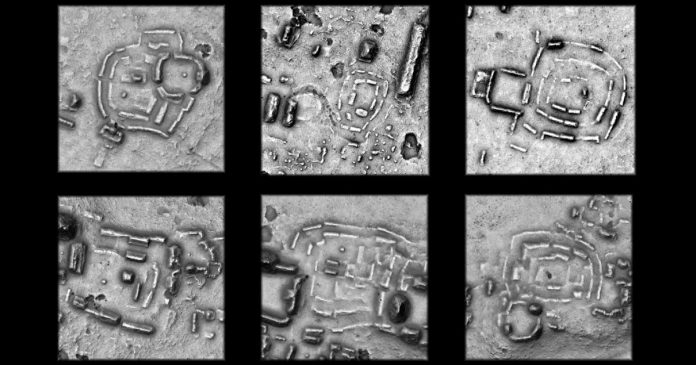
Recent advances in LiDAR scanning have brought to light a remarkable class of archaeological remains scattered across the central and western Maya Lowlands. These nested constructions consist of low elongated platforms arranged in roughly concentric circles or rectangles. Archaeologist Ivan Šprajc has documented approximately 50 examples. Primarily in the Mexican state of Campeche, through analysis of LiDAR datasets from NASA and other sources. While Šprajc proposes that these complexes represent ancient Maya built marketplaces, an alternative interpretation merits serious consideration. The layouts, central features, and associations with ballcourts suggest they may instead have served ritual purposes. Possibly connected to the ballgame and practices involving war captives.
The LiDAR Revelations and Geographic Patterns
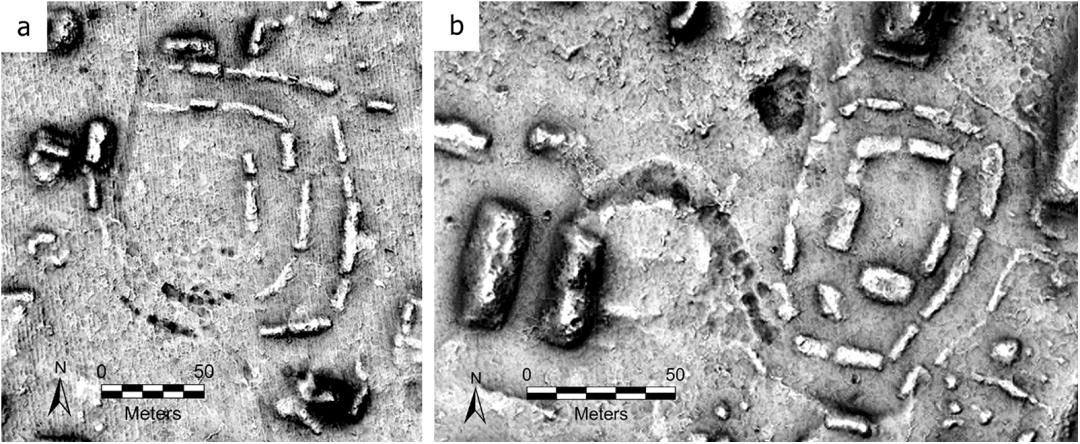
Šprajc identified the majority of these sites by examining LiDAR derived terrain models across transects covering the Yucatan Peninsula. The complexes appear most densely in central and southwestern Campeche. With additional examples in areas such as the El Palmar region and a few sites farther afield in Peten, Guatemala. Many lie near major centers including Calakmul, Ocomtun, Chacbitun, and Yesal. While others occur in smaller residential clusters or near natural features such as rivers and wetlands.
Field verification confirmed the low profile of the platforms. Which explains why they remained largely undetected until advanced remote sensing became available. Test excavations at several locations yielded ceramics spanning the Late Preclassic through Terminal Classic periods. With strongest representation during Classic times (approximately A.D. 250 to 900). The distribution raises questions about regional economic or ritual networks rather than purely commercial ones.
Architectural Layout: Aisles for Commerce or Ritual Circuits and Mazes
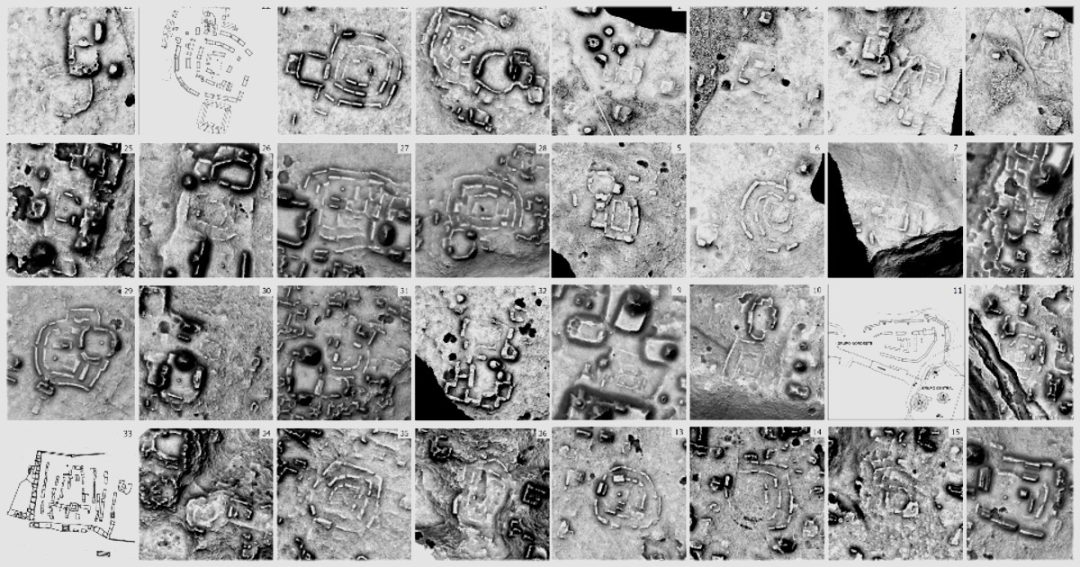
The defining characteristic of these nested constructions is their concentric organization of narrow, elongated mounds separated by open spaces. Šprajc interprets the platforms as supports for perishable stalls and the intervening areas as walkways that would have facilitated the movement of vendors and customers. Multiple openings in the outer perimeters are seen as allowing public access, with more restricted entrances possibly serving administrative control.
An alternative reading emphasizes the maze like quality of the arrangements. Concentric rings connected by radial or circumferential paths evoke processional routes or ceremonial circuits common in Mesoamerican ritual architecture. Rather than efficient commercial circulation, the design could have guided participants through staged movements, performances, or ritual sequences. The more circular examples, concentrated in certain lidar surveyed zones, particularly suggest cosmological or processional intent over market functionality. This interpretation aligns with broader Maya traditions in which spatial layouts encoded symbolic journeys or ritual order.
Central Altars and Shrines: Economic Supervision or Ceremonial Centers
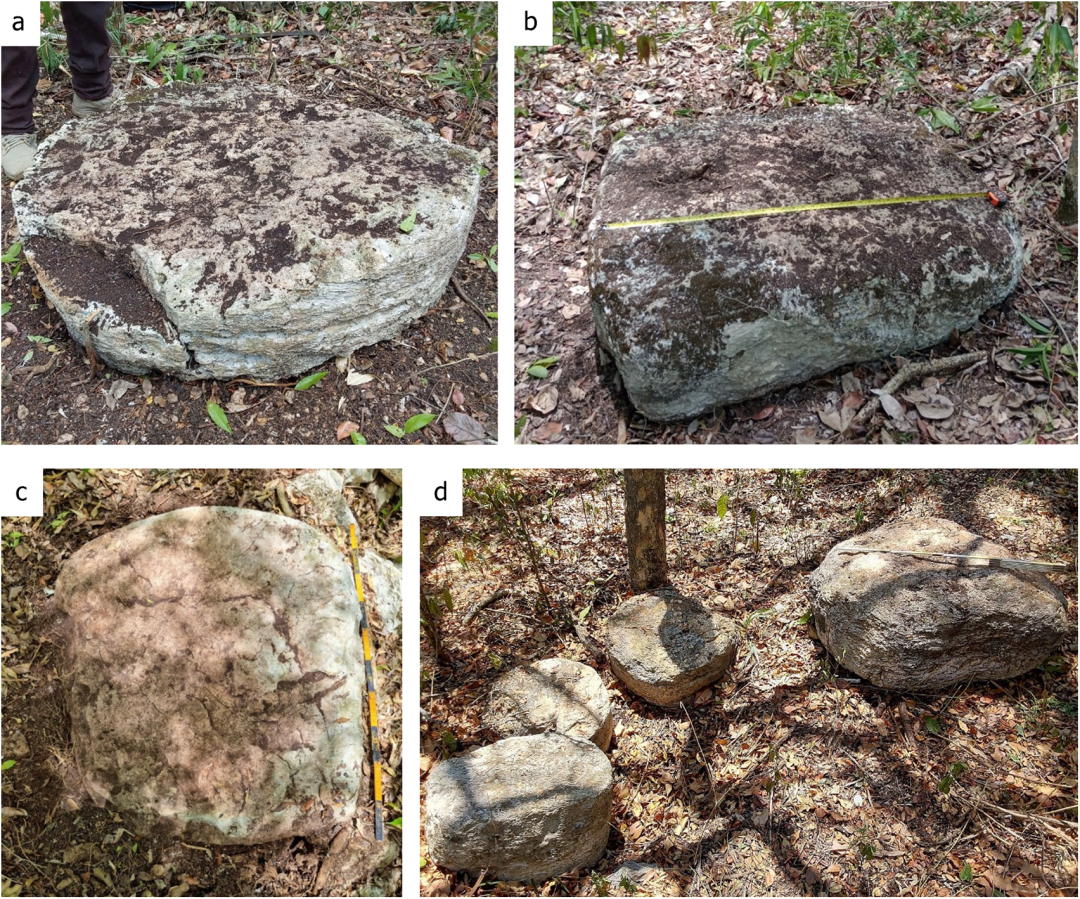
Stone altars and central heaps, interpreted as shrine remains, appear in multiple complexes examined on the ground. In one test pit a concentration of ceramic fragments was recovered directly associated with a stone altar. Šprajc links these features to the known religious dimensions of Mesoamerican trade. Noting that markets often included altars dedicated to patron deities and were frequently situated near temples.
The ritual maze perspective offers a more direct explanation. Central altars placed within enclosed concentric spaces are consistent with focal points for offerings, invocations, or displays tied to ceremonial events. In Maya society such placements commonly mark locations of sacrifice, ancestor veneration, or the handling of war captives. The presence of these features does not require an economic overlay. They fit naturally within a framework of ritual practice where the ballgame and captive taking played prominent roles. The paper itself records these elements without demonstrating that they served market oversight rather than independent ceremonial functions.
Associations with Ballcourts: Trade Competition or Ritual Performance and Captives
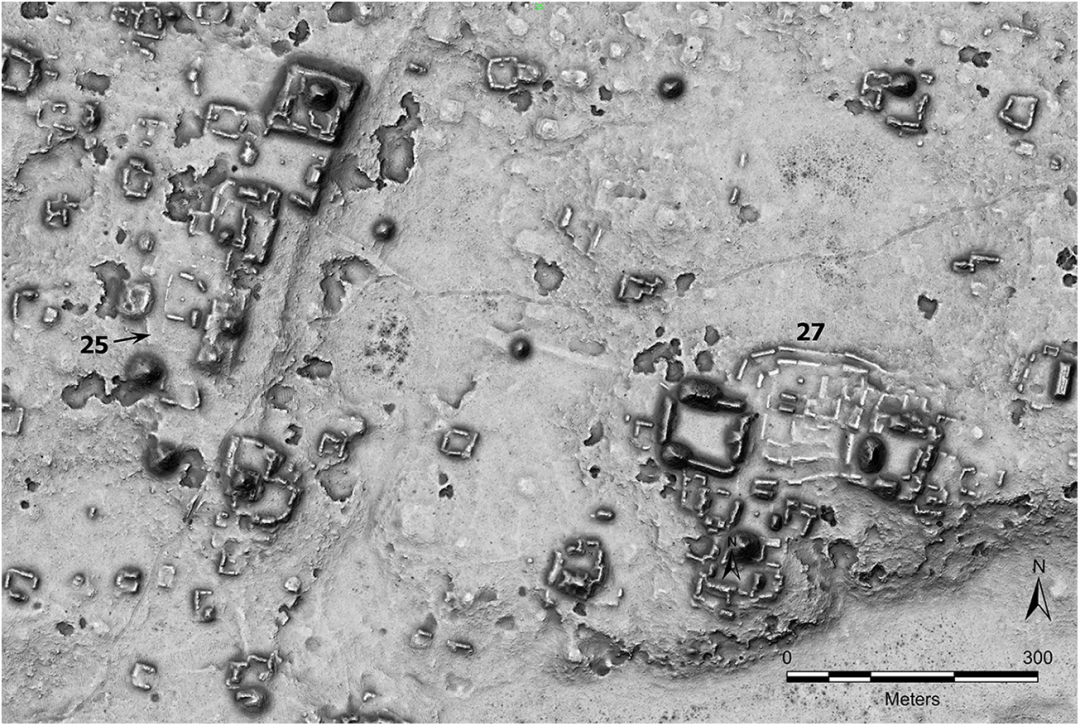
A notable number of the nested constructions lie in close proximity to ballcourts. Šprajc and earlier researchers connect this pattern to inter polity competition and the movement of goods. Suggesting merchants may have traveled alongside ball teams. The ballgame is acknowledged to have carried religious significance, yet the primary emphasis remains on economic integration.
The ritual interpretation takes the ballcourt connection further. Classic Maya iconography and texts demonstrate that the ballgame was deeply intertwined with warfare, captive taking, and sacrificial ritual. War captives were sometimes displayed, ransomed, or sacrificed in association with ballgame events. A complex featuring concentric ritual pathways, a central altar, and an adjacent ballcourt could have accommodated integrated ceremonies in which captives were processed, displayed, or offered. This reading draws on the well attested historical record of Maya captive practices and the religious character of the ballgame, rather than assuming commercial primacy. It avoids projecting later or external market models onto contexts where ritual and political functions likely predominated.
Assessing the Marketplace Hypothesis
The case for marketplaces rests largely on configurational similarities to the East Plaza at Tikal and the Chiik Nahb complex at Calakmul. Together with analogies to 16th century central Mexican markets. The low platforms and open circulation spaces are presented as practical for displaying goods. While larger associated structures are viewed as possible storage or administrative facilities. Murals at Calakmul depicting figures with goods and generic labels are cited as supporting evidence. Although alternative readings of these paintings as ritual feasts continue to be debated.
My critique of this view is that the ethnohistoric analogies derive primarily from Postclassic central Mexico and colonial descriptions. Which may not map cleanly onto Classic Maya realities. The Maya term for plaza and market is polysemous, and direct archaeological signatures of specialized market exchange remain limited at these particular sites. The concentric, maze-like layouts and prominent central altars fit less comfortably within a commercial model than within a ritual one. Multifunctional use cannot be ruled out, yet the architectural grammar and associated features provide stronger support for ceremonial purposes linked to the ballgame and captive rituals than for dedicated marketplaces.
Chronology, Test Excavations, and Outstanding Questions
Ceramic evidence from test pits indicates use during the Classic period, with some locations showing earlier Preclassic material in construction fills. Few plaster floors were encountered, a detail Šprajc suggests could suit earthen surfaces tolerant of spilled liquids in a market setting. Small quantities of chert debitage and possible food remains appear in some contexts, consistent with either craft activity or ritual consumption.
These findings do not yet distinguish decisively between interpretations. Systematic excavation, geochemical sampling, and detailed analysis of associated artifacts and human remains (if present) will be required to clarify function. The current data set, while impressive in its scale thanks to LiDAR, remains preliminary regarding the specific activities that took place within these distinctive spaces.
Conclusion
The nested constructions revealed by LiDAR represent a significant addition to our understanding of Maya landscape organization during the Classic period. Their concentric layouts, central altars, and frequent proximity to ballcourts invite multiple lines of interpretation. While a marketplace function has been proposed on the basis of architectural comparison and ethnohistoric analogy, the maze like circulation patterns, prominent ritual features, and ballcourt associations align more convincingly with ceremonial practices. These may have included processional movement, offerings at central altars, and events connected to the ballgame and the handling of war captives, all deeply rooted in the historical and religious traditions of Maya society.
Further fieldwork will undoubtedly refine or challenge these possibilities. For now, the ritual maze interpretation offers a coherent framework that respects the distinctive architecture and the documented ritual dimensions of Maya political and religious life without requiring the importation of later market models. The complexes stand as compelling evidence of how the Maya shaped space to accommodate both social interaction and profound ceremonial concerns.
For more deep dives read, 5,000-Year-Old Iberian Tomb of the Seven Beaded Women.
