

Archaeologists from the University of West Bohemia have identified a large circular enclosure near the village of Chleby in the Nymburk region of Central Bohemia. Organic material recovered from the site dates the original construction to roughly 6500 years ago. That places the monument more than a thousand years earlier than the main phases of Stonehenge. The enclosure measures about 230 meters across and is surrounded by a ditch more than 2.5 meters deep. Twelve entrances interrupt the circuit at irregular intervals. Researchers interpret the layout as a ritual centre that incorporated observations of the Sun and Moon. The site stands among the oldest monumental ritual structures of its kind known in Central Europe.
The Enclosure and Its Layout
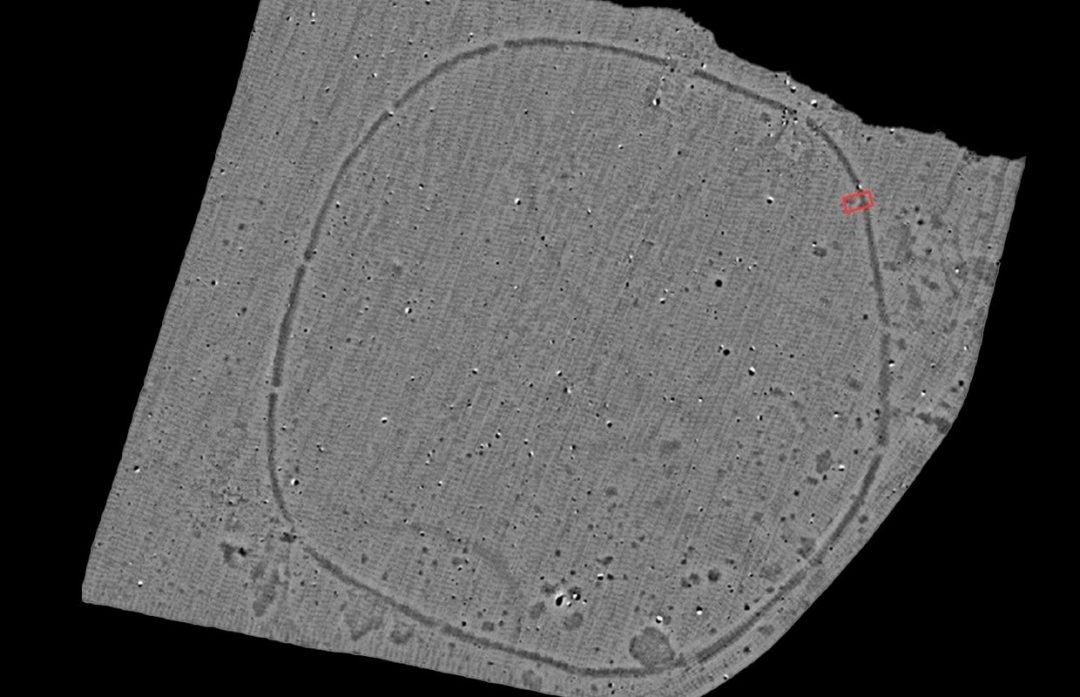
The monument forms an almost circular circuit cut into the landscape of the Nymburk region. A substantial ditch more than 2.5 meters deep defines the outer edge. Twelve openings break the perimeter. These openings are not evenly spaced. When the positions of the entrances were plotted in detail, the geometry proved deliberate rather than random. The overall diameter reaches approximately 230 meters, creating an enclosed space of considerable scale for its period.
Circular enclosures of this size and date were previously unknown in the region. That absence alone marks the Chleby structure as exceptional within the early Eneolithic record of Bohemia. Earlier surveys and excavations had already established the existence of the ditch and the basic circuit. The recent analysis focused on the precise placement of the twelve entrances and their relationship to the surrounding horizon. The result is a clear architectural plan that goes beyond simple enclosure and points to intentional design.
Astronomical Alignments
Two principal observation lines emerge from the geometry of the entrances. One tracks the extreme rising and setting positions of the Moon on the horizon during its roughly 18-year cycle. This cycle produces the major lunar standstill, when the Moon reaches its northernmost and southernmost points. The second line connects sunrise at the summer solstice with sunset at the winter solstice. These alignments create sightlines that would have allowed people standing inside the enclosure to mark key points in the solar and lunar year.
The solar arrangement follows a pattern familiar from the main axis of Stonehenge. At Chleby the same principle appears more than a thousand years earlier. For early farming communities the summer solstice sunrise marked a beginning while the winter solstice sunset marked an ending. The entrances at Chleby appear to have framed those moments with precision. The lunar alignment adds a longer temporal dimension, linking the monument not only to the annual cycle of the Sun but also to the slower rhythm of the Moon. Together the two systems suggest a sophisticated awareness of celestial movement expressed through architecture.
Ritual Evidence
Bull skulls and horns were recovered from the ditch, especially near several of the entrances. Researchers interpret these remains as possible decorations for monumental gateways that once led into the enclosure.
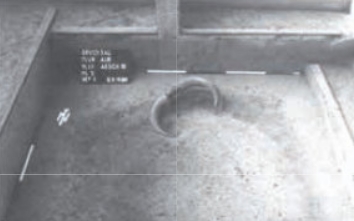
The bull held clear religious importance among early farming groups across prehistoric Europe. Similar deposits appear at other Neolithic and Eneolithic sites, reinforcing the idea that cattle carried symbolic weight in ritual contexts. The placement of the skulls and horns close to the openings strengthens the argument that the entrances themselves functioned as ceremonial thresholds.
Human bones also appear in the ditch. A later Bronze Age burial belonging to the Únětice culture contained the remains of approximately 18 people. These individuals were interred over time rather than in a single event. The presence of this collective grave inside the earlier monument indicates that the place retained some form of significance long after its original construction. The combination of animal deposits near the entrances and the subsequent human burial shows that the site served ritual purposes across more than one prehistoric period.
Later Use of the Site
By the Iron Age the original function of the monument had ended. The ditch was gradually filled with soil and debris. An ordinary settlement then occupied the former sanctuary. Houses and domestic features replaced the open ceremonial space. This sequence differs sharply from the history of Stonehenge, which experienced repeated phases of construction and reuse across many centuries. At Chleby the ritual role appears to have ceased permanently once the ditch was closed.
The change in use does not erase the earlier importance of the place. The fact that a substantial Bronze Age burial was still placed within the circuit shows that memory of the site persisted for a time. Only later did the landscape shift fully toward everyday occupation. The long transformation from sanctuary to settlement makes Chleby a useful case for studying how prehistoric communities altered the meaning of monumental places over generations.
Research Context
Petr Krištuf of the University of West Bohemia leads the current investigation. The site was previously discussed in a 2019 paper. Jan Turek of Charles University and Jan Fišer of the University of Hradec Králové contribute key work on the project. Soil samples collected from the enclosure and its surroundings are under chemical analysis. These samples may reveal traces of repeated human activity that leave little conventional archaeological evidence. The investigation forms part of the international project titled Long-term Land Use Dynamics within the Areas of Prehistoric Ritual Places.
The site itself has been under study for more than a decade. An earlier project examined Proto-Eneolithic ditch enclosures in Bohemia and included Chleby among three key locations. Results from that work appeared in a 2019 volume focused on cult and ritual at the beginning of the Eneolithic. A separate 2023 paper in Památky Archeologické published the detailed analysis of the Únětice multiple burial found in the ditch. The geometric study of the entrances and the solar-lunar interpretation were presented publicly in August 2026 through a university announcement. No peer-reviewed paper on the astronomical claims has appeared yet. Further laboratory results and spatial data are expected to refine the current picture.
Conclusion
The Chleby enclosure stands as one of the oldest monumental ritual sites of its kind known in Central Europe. Its size, the deliberate placement of twelve entrances, and the evidence of bull symbolism and later burial reuse point to a place of sustained ceremonial importance. The solar and lunar alignments add a further layer of planning that links architecture to the movements of the sky. Continued excavation and laboratory work will refine the sequence of activity at the site and clarify how its meaning changed across the centuries.
