
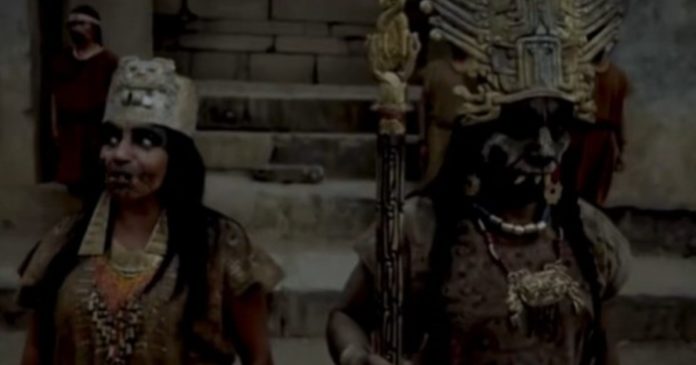
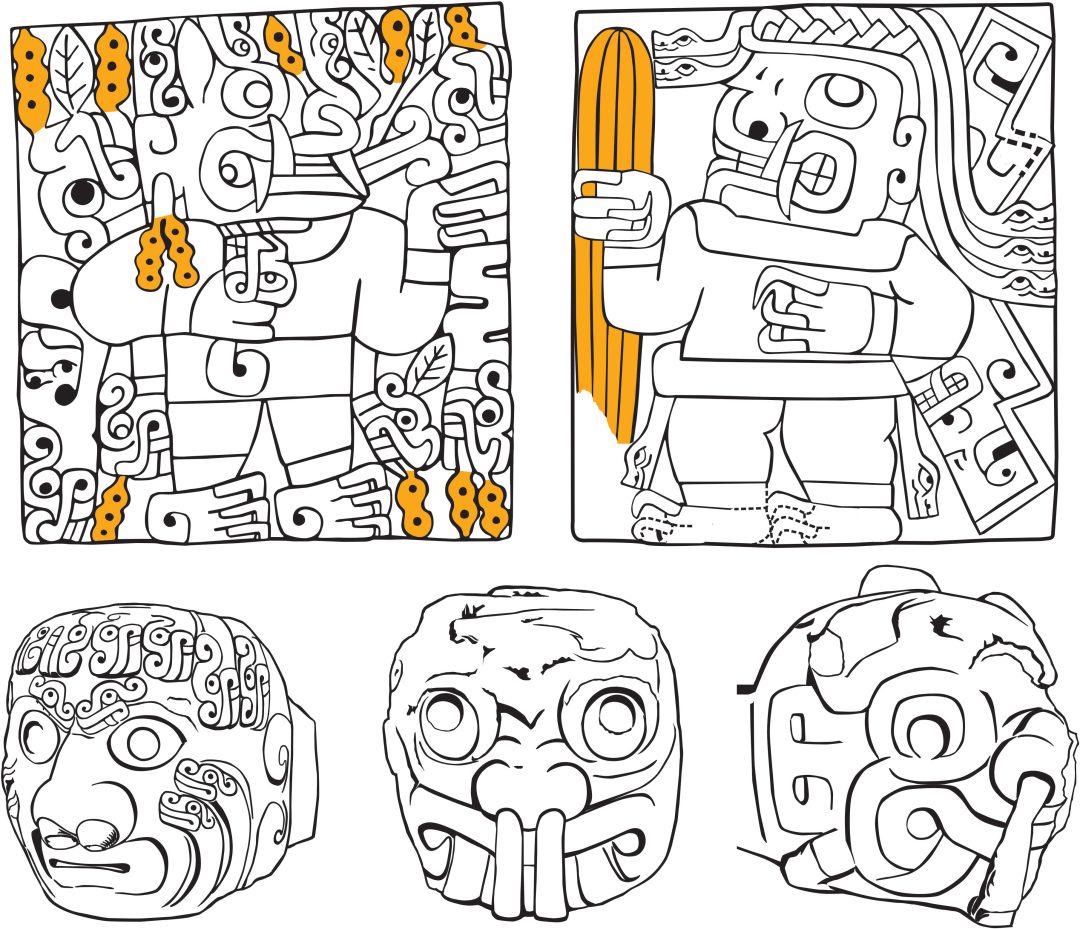
For decades archaeologists suspected that ceremonies at Chavín de Huántar included plants that alter consciousness. Iconography showed San Pedro cactus and possible vilca. Stone heads displayed grimaces and mucus flow that match known effects of snuffing. Until 2025 no plant remains or chemical residues had been recovered from ritual contexts at the site. A paper published in the Proceedings of the National Academy of Sciences changed that. Residues inside bone tubes from a sealed underground gallery now confirm that people inhaled vilca and wild tobacco there more than 2,000 years ago.
The find is the northernmost direct evidence of these plants in the pre-Hispanic Andes. It also shows that their use occurred inside restricted architectural spaces rather than in open or informal settings. That detail matters for how scholars understand the rise of social hierarchy during the Formative Period.
A Major Ritual Center in the High Andes
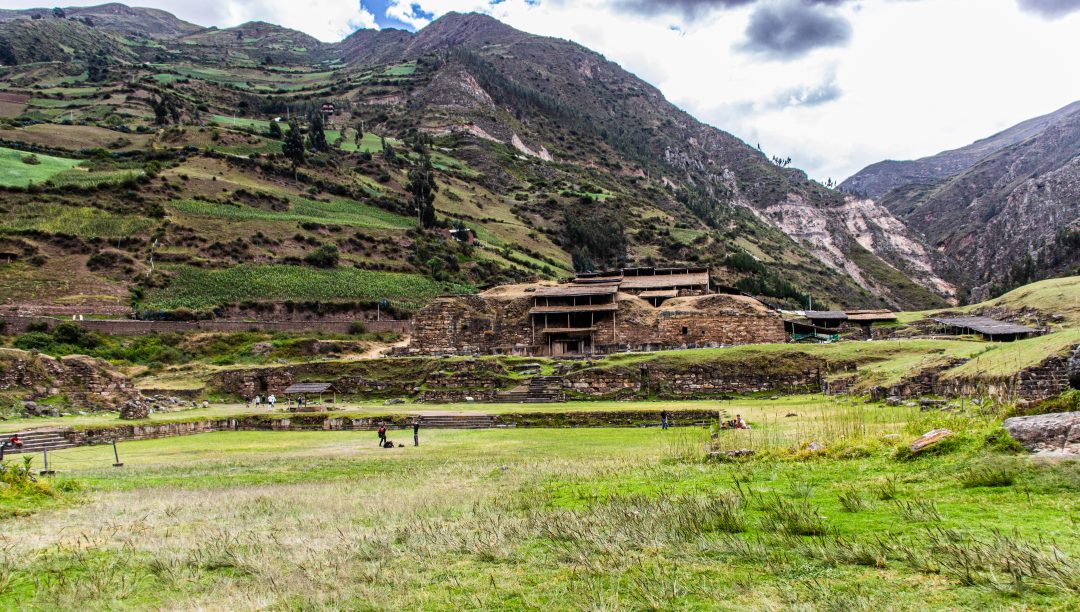
Chavín de Huántar sits at about 3,150 meters in Peru’s north central highlands. Between roughly 1200 and 400 BCE the site grew into a complex of stone faced platforms, open plazas, and subterranean galleries. Builders enclosed earlier open spaces as the monument expanded. Access to some interiors remained possible even after they became hidden.
Researchers have long treated the site as a center of public ritual. Processions moved through spaces of different visibility. Offerings of ceramics, shells, and other objects were placed in galleries. Sound from conch trumpets and the play of light in dark corridors formed part of the experience. The question was what else happened in those rooms.
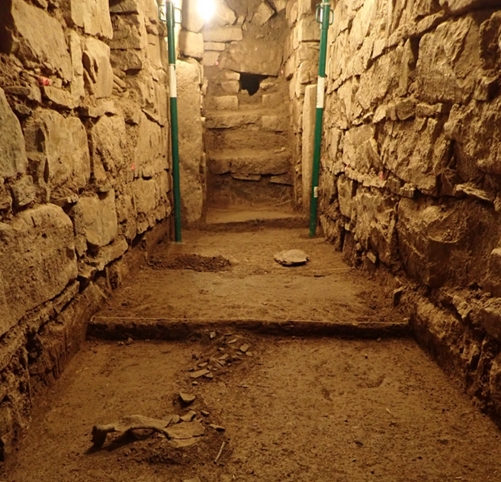
Gallery 3 is a rectangular corridor about 7 meters long, 1.2 meters wide, and 1.9 meters high. It was built into the south atrium of the Circular Plaza in the early first millennium BCE. After use ended around 500 BCE the space was sealed. Excavations in 2017 and 2018 recovered deposits that had remained closed for 2,500 years.
Artifacts Recovered from Gallery 3
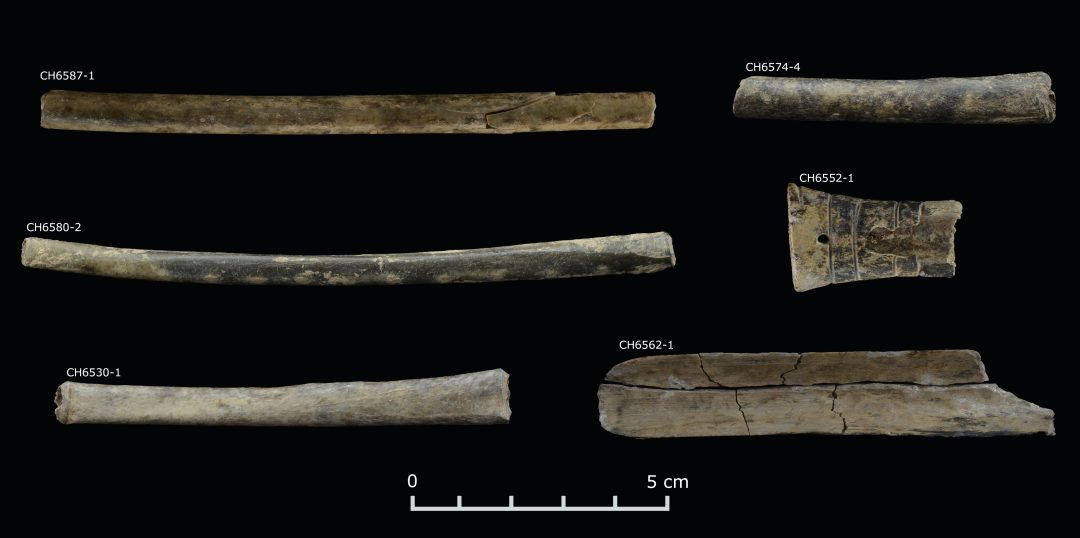
The gallery contained 23 objects of forms linked to psychoactive consumption elsewhere in the Andes. Twenty two were made of bone. One was a marine mussel shell. Most were simple tubes fashioned from bird wing bones. Lengths range from about 6 to 13 centimeters. Widths are typically 0.5 to 0.7 centimeters. Two objects were carved from artiodactyl bone, including a white tailed deer metacarpal with grooves and two small holes at one end.
The artifacts came from floor layers and from later fill that closed the gallery. Some lay near ceramic offerings, beads, and human remains. Radiocarbon dates and Bayesian modeling place the relevant deposits between about 800 and 350 BCE. That span covers the later part of Chavín’s main occupation and the years immediately after.
Nineteen of the tubes share the same manufacturing style. Only a subset produced chemical or botanical traces. Uniformity of form still suggests they belonged to a single class of equipment.
Independent Chemical and Microbotanical Tests
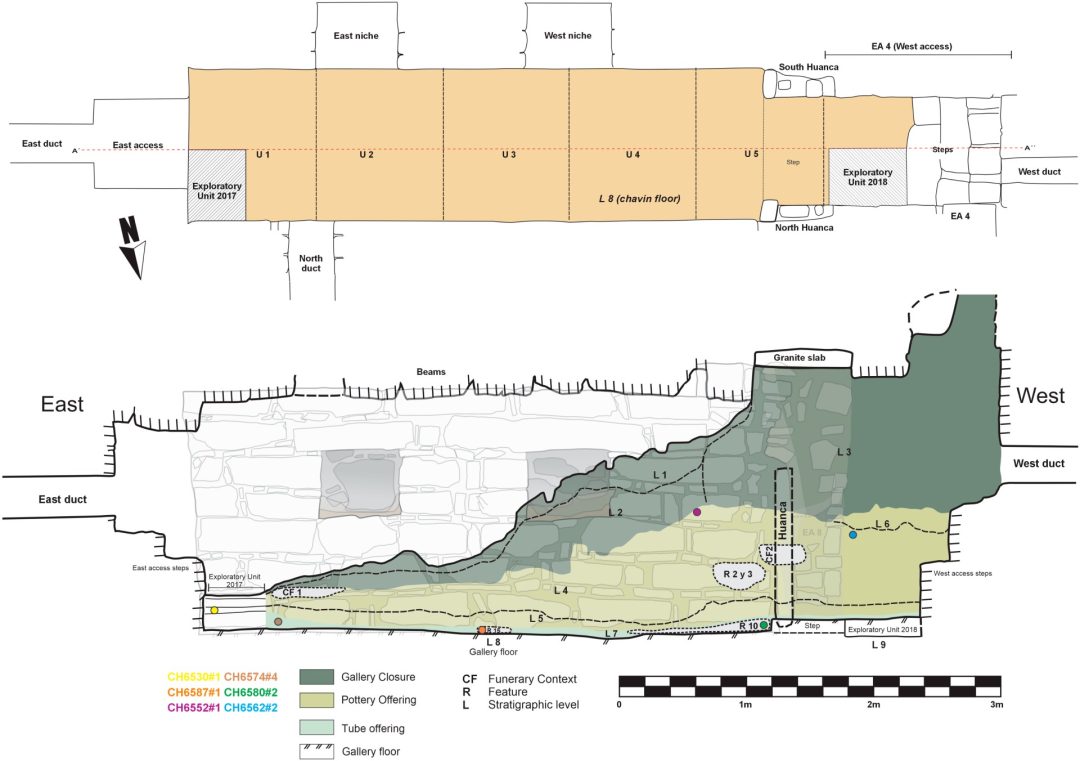
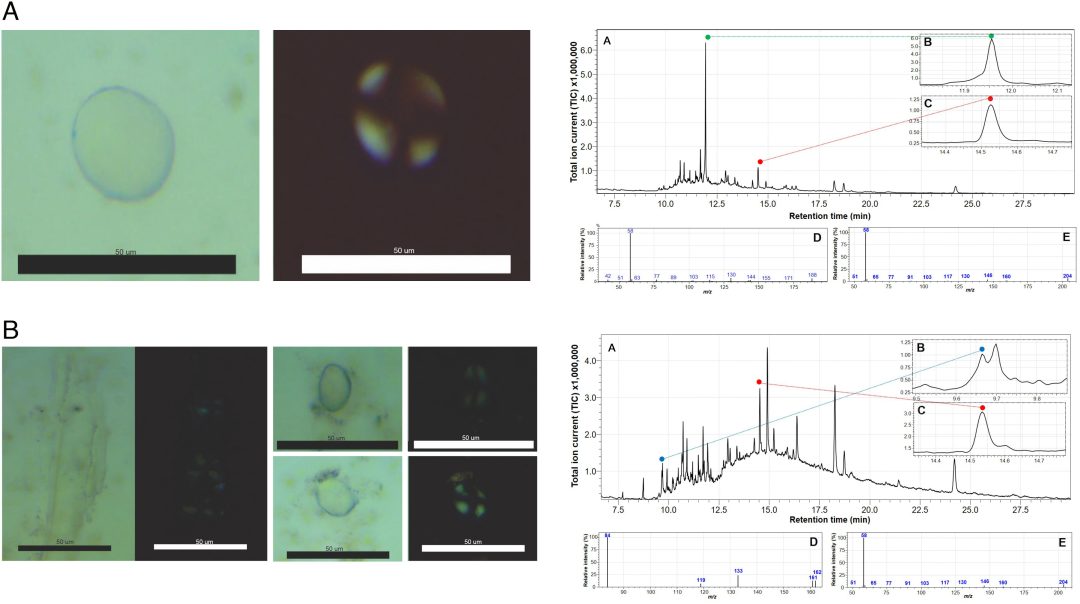
Researchers sampled the interiors of the objects in a clean laboratory. They used gas chromatography mass spectrometry for alkaloids and optical microscopy for starch grains, crystals, and trichomes. The two laboratories worked independently and without sharing results.
Six artifacts contained diagnostic compounds. Nicotine appeared on several tubes. That molecule is the marker for the genus Nicotiana. Microremains on some of the same pieces match roots of wild Nicotiana species. Other tubes held N,N dimethyltryptamine (DMT) and 5 hydroxy N,N dimethyltryptamine, also called bufotenine. Those alkaloids identify Anadenanthera colubrina var. cebil, known as vilca.
Four of the six positive objects also produced identifiable plant microremains. Starch grains showed damage from dry heat. The damage pattern is consistent with toasting and grinding seeds and roots into powder. It is not consistent with burning the alkaloids themselves. No combustion byproducts of the psychoactive compounds were detected. The tubes therefore served as inhalers rather than smoking pipes.
Control sediment from the gallery contained almost no plant material. The residues came from the artifacts, not from surrounding dirt.
Mixed Powders and Local Plants
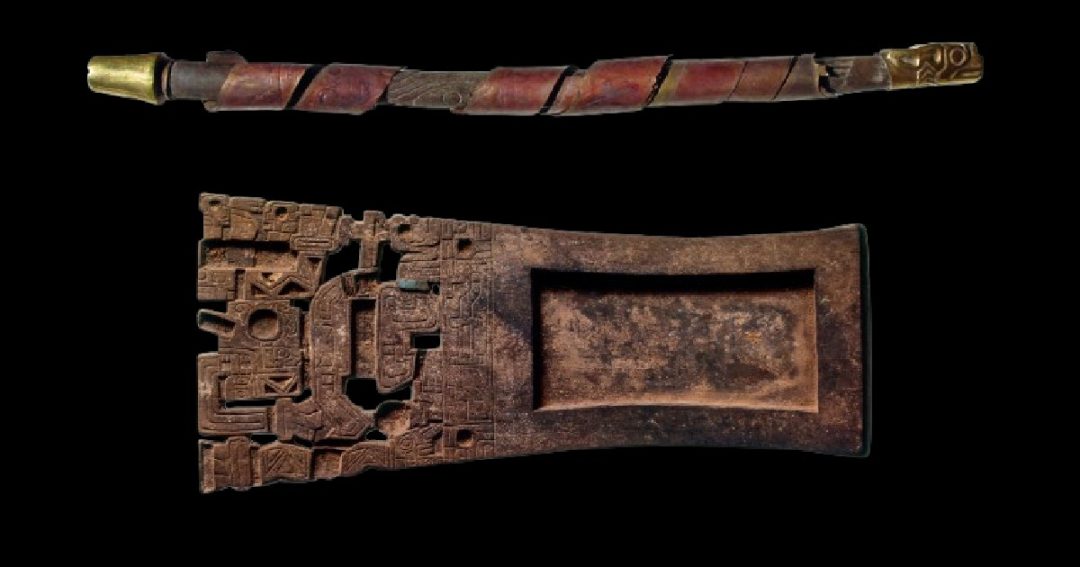
Several tubes held traces of both plants. Mixed vilca and Nicotiana snuff is known from later wooden trays in northern Chile, dated between 500 and 1500 CE. The Chavín examples are older. They are the earliest evidence of that combination in the Americas.
Neither plant required long distance transport from the Amazon. Wild Nicotiana grows across many Andean environments, including the highlands. Vilca grows on eastern slopes below about 2,700 meters. A descent of only 25 kilometers down the Mosna River from Chavín reaches suitable elevations. The plants could have been obtained within a day’s walk.
San Pedro cactus appears clearly in Chavín stone carving. Neither microbotanical nor chemical evidence of that cactus or its alkaloid mescaline appeared in the Gallery 3 samples. Absence in one sealed room does not prove the plant was unused at the site. It does show that the tubes examined here carried vilca and tobacco.
Restricted Rooms and Institutional Control
Bone tubes of similar form occur in other parts of Chavín, including the Ofrendas Gallery and some domestic or workshop areas. The highest concentration of analyzed pieces with residues comes from Gallery 3 and comparable restricted interiors. They are scarce in ordinary midden deposits.
The paper’s authors interpret this pattern as evidence of organized use. Consumption took place in small, dark, controlled spaces rather than in public plazas open to all visitors. Access to the galleries was limited. The same rooms also received offerings and, in some cases, human burials. The association is with ritual activity, not with casual storage or discard.
Effects of vilca and Nicotiana vary with dose and setting. Reports include visual and auditory changes, altered body sense, and physical reactions. Combined with architecture designed to manipulate light and sound, those effects would have made the ceremonies intense. Participants who entered the galleries experienced something most people at the site never did.
Implications for Social Complexity
The Formative Period in the Central Andes saw the growth of monumental construction, craft specialization, irrigation, and clearer differences in status. Ritual is widely accepted as one mechanism that held communities together and also marked some people as special. The new residues show that psychoactive plants formed part of that mechanism at Chavín.
The argument is not that drugs created hierarchy by themselves. The argument is that controlled access to powerful experiences inside monumental architecture helped make emerging differences feel legitimate. Leaders who hosted the rituals could present themselves as intermediaries with forces beyond ordinary life. Labor for the stone buildings and the movement of rare materials become easier to organize when participants believe the project is cosmically important.
Later Andean societies continued to use vilca. Wari vessels sometimes show seed pods. Snuff trays and tubes appear in Tiwanaku related contexts. The Chavín evidence places the practice earlier and farther north than most previous chemical finds. It also places it inside the same kind of restricted ceremonial architecture that later states expanded.
The sample remains small. Six positive objects out of 23 is a limited set. Preservation varies. Other substances may have been used in tubes that tested negative. Broader sampling at Chavín and at contemporary centers will test how widespread the pattern was.
Conclusion
The residues from Gallery 3 convert a long-standing hypothesis into measured data. People at Chavín de Huántar inhaled mixed powders of vilca and wild tobacco inside restricted galleries during the first millennium BCE. The practice was part of formal ritual, not only individual vision seeking. The plants were available locally. The architecture that contained the activity was built at great labor cost and designed to control who entered and what they experienced.
That combination of substance, setting, and restricted access fits the larger pattern of the Formative Period. Monumental centers became places where some people gained lasting advantages in status and coordination. Ritual that included altered states was one tool among others. The Chavín tubes show that tool in use at an early and influential site. Further work on other galleries and other contemporary centers will determine how common the pattern was and how it changed as Andean societies grew more unequal.
